Minister of State for Aviation JAYANT SINHA has spent the last nine months working on the ins and outs of the regional connectivity scheme (RCS). Wearing his McKinsey, Courage Capital and Omidyar network hats, Sinha says that the scheme is designed not as a bureaucrat would think but as a businessman would and is crafted to make money. He spoke to Anjuli Bhargava on the contours of the scheme. Excerpts:
Can you explain the RCS and how it will work?
India’s aviation sector has three distinct parts: The international market, where Indian carriers have been doing very poorly even though there is tremendous demand — 50 million passengers and growth rates of over 9 per cent. It’s a very high growth rate for anywhere in the world.
If you look at the data, we can tell you what percentage from Dubai, Singapore and so on is sixth freedom traffic (the right to fly from a foreign country to another foreign country while stopping in one's own country) and it’s almost 70 per cent — people going from, say, Delhi to New York or Boston or wherever else. That has resulted in Dubai working as a hub for all of India.
The domestic market is 100 million people. This is growing at around 12.5 per cent a year long-term. In the past three years, growth has been over 20 per cent. The only blip was when Kingfisher went under and a lot of capacity left the system, growth slowed.
The domestic market is divided into the national market (travel between the larger cities) and the regional market and by some accounts 70-80 per cent of the market is between the top cities. Not enough capacity in tier 3-4 cities and towns like Kanpur, Surat, Bathinda, Mysore, Agra, Ludhiana, and Jamshedpur. All these cities are very poorly connected.
The route dispersal guidelines do that to some extent?
Yes, but they could meet all their RDG obligations by doing only Delhi-Guwahati. You can cover the RDG just by flying into the bigger cities.
They don’t need to go deeper. But there is a huge latent demand in tier 3 and tier 4 towns. We didn’t have any carriers willing to serve the regional market.
Say, if I want to do Jamshedpur-Kolkata, I can’t use a narrow-bodied aircraft like A320 or B737 since the airport is not equipped and neither will I find 180-odd passengers to fly.
We have now made it profitable to fly the smaller planes. This is a turbo prop market. If you look at China, the US or many other countries, they have smaller airlines – Delta Express and American Eagle – that act as feeders to larger airlines.
We have been able to convince lessors to lease planes to smaller players by making it easier for them to get back their aircraft in the case of non-payment. Seizure will be far quicker and easier. As a result, they have been able to offer aircraft at lower rates since their risks are lower. Alliance Air, for instance, has ordered 20 ATRs so far.
We have been able to offer a series of concessions to build profitable businesses: ATF rates down to 3 per cent, no charges at the airport you are flying out of or the one you are flying into, and three-year exclusivity. No competition on the route. We have reduced costs dramatically.
Then we are offering them a subsidy. The price cap for one hour of flying is Rs 2,500. Fifty per cent of seats will be offered at a subsidised rate. A player can offer at least nine RCS seats and a maximum of 40. At Rs 2,500, we expect it to be very competitive with train traffic. We have coined this term “rail parity”.
Considering the track record of many small players, how do you expect this to be different?
I understand your scepticism. You may say “I have seen this movie before and it always ends badly”. You may ask what’s different. What’s different is that we have carefully crafted the scheme so that people can make money. There is a difference between the bureaucratic mindset and the businessmen’s mindset. And we have approached this with the latter. I have been with McKinsey for 12 years and then an investor for 10 years. I have spent my whole life looking at business models. I know by now when one can make money and when one can’t.
We have built the P&Ls (profit and loss), the spreadsheets and looked at this from the businessmen’s end. It’s been nine months of hard work (we started work on this from July 2016).
Was there no other way to provide for the subsidy other than cross-subsidising?
With the current routes, we have opened up 33 new airports at a subsidy bill of only Rs 205 crore. The domestic passenger revenues are Rs 80,000 crore, so this is a very low subsidy amount. Domestic airlines were arguing that the levy should be on the taxpayers in general and not on fliers. But look at it this way. In telecommunications there is a universal service obligation — a 5 per cent fee you pay on your bill. Any network business often requires a fee to be charged to spread the network universally. In a sense the idea is to cross-subsidise the busy trunk routes with the thin, sparsely travelled peripheral routes so that the network grows and thrives. The power of the network grows exponentially as more nodes join the network. There is little incentive for one player to add a node but there is an externality here that the architect of the network can see but an individual operator may not be able to appreciate. Also, almost everywhere around the world, there are these subsidy schemes to be able to get to tier 3 and tier 4 towns.
I’m not saying there will be no failures but from our side we have minimised the risks.

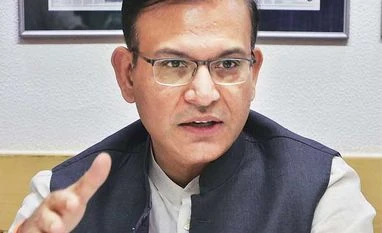 "Regional connectivity scheme crafted for people to make money: Jayant Sinha")











