Unemployment rate at four-decade high: NSSO survey compared past figures

A former chairman of the NSC, said on condition of anonymity, that the report once approved by the NSC is the final version
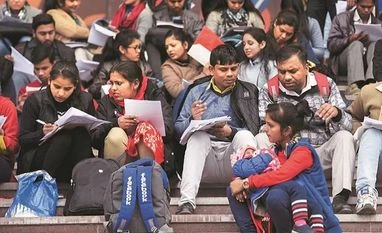
Jobs, workers
Somesh Jha New Delhi
Last Updated : Feb 01 2019 | 1:16 AM IST
The National Sample Survey Office’s (NSSO’s) latest jobs survey has compared the unemployment figures for 2017-18 with its past surveys since 1972-73. 

Though NITI Aayog Vice-Chairman Rajiv Kumar said at a press conference on Thursday that the survey “is not finalised and is at a draft stage” and that the NSSO’s past surveys cannot be compared with its latest one conducted in 2017-18, the National Statistical Commission (NSC)’s acting chairman and a member had resigned from their post on Monday, alleging that the government has withheld the release of the NSSO’s jobs survey after its approval. 

In fact, a standing committee on the report and the NSC had given its approval in the first week of December. 

A former chairman of the NSC, said on condition of anonymity, that the report once approved by the NSC is the final version, which should be put up in public domain, ideally within a week. 
 
The NSSO’s report page number 84 stated, “The comparison of unemployment rates since 2004-05.” “Statement 31 gives the unemployment rates as obtained from the nine quinquennial surveys of NSSO (27th round to 68th round) and PLFS (2017-18)”. 

“The statement shows that compared to the quinquennial rounds, in 2017-18 the unemployment rates… were higher for both males and females,” the report, as reviewed by Business Standard, stated. 
 
The report further makes a comparison of the labour force participation rate (LFPR), workers population rate (WPR) and the religion-wise indicators from the past surveys of the NSSO. The NSSO used to conduct its survey every five years till 2011-12. However, the survey was discontinued and an annual survey of households on jobs was started from 2017-18.

The country's unemployment rate stood at over a four-decade high of 6.1 per cent during 2017-18, compared to 2.2 per cent in 2011-12. PLFS is the first annual household survey of the NSSO, conducted for July 2017-June 2018. 

One subscription. Two world-class reads.

Already subscribed? Log in

Subscribe to read the full story →
*Subscribe to Business Standard digital and get complimentary access to The New York Times

Smart Quarterly

₹900

3 Months

₹300/Month

SAVE 25%

Smart Essential

₹2,700

1 Year

₹225/Month

SAVE 46%
*Complimentary New York Times access for the 2nd year will be given after 12 months

Super Saver

₹3,900

2 Years

₹162/Month

Subscribe

Renews automatically, cancel anytime

Here’s what’s included in our digital subscription plans

Exclusive premium stories online

  • Over 30 premium stories daily, handpicked by our editors

Complimentary Access to The New York Times

  • News, Games, Cooking, Audio, Wirecutter & The Athletic

Business Standard Epaper

  • Digital replica of our daily newspaper — with options to read, save, and share

Curated Newsletters

  • Insights on markets, finance, politics, tech, and more delivered to your inbox

Market Analysis & Investment Insights

  • In-depth market analysis & insights with access to The Smart Investor

Archives

  • Repository of articles and publications dating back to 1997

Ad-free Reading

  • Uninterrupted reading experience with no advertisements

Seamless Access Across All Devices

  • Access Business Standard across devices — mobile, tablet, or PC, via web or app

Next Story



