Why RBI disagrees with market perception on policy normalisation

RBI's announcement of liquidity absorption through the variable reverse repo auction was interpreted by the market as an indication of withdrawal from the accommodative stance
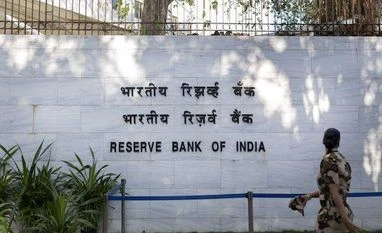
RBI
Manojit Saha Mumbai
6 min read Last Updated : Aug 20 2021 | 12:28 AM IST
Since the announcement of the monetary policy review in the first week of August, most market participants interpreted liquidity absorption through the variable reverse repo auction (VRRR) as an indication that the Reserve Bank of India (RBI) has started unwinding its ultra-loose monetary policy.

In other words, the central bank seems to have started tapering the easy money policy that started with the nationwide lockdown imposed in the last week of March 2020 to curb the spread of coronavirus.

The yields on the 10-year government paper rose as much as 4 bps immediately after the VRRR announcement on August 6.

RBI governor Shakikanta Das, while announcing the review of the monetary policy on August 6, said the central bank has decided to conduct fortnightly VRRR auctions of Rs 2.5 trillion on August 13, 2021, Rs 3 trillion on August 27, 2021, Rs 3.5 trillion on September 9, 2021, and Rs 4 trillion on September 24, 2021.

The market mood changed abruptly following the announcement even as Governor Das categorically stated that "these enhanced VRRR auctions should not be misread as a reversal of the accommodative policy stance".

In the recently released monthly bulletin on Tuesday, the article on the ‘state of the economy’ dwells why the market perception misread the VRRR announcement.

“In response [to the VRRR announcement], a section of the media has sought to resurrect the ghosts of January 11, 2021 when markets misread the first announcement of a VRRR auction of Rs 2 lakh crore as liquidity tightening. Those fears proved unfounded,” the article said, which is authored by a host of central bank researchers, including deputy governor in-charge of monetary policy Michael Patra. The ‘state of the economy’, report which has become a permanent fixture of the monthly bulletin after the outbreak of Covid, comes with a disclosure: “Views expressed in this article are those of the authors and do not necessarily represent the views of the Reserve Bank of India.”

“This time around in certain sections, the VRRR time path has been linked to the upward adjustment in the inflation forecast and misconstrued as more than coincidence,” the article said.

In order to clear the air, the article comes out with a strong rebuttal on the perception that the 14-day VRRR was an indication of policy normalisation. To start with, the authors said, the suggestion to increase the amount of VRRR came from market participants in the pre-policy consultative meetings, presumably to avoid ‘lazy’ banking.

“We believe that the request is justified from the point of view of participants who plan their liquidity operations well and seek a reward for time preference in the form of higher remuneration, as opposed to ‘idle’ banking which procrastinates in favour of parking lazily in the fixed rate reverse repo on an overnight basis,” the report said.

The second point that the article highlighted is that the choice of variable rate auction or fixed rate reverse repo is entirely with market participants.

“They [market participants] can ab initio opt for the overnight fixed rate reverse repo or even if they have placed funds with the Reserve Bank for 14 days, they can withdraw at the end of the auction tenor and either park them at the fixed rate overnight window or deploy them in the market,” it said.

And finally, the report said the notion of VRRRs being a liquidity withdrawal tool by ‘stealth’ is absurd when the RBI is simultaneously committing to conduct GSAP (Government Securities Acquisition Programme) and other liquidity injecting operations.

The February 2020 circular

One important distinction that the central bank made when it announced liquidity facilities under revised Liquidity Management Framework in February 2020 was between temporary liquidity and durable liquidity.

The 14-day variable repo/reverse repo auction was categorised as instruments to manage short term or transient liquidity. When the tenor of VRRR is more than 14 days, the objective is to manage durable liquidity.

By announcing a 14-day variable repo rate auction, the message was clear from the central bank. They do not want to disturb the durable liquidity; it is the temporary liquidity surplus that they want to absorb. One of the reasons behind this temporary surplus is lack of government spending.

Narrowing rate corridor

One of the objectives behind announcing this particular measure was also to align the overnight rates to the repo rate. The central bank had a view, since the current monetary policy framework is in place, that the weighted average call rate should hover around the repo rate.

Since the Covid-19 pandemic broke out in March 2020, which prompted the ultra-loose monetary policy characterised by low interest rates and abundant liquidity, the overnight rates are actually around the reverse repo rate. The reverse rate is 65 bps lower than the repo rate, as against 25 bps gap during normal times.

“Regarding liquidity management, RBI has maintained that the resumption of its Variable rate reverse repo (VRRR) auctions should not be misread as a reversal of the accommodative policy stance, as the amount absorbed under the fixed rate reverse repo is expected to remain more than Rs 4.0 lakh crore at end-September 2021. This decision will push up short term rates towards repo rate,” said Soumya Kanti Ghosh, Group Chief Economic Adviser, State Bank of India in a note.

Beyond the VRRR announcement, there was another issue, as interpreted by the market, as an indication of withdrawal from the accommodative stance.

Jayanth Varma, one of the external members of the six-member monetary policy committee, did not agree with the decision to maintain the accommodative stance, though he voted in favour of holding interest rates, along with the five other members. The key policy rate or the repo rate was left unchanged at 4%.

“While the MPC’s rate action was along expected lines, the VRRR decision and one committee member voting against accommodative stance were early signs of normalization,” said Anagha Deodhar – Chief Economist, ICICI Securities. “We expect the normalisation to continue with the RBI hiking reverse repo rate in two steps starting early next year,” she said.

What exactly was the concern of Varma, who is a professor of Indian Institute of Management, Ahmedabad, will only be known once the minutes of the August policy review meeting is published, scheduled tomorrow (August 20).

One subscription. Two world-class reads.

Already subscribed? Log in

Subscribe to read the full story →
*Subscribe to Business Standard digital and get complimentary access to The New York Times

Smart Quarterly

₹900

3 Months

₹300/Month

SAVE 25%

Smart Essential

₹2,700

1 Year

₹225/Month

SAVE 46%
*Complimentary New York Times access for the 2nd year will be given after 12 months

Super Saver

₹3,900

2 Years

₹162/Month

Subscribe

Renews automatically, cancel anytime

Here’s what’s included in our digital subscription plans

Exclusive premium stories online

  • Over 30 premium stories daily, handpicked by our editors

Complimentary Access to The New York Times

  • News, Games, Cooking, Audio, Wirecutter & The Athletic

Business Standard Epaper

  • Digital replica of our daily newspaper — with options to read, save, and share

Curated Newsletters

  • Insights on markets, finance, politics, tech, and more delivered to your inbox

Market Analysis & Investment Insights

  • In-depth market analysis & insights with access to The Smart Investor

Archives

  • Repository of articles and publications dating back to 1997

Ad-free Reading

  • Uninterrupted reading experience with no advertisements

Seamless Access Across All Devices

  • Access Business Standard across devices — mobile, tablet, or PC, via web or app

Topics :Reserve Bank of Indiamonetary policy

Next Story



