Some of the biggest news in exercise science this year concerned the tiniest impacts from physical activity, which does not mean that the impacts were inconsequential. It means they were microscopic.
We learned this year, for instance, that exercise changes how our cells communicate with one another, as well as how rapidly they age. This new research began to detail the many, pervasive ways in which working out alters the inner workings of our bodies and contributes to better health.
There were other, broader themes, too, in 2018’s fitness-related science, including about how older people can be enviably youthful if they are active and the unexpected roles that weight training may play in our health.
But for me, the most exciting exercise research in 2018 went small. A study that I wrote about in January, for instance, found that people’s blood contained more of certain vesicles, which are tiny bubbles filled with biological material, after aerobic exercise.
When the scientists subsequently isolated these vesicles in mice and tagged them with a dye that glows, they tracked where they went and discovered that most homed in on the liver. There, the vesicles entered the organ, dissolved and delivered a load of biological stuff, including snippets of genetic material that can supply messages to other genetic material.
In this way, the scientists speculate, the vesicles probably delivered a biological alert to the liver, letting it know that exercise was underway, and it might want to start releasing stored energy for use by other, working tissues, like the muscles.
This study is a bracing reminder that multiple far-flung bodily systems are involved when we move and they all must communicate, but the process is bogglingly complex and, for the most part, still to be mapped.
A similar message emerged from other studies I wrote about this year, although they delved into how, at a molecular level, exercise makes us healthier. It does, of course. People who exercise tend to live longer and with far fewer diseases and disabilities than people who do not.
But we do not fully understand the many underlying biological steps involved. A study I wrote about just last week examined one small piece of this puzzle, involving the levels of hundreds of different proteins in the bloodstreams of people who regularly exercise or not.
And there were differences. People who exercised had more and less of multiple proteins, which matters, since proteins spur other biological operations throughout the body. In effect, aspects of the exercisers’ everyday physiology appear to be unlike those of people who are sedentary.
So, too, the look and to some extent the “age” of their chromosomes may be different, according to another study I covered this year.
It found that sedentary, middle-aged people who took up aerobic exercise for six months developed longer telomeres in their white blood cells. Telomeres are the tiny caps on the ends of chromosomes that protect our DNA from damage during cell division. Telomeres shorten as a cell ages, until they are so abbreviated that the cell cannot function and often dies. Lengthy telomeres, on the other hand, are thought to denote relative cell youth and vigour.
In this study, aerobic exercise appears to have lengthened people’s telomeres, almost dialing back time.
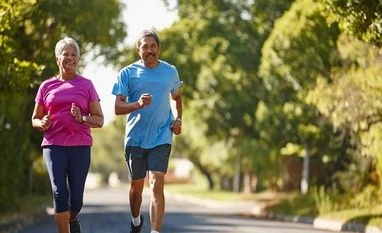
If that finding doesn’t motivate all of us to want to move more, several other studies from this year that looked at exercising and aging using a wider lens probably should. One, from March, showed that older cyclists had immune systems that resembled those of much younger people, as well as muscles that retained a youthful size and fiber content, even among the riders who were well into their 70s.
So, too, older recreational athletes displayed the muscles of much younger people in another study I covered, this one from November, and it found, too, that people who had been working out for decades had the aerobic fitness of whippersnappers 30 years their juniors.
©2018 The New York Times News Service

 "How exercise keeps us young")












 Connect with us on WhatsApp