
Oil rises on optimism Omicron impact will be limited on fuel demand
Oil prices rose helped by growing optimism that the Omicron coronavirus variant's impact will be limited on global economic growth and fuel demand.
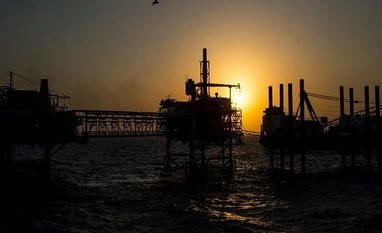 "Oil rises on optimism Omicron impact will be limited on fuel demand")
WebinarsNew
Deep DiveNew
Explore Business Standard
Oil prices rose helped by growing optimism that the Omicron coronavirus variant's impact will be limited on global economic growth and fuel demand.
Oil prices rose on Monday, extending gains from last Friday, helped by growing optimism that the Omicron coronavirus variant's impact will be limited on global economic growth and fuel demand.
Brent futures climbed 53 cents, or 0.7%, to $75.68 a barrel by 0100 GMT, after rising 1% on Friday.
U.S. West Texas Intermediate (WTI) gained 69 cents, or 1.0%, to $72.36 a barrel, following a 1% increase in the previous session.
Both benchmarks posted gains of about 8% last week, their first weekly gain in seven. They have recovered more than half the losses suffered since the Omicron outbreak on Nov. 25.
"Market sentiment has improved as the threat of the Omicron variant has receded," said Toshitaka Tazawa, an analyst at Fujitomi Securities Co Ltd.
"WTI will probably test its recent high of $73.34 and then try to rise towards $78, the level before the Omicron fears led to a sharp sell-off late last month," he said.
South African scientists see no sign that the Omicron variant is causing more severe illness, they said on Friday, as officials announced plans to roll out vaccine boosters with daily infections approaching an all-time high.
Booster COVID-19 shots significantly restore protection against mild disease caused by the Omicron variant, the UK Health Security Agency said on Friday.
Still, investors remained cautious on the U.S.-led coordinated release of crude reserve by oil consuming countries as well as tensions between Russia and Ukraine.
The U.S. Department of Energy said on Friday it will sell 18 million barrels of crude oil from its strategic petroleum reserve (SPR) on Dec. 17, as part of a previous plan to try to reduce gasoline prices.
On Sunday, the Group of Seven warned in a statement that Russia faces massive consequences and severe costs if President Vladimir Putin attacks Ukraine.
U.S. intelligence assesses that Russia could be planning a multi-front offensive on Ukraine as early as next year, involving up to 175,000 troops.
Meanwhile, Iraq's oil minister said on Sunday he expected the Organisation of the Petroleum Exporting Countries (OPEC) at its next meeting to maintain its current policy of gradual monthly increases in supply by 400,000 bpd.
(Reporting by Yuka Obayashi; Editing by Stephen Coates)
(Only the headline and picture of this report may have been reworked by the Business Standard staff; the rest of the content is auto-generated from a syndicated feed.)
First Published: Dec 13 2021 | 8:16 AM IST


 Connect with us on WhatsApp