While Delhi burns

The state security apparatus dithers

delhi
Business Standard Editorial Comment Mumbai
3 min read Last Updated : Mar 06 2020 | 2:51 PM IST
The unedifying spectacle of public property and religious sites being torched, and mobs throwing stones and attacking journalists just 16 km from the lavish pageantry of US President Donald Trump’s state visit rudely contradicts the government’s claim that the situation is under control. Those images of rioting and arson in the national capital — and not some distant outpost — were witnessed by the world press accompanying the US president. Their reports are unlikely to instil confidence in the investing community, more so when the ineptitude of the Delhi police, the first line of citizens’ security, was on public display. The carnage that has left at least 24 people dead and hundreds injured, cannot be attributed to some incompetent state administration. The Delhi police comes under the Union home minister, with a wide array of security services at its disposal. The fact that the government had to give National Security Adviser Ajit Doval the mandate to restore normalcy does not speak well about the police.

Raisina Hill chose to stand inert when a disqualified Aam Aadmi Party (AAP) MLA-turned Bharatiya Janata Party tough issued an “ultimatum” to the Delhi Police to clear the roads of peaceful protestors against the Citizenship Amendment Act (CAA) or face the consequences after Mr Trump’s visit. The fact that this incendiary statement was made in the presence of a senior police official is noteworthy: Clearly, Kapil Mishra felt a measure of impunity for triggering the rioting that preceded his timetable. He remains at large and continues to tweet defiantly pointing to extraordinary forbearance by a police force that swiftly arrested students at the Jawaharlal Nehru University on the slimmest of pretexts under sedition laws. The law courts have defined sedition as a crime that provokes just the kind of law and order problem that Mr Mishra precipitated.

Equally, Home Minister Amit Shah has much to answer for. He would have been well aware of the febrile and stubborn nature of the CAA protests from Shaheen Bagh, which he targeted unsuccessfully during the Delhi Assembly election campaign. He did well by skipping Mr Trump’s Rashtrapati Bhavan reception to manage the situation in north-east Delhi, but TV images relayed the conspicuous absence of the police or outright collusion with rowdies on occasion. Even then Mr Shah did not think it necessary to call in the military or paramilitary forces, which have a sufficiently large presence around the capital to be mobilised at short notice. It is certainly bizarre that the high court had to be mobilised — in the middle of the night — to order the police to organise the transport of injured people to better-equipped hospitals and restore law and order, in short to do its job. The media briefing from the government on Wednesday did not help. The environment minister launched into a tirade against the Congress (for the 1984 anti-Sikh riots) and admonished the press for “demoralising” the police. And the appeal from Prime Minister Narendra Modi to restore normalcy came a bit late in the day.

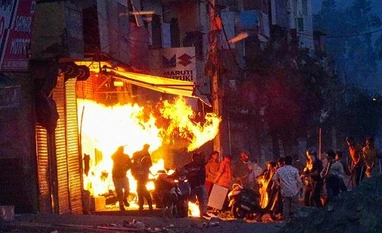
Arguments over whether anti-CAA protestors, AAP members or freelance defenders of the Hindu faith were responsible for the rioting are beside the point. Blame-gaming is a popular political ruse but the time for it has passed. It is urgent that the emergency meeting of the Cabinet looks for ways to lower the political temperature, restore law and order, and prove that the government functions for all Indians, not just those who profess its majoritarian beliefs.


One subscription. Two world-class reads.

Already subscribed? Log in

Subscribe to read the full story →
*Subscribe to Business Standard digital and get complimentary access to The New York Times

Smart Quarterly

₹900

3 Months

₹300/Month

SAVE 25%

Smart Essential

₹2,700

1 Year

₹225/Month

SAVE 46%
*Complimentary New York Times access for the 2nd year will be given after 12 months

Super Saver

₹3,900

2 Years

₹162/Month

Subscribe

Renews automatically, cancel anytime

Here’s what’s included in our digital subscription plans

Exclusive premium stories online

  • Over 30 premium stories daily, handpicked by our editors

Complimentary Access to The New York Times

  • News, Games, Cooking, Audio, Wirecutter & The Athletic

Business Standard Epaper

  • Digital replica of our daily newspaper — with options to read, save, and share

Curated Newsletters

  • Insights on markets, finance, politics, tech, and more delivered to your inbox

Market Analysis & Investment Insights

  • In-depth market analysis & insights with access to The Smart Investor

Archives

  • Repository of articles and publications dating back to 1997

Ad-free Reading

  • Uninterrupted reading experience with no advertisements

Seamless Access Across All Devices

  • Access Business Standard across devices — mobile, tablet, or PC, via web or app

Topics :Delhi Riots 2020DelhiAAPBJPBS Opinion

Next Story




