Any entity providing banking services needs to follow regulations meant for banks, said T Rabi Sankar, deputy governor of Reserve Bank of India (RBI), on Thursday.
Non-bank entities outside the regulatory purview cannot be allowed to undermine the banking system, he said at the Business Standard BFSI Insight Summit.
“The entity-based regulation of banks, with its focus on health parameters like capital adequacy, leverage, liquidity, or financial integrity requirements like KYC, AML, CFT, is required to be adapted to the co-existence of fintech entities that are not subject to the same regulatory requirements. The concept of activity-based regulations with the basic theme of same activity, same regulation has in this context gained currency,” Rabi Sankar said.
“The fundamental point is that any entity providing banking services needs to be subject to similar regulations as bank.” A non-bank undertaking banking functions needs to be licensed and regulated like banks. Without the licence, it should not be allowed to undertake banking activities.
Rabi Sankar made the statements in the context of a RBI clarification in June that said prepaid cards cannot be loaded by credit lines. The clarification wreaked havoc in the fintech sector where a large number of entities had based their business model on loading credit through prepaid cards.
“This in essence is what RBI did when it clarified that prepaid instruments cannot be funded out of credit lines because it enabled an entity to undertake a licensed business without a licence. That regulation clearly established the principle of same activity, same regulation,” he said.
An arrangement where regulations for non-banks and fintechs are not aligned with those for regulated financial firms, like banks or their subsidiaries, will create inefficiencies and risks associated with regulatory arbitrage, he added.
The rise of fintech, open banking, lending platforms and payment apps has disrupted traditional banking and brought new challenges for the regulator, experts have said before.
RBI’s approach to fintech has three principles. First, innovation needs to be encouraged. Second, innovation needs to be assimilated in the financial system without disruption. Third, customers have to be protected.
“No regulator has the luxury of letting innovation disrupt the financial system in the hope that the market might reach its own equilibrium eventually,” Rabi Sankar said.
“A key element for smooth absorption of new technology is to ensure a level-playing field. If offering credit cards requires a banking license, allowing a non-licensed entity to synthesize them would amount to undermining the licensing system and the banking system as this system would then be placed at a competitive disadvantage.”
Cryptocurrencies since May 2022 have lost some of their shine and RBI’s warning about them was motivated by policy sovereignty and the need to protect uninformed investors, he said.
“RBI was perhaps the first central bank to call for a complete prohibition of cryptocurrencies in India. It is now recognised globally that a total ban is a valid policy option for any country. It is a distinct policy that the ambiguous or equivocal stance of regulators or authorities globally has contributed to the surge in demand and valuation of crypto products in the last two years. RBI’s caution has contained the damage in India.”

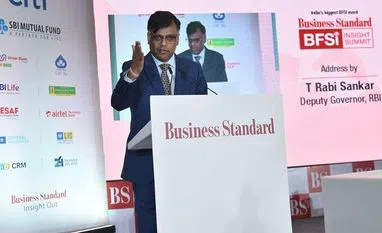 "All entities providing banking service subject to same rules: RBI Dy Guv")












 Connect with us on WhatsApp