Rising cyberthreats a real concern, say fintech players at BFSI summit

The growing cyberattacks across the finance world as well as business in general is making senior executives more aware of the need for security
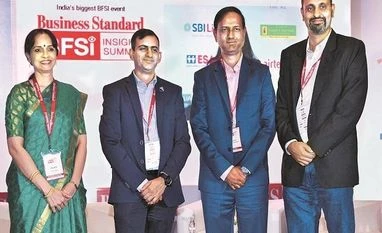
BFSI insight summit 2022
(From left) Rajsri Rengan, head of development — banking & payments — India & the Philippines, FIS; Akshay Mehrotra, co-founder & CEO, Fibe (previously EarlySalary); Ranjeeth Bellary, partner, EY Forensic & Integrity Services; and Anuj Kacker, co-founder, Freo, and executive committee member, Digital Lenders Association of India. Photo: Kamlesh Pednekar
BS Reporters
4 min read Last Updated : Dec 22 2022 | 12:02 AM IST
Financial institutions are 300 times more vulnerable to cyberattacks than any other industry and the cost of remediating a cyberattack is 40 per cent more than any other industry, said a recent study. It has been time and again proven that one of the main reasons for a malicious attacker entering a financial network is for financial gains. 

The growing cyberattacks across the finance world as well as business in general is making senior executives more aware of the need for security.

“In fact, our chief security officer recently remarked that earlier he would meet the board of directors of companies probably once a year for 20 minutes, but now the amount of interaction that we see with the board is 30 minutes every month. Cyber security is something that is playing on the minds of everyone,” said Rajsri Rengan, head of development — banking and payments — India and Philippines FIS, at the Business Standard BFSI Insight Summit.

Ranjeeth Bellary, partner, EY Forensic and Integrity Services, said: “Statistically cybercrime today is the largest in terms of monetary value. When it comes to crime it has surpassed illegal drug trafficking, which used to be a top, in terms of, crime. When it comes to (the) banking industry, there’s…(a lot)…of valuable information that hackers can have in terms of individual users' data, etc.”

For cyber incidents, some responsibility also lies with individual users when they are not conscious about sharing personal data, whether online or in person, he said.

“When it comes to the banking industry, I think security is a very regulated aspect and, hence, the sector has evolved from that perspective. Also many fintechs have been very nimble, very agile in terms of adopting security,” Bellary said.

He agreed that security as an aspect is not restricted to the size of a company.

The topic of the session was ‘Who’s leading the way in banking technology?’ 

Proactively building for change is an ingrained practice, said Akshay Mehrotra, co-founder and CEO of Fibe (formerly EarlySalary).

“We believe that every three years technology changes. And we have to destroy what we have built ground up. In fact, as on today morning, we rolled out our Version 3, where we destroyed every piece of railroad tech that we built before. This means the new platform is far more stable. It’s meant to handle maybe 20x, customers, and take us through the next three years’ growth. It also meant to be far more secure. It’s based on a conceptual conversational UI (user interface), which means that every new consumer is different and every time I converse, I can modify my platform to cater to them,” he said.

Every fintech company wants to be a bank, and banks are eyeing the agility of a fintech firm, said Anuj Kacker, co-founder Freo, a neo bank, and executive committee member of Digital Lenders Association of India (DLAI). “If that be the case, then why should customer security be treated differently.”

He pointed out the recent guidelines of the Reserve Bank of India (RBI), the cornerstone of which was customer protection and customer data privacy.

The panel welcomed the recent RBI guidelines on the digital lending segment. Mehrotra said this was for the first time that a guideline is proactively seeing how to build business. “It is coming very early in the life of the sector. Usually this happens when the sector is (worth) a few billion dollars... It’s given a clear pathway on how to build a company, and more importantly how to structure your organisation in the correct manner. How does the interaction between risks, customer and technology have to be created? Whenever the regulator puts clear parts, you see those markets expanding dramatically fast, we saw that with UPI (unified payment interface),” he added.

The clarity that these guidelines have provided the players, Mehrotra believes, is that the lending sector could be a $1-trillion industry within the next three years.

One subscription. Two world-class reads.

Already subscribed? Log in

Subscribe to read the full story →
*Subscribe to Business Standard digital and get complimentary access to The New York Times

Smart Quarterly

₹900

3 Months

₹300/Month

SAVE 25%

Smart Essential

₹2,700

1 Year

₹225/Month

SAVE 46%
*Complimentary New York Times access for the 2nd year will be given after 12 months

Super Saver

₹3,900

2 Years

₹162/Month

Subscribe

Renews automatically, cancel anytime

Here’s what’s included in our digital subscription plans

Exclusive premium stories online

  • Over 30 premium stories daily, handpicked by our editors

Complimentary Access to The New York Times

  • News, Games, Cooking, Audio, Wirecutter & The Athletic

Business Standard Epaper

  • Digital replica of our daily newspaper — with options to read, save, and share

Curated Newsletters

  • Insights on markets, finance, politics, tech, and more delivered to your inbox

Market Analysis & Investment Insights

  • In-depth market analysis & insights with access to The Smart Investor

Archives

  • Repository of articles and publications dating back to 1997

Ad-free Reading

  • Uninterrupted reading experience with no advertisements

Seamless Access Across All Devices

  • Access Business Standard across devices — mobile, tablet, or PC, via web or app

Topics :BFSICyber theftsBusiness StandardFintechfinancial institutions

Next Story



