China-Taiwan relationship hinges more on political outlook than territory

Taiwan is no longer just a regional issue-it is now central to the Chinese Communist Party's legitimacy
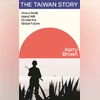
book
Gunjan Singh
5 min read Last Updated : Apr 03 2025 | 12:08 AM IST
The Taiwan Story: How a Small Island Will Dictate the Global Future
Author: Kerry Brown
Publisher: Penguin
Pages: 274
Price: Rs 899 
The Russian invasion of Ukraine has pushed the world to consider the future of Taiwan. It also calls in question the United States’ commitment to defend Taiwan in a similar situation.  In The Taiwan Story: How a Small Island Will Dictate the Global Future, Kerry Brown tries to look for answers for the “Taiwan Question”. He concludes that given that two of the major stakeholders (China and the US) possess nuclear capabilities, any misstep can lead to large-scale damage. Thus, Dr Brown asserts that, “Everyone is a stakeholder in the Taiwan issue. Everyone needs to do what they can to preserve at least some level of stability.”
 
Taiwan, as Dr Brown points out, is no longer a regional issue. With the rise of Xi Jinping and the idea of the “rejuvenation of the Chinese nation”, Taiwan has become crucial for Chinese Communist Party’s (CCP) legitimacy too. “Rejuvenation”, in the CCP’s view, can be achieved only through reunification. For Mr Xi and the CCP, Taiwan is a renegade province that must return to the fold of the motherland, ignoring the fact that this very island is home to 23 million people. These people acknowledge that they are “Taiwanese” and lack any major bond or understanding of what it means to be Chinese.
 
This Taiwanese identity (which is riddled with its own challenges) is distinct from a Chinese identity. The democratisation of the island (which began in 1996) has wrought momentous changes to Taiwan’s social and political structure. These changes, which have had an impact on the ideas of “sovereignty and identity,” are driving the discourse on Taiwan. The idea of “One China” may be crucial for the CCP but the idea that Taiwan is not China is increasingly taking root within the island. Dr Brown writes, “Being called Chinese, for Taiwanese, is like summoning up a shadow shelf, a part of one’s identity that is hostage to forces and assertions that are beyond one’s control.”
 
The author highlights the challenges associated with what it means to be “Taiwanese” today, especially in the geopolitical context. But the island nation is also divided on what this identity is all about. As the author explains, “To be Taiwanese today, therefore, is to be tolerant in terms of values, lifestyle and political or cultural beliefs. But there is a big question mark over just how far this toleration extends.”
 
Complicating this issue is the centrality of Taiwan for global supply chains. Taiwan is an economic powerhouse by virtue of manufacturing more than 60 per cent of the world’s most advanced chips and semiconductors. The author asserts that this was a path chosen by Taipei, given its unique sovereignty challenges. The rise of Beijing as an economic mammoth has pushed Taipei to integrate with it. China today is Taiwan’s largest trading partner. With time, Taiwanese and Chinese economies have become increasingly interconnected. Most Taiwanese governments have attempted to look for alternatives to China, with policies such as the New Southbound Policy (NSP), which have had limited impact, however. The irony of this is not lost on the Taiwanese. The author summarises this feeling when he writes, “The harsh fact is that despite the attempts to diversify and find opportunities elsewhere, Taiwanese maintain their living standards today in good part because of their economic ties with China. They live in a state of constant paradox where the greatest source of threat to their physical safety is also the single largest guarantor of their material well-being.”
 
Given the complex nature of this issue, the author argues that there is a need for a coherent policy framework. What limits such an exercise is the lack of contact and understanding of each other. Beijing has broken all channels of communication since the election of Tsai Ing-wen of the Democratic Progressive Party (DPP) in 2016. Today, neither side has any form of direct communication and no awareness of what the other is thinking. Thus, the author rightly highlights that, “...to China’s ‘yes, yes, yes’ on unification, it seems Taiwan has worked itself into a position of forever saying ‘no, no, no’. Nowhere needs a China policy quite as much or as urgently as Taiwan.”
 
For Mr Xi , Taiwanese independence is a red line. The more Taiwan attempts to become distinct and autonomous, the more it challenges Beijing’s sovereignty and Mr Xi’s political aspirations may not leave any manoeuvring space for Taipei. The idea pushed by Mr Xi today can be summed up as: “‘China the Winner’ is Xi’s theme. And for Taiwan that means offering the island a simple choice: Join the winning team today on your terms; or later on ours. But join you will have to.”
 
What makes this book an essential read is the author’s insights, especially his understanding that the conflict would be one based on the notion of “authoritarianism vs democracy and not solely about territory. As he writes, “[The conflict] would be one where the values of the democratic world face those of its most formidable authoritarian opponent. This endows the issue of Taiwan with global importance.” Though the author presents a probable solution, the ambiguity and unpredictability of the China-Taiwan predicament cannot be escaped. Interestingly, Dr Brown’s insistence on using the adjective “country when discussing Taiwan may be misplaced. The term “nation,” which refers to a group of people who share a common identity beyond a geographic region, better encompasses what Taiwan is today and how it perceives itself. 
The reviewer is associate professor, O P Jindal Global University
   

One subscription. Two world-class reads.

Already subscribed? Log in

Subscribe to read the full story →
*Subscribe to Business Standard digital and get complimentary access to The New York Times

Smart Quarterly

₹900

3 Months

₹300/Month

SAVE 25%

Smart Essential

₹2,700

1 Year

₹225/Month

SAVE 46%
*Complimentary New York Times access for the 2nd year will be given after 12 months

Super Saver

₹3,900

2 Years

₹162/Month

Subscribe

Renews automatically, cancel anytime

Here’s what’s included in our digital subscription plans

Exclusive premium stories online

  • Over 30 premium stories daily, handpicked by our editors

Complimentary Access to The New York Times

  • News, Games, Cooking, Audio, Wirecutter & The Athletic

Business Standard Epaper

  • Digital replica of our daily newspaper — with options to read, save, and share

Curated Newsletters

  • Insights on markets, finance, politics, tech, and more delivered to your inbox

Market Analysis & Investment Insights

  • In-depth market analysis & insights with access to The Smart Investor

Archives

  • Repository of articles and publications dating back to 1997

Ad-free Reading

  • Uninterrupted reading experience with no advertisements

Seamless Access Across All Devices

  • Access Business Standard across devices — mobile, tablet, or PC, via web or app

Topics :BookBOOK REVIEWTaiwan

Next Story



