The Art of Decluttering: Ancient Practices for Mordern Living
Decluttering has been a global obsession ever since Marie Kondo told us to keep only what sparks joy. Closets were emptied, storage boxes sold out, and minimalism became a lifestyle. But what if India already had its own wisdom traditions around order, balance, and mindful living, long before tidying up became a trend? That’s the proposition in Bhawana Pingali’s book that looks inward to find solace in nine rituals, granny practices, and crafts that modernity pushed aside.
At the heart of Pingali’s work is the concept of shaucha, or cleanliness, as understood in Indian philosophy. Not just scrubbing surfaces, but a deeper purification of body, mind, emotions, and spirit. Decluttering, she argues, is about freeing our senses from overload, creating space for mindfulness, and reconnecting with ecological rhythms.
The book spotlights forgotten practices that reveal how Indian homes once embodied sustainability and balance. Mustard seed pillows that ease the body and offer better sleep for infants and adults, squatting toilets that align the spine, and cotton sanitary cloths handmade by mothers all make an appearance. Far from nostalgia, Pingali suggests these embodied wisdoms, erased by a generation that sought westernised practices, but remain valuable in an age of disposable living.
Her Telugu and Odiya mixed heritage adds cultural texture as she goes about re-learning practices from her foremothers. She writes about muggu in Telugu for elegant mathematical designs drawn daily with rice flour at the doorstep. These patterns, also known as rangoli, kolam or alpona elsewhere, are both meditative and ecological: They feed ants and birds, vanish with the morning wash, and are redrawn anew. Each design is a fleeting artwork, reminding us of impermanence and the quiet beauty of daily ritual.
Clothing, too, gets reimagined. Against the tide of fast fashion, Pingali restores dignity to the acts of mending and repurposing. She highlights the skill of rafugars, traditional darners whose work was once prized, and recalls her grandmother’s bifurcated sari, a drape adapted to practicality. Stitching, knitting, quilting, or kantha embroidery are framed not only as hand skills but as emotional therapies, sisterhood practices that strengthen connections.
In her family’s Odia home, evenings meant lighting jhuna resin. Across India, incense or ritual scents are burnt as a way to shift energy at dusk. For Pingali, these are sensory resets that aid in decluttering the atmosphere of the home. Even something as simple as walking barefoot becomes an act of grounding, reconnecting body and earth.
Unlike prescriptive self-help manuals, Pingali doesn’t offer a rigid method. Instead, each section ends with suggestions on how to adapt rituals today: a simple rice-flour design as a morning mindfulness practice, an evening incense ritual, or learning to darn an old shirt instead of discarding it. The reader is encouraged to find their own rituals for decluttering, sustainability, and mindfulness, rather than copy-pasting traditions.
Kondo asks whether an object sparks joy for the individual. Pingali asks how an object fits into a larger ecosystem of needs, memory, and responsibility. A brass lamp may not spark joy each day, but it holds cultural continuity. A repaired cushion may lack glamour but carries ecological value. Her philosophy is less about ruthless minimalism than mindful connectedness.
The writing is warm and often wry, peppered with personal anecdotes. She admits that decluttering is messy and emotional, and that modern lives resist easy fixes. This honesty makes the book feel more companionable than doctrinaire.
If the book has a quiet manifesto, it is this: India has always known how to live lightly. Our traditions of craft, ritual, and cyclical living carried ecological wisdom long before sustainability became a buzzword. Decluttering, Pingali shows, isn’t a chic trend to import from elsewhere. It is part of our cultural inheritance, waiting to be rediscovered.
For readers weary of the relentless self-help aisle, Pingali offers something gentler and more rooted. Her book is part cultural history, part manual, part meditation. If Marie Kondo helped the world fold its shirts, Bhawana Pingali helps us unfold our inheritances, ritual by ritual, stitch by stitch, day by day.

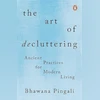 "Decluttering, Indian style: Bhawana Pingali revives forgotten rituals")










 Connect with us on WhatsApp