Ghost Nation: The Story of Taiwan and Its Struggle for Survival
We live in a post-morality world that has perfected the art of forgetting while remembering. Month after month, year after year, annexations continue, bombings remain ceaseless, ceasefires come and go, and the world, which once promised to “never again” let it happen, actively propagates such violence. The world watches, condemns, and then moves on to the next crisis. In this world of collective amnesia, what’s one more Ukraine, one more Palestine? One more Taiwan?
Chris Horton’s Ghost Nation chooses a different premise. The book assumes, correctly, that we live in a world where moral arguments have been rendered impotent. Morality should be reason enough, but Mr Horton doesn’t solely appeal to our better angels, for he assumes they’ve been permanently grounded. Instead, he speaks to our more reliable motivations: Economic anxiety, the fear of systemic collapse.
What if China were to annex Taiwan tomorrow? Taiwan produces over 60 per cent of the world’s semiconductors and 90 per cent of the most advanced chips — every smartphone, every car, every data centre, therefore, depends on Taiwanese ingenuity. “In today’s hyper-globalised world, nearly every country, from basic commodities exporters up to the most developed economies, would experience an economic pain that would make the recent pandemic seem mild,”
But to understand how Taiwan became this indispensable yet abandoned nation, Mr Horton traces a pattern as old as the island itself. Beginning with 17th-century records, Taiwan was passed between empires like a trophy, from Chinese dynasties, Dutch traders, Spanish colonisers to Japanese occupiers and ultimately Chiang Kai-shek’s retreating Nationalists, each bringing one form of exploitation or the other. The island has never belonged to itself.
Even today, Taiwan is a part of the Chinese expansionist propaganda, without any consideration of the Taiwanese people or culture. Mr Horton notes, “A popular hashtag for Chinese nationalists when discussing Taiwan online is… ‘keep the island but don’t keep the people’.”
But Taiwanese democracy was a long struggle, emerging through cycles of repression and trauma. The 228 massacre of 1947, for instance, started with a cigarette vendor’s refusal to pay tribute and escalated into a systematic slaughter as thousands were executed, intellectuals hunted like prey, and neighbourhoods disappeared into military trucks. For nearly four decades, mentioning “228” could mean imprisonment or disappearance. The White Terror that followed had political officers stationed in schools, children reporting on parents, neighbours vanishing without explanation, a nation turning against itself.
And yet, every act of repression clarified what Taiwan was becoming. The White Terror, instead of crushing Taiwanese identity, refined and concentrated it. A society learning to survive under total surveillance learnt the skills democracy would later require: Reading between the lines, trusting networks over institutions.
Taiwanese democracy, as Mr Horton shows, has been tempered by adversity, which led to the creation of one of the freest and most vibrant democracies in the Asia-Pacific region. The island’s protest culture, whether against Japanese colonial rule, KMT ( Kuomintang) authoritarianism, or contemporary democratic governments, shows a civic engagement that China’s surveillance state cannot comprehend or replicate.
A touching moment Mr Horton captures in the initial pages of the book is President Tsai Ing-wen’s 2016 apology to Taiwan’s indigenous peoples, the first such acknowledgment in the island’s modern history. For centuries, these original inhabitants had been erased, renamed, their languages forbidden, their lands stolen. This reckoning goes beyond indigenous rights to Taiwan’s entire colonial inheritance, for more than 16 ethnic groups of original inhabitants survive, some numbering fewer than 500 individuals. Their stories are Taiwan’s stories: Of survival and persistence against overwhelming odds. This persistence also poses questions that Chinese nationalism cannot answer: If Taiwan has “always” been Chinese territory, why do these Austronesian peoples exist here at all?
Beijing’s patience wears thin. Incursions by China have exploded from fewer than 20 in 2019 to more than 3,000 in 2024, relentless psychological warfare meant to drain Taiwanese resources and morale. The message being passed is explicit: Resistance is futile, capitulation inevitable.
But it is “not the CCP that has erased Taiwan,” Mr Horton writes, “It is us: the liberal democracies, the developed economies, the supposed friends of Taiwan.” Strategic ambiguity, that diplomatic masterpiece of having it both ways, has curdled into strategic abandonment. Twenty-three million people exist in diplomatic limbo while their supposed allies calculate whether democracy is worth inconveniencing Beijing over.
Taiwan offers a living counterargument to authoritarian claims that democracy and economic growth cannot coexist. By ghosting Taiwan, Mr Horton suggests, the “liberal” world sabotages its own credibility.
Ghost Nation refuses to treat Taiwan as a mere diplomatic chess piece or economic asset. Within these pages, Taiwan comes across as simultaneously one of the most advanced technological societies on earth and one of the most diplomatically isolated, a booming democracy that most democratic nations pretend doesn’t exist, a living refutation of Chinese authoritarianism that Chinese allies systematically ignore.
Taiwan stands as proof that some things — freedom, dignity — are worth defending. Will the world finally see Taiwan? Or will it remain forever a ghost nation, visible only in the moment of its disappearance?

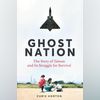 "Ghost Nation: By ignoring Taiwan, the world is eroding its own morality")












 Connect with us on WhatsApp