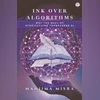
Ink Over Algorithms: Why the Soul
of Storytelling Transcends AI
by Manjima Misra
Published by Highbrow Scribes Publications
95 pages ₹399
I recently completed a training that equips media professionals with practical artificial intelligence (AI) skills to enhance efficiency, boost productivity and support the adoption of technology for a future-ready workforce. Reading author and educator Manjima Misra’s latest book exploring the intersection of AI with narratology, creative writing, feminism and law reiterated some of these learnings. Focusing on the importance of storytelling, the book offers a balanced assessment of both AI’s capacities and limitations.
At the very outset, Ms Misra emphasises the uniqueness of the human voice in creative writing, taking examples of extracts from timeless classics to make her point. In the chapter on human-AI collaboration, she discusses several ways in which AI is useful, including brainstorming plots, refining drafts, accelerating workflows, offering novel prompts, creating dialogues and making research more efficient. For instance, AI tools such as ChatGPT can be used to name characters based on genres and personalities as well as name and describe places and settings in novels. Ms Misra adds that since linguistic production differs across AI tools, it would benefit writers to synthesise their best aspects instead of restricting
oneself to a specific AI tool for collaborative writing.
Another interesting human-AI collaboration could be in the sphere of human educators collaborating with AI tools to develop learners’ writing skills. “AI tools can provide students with a wide variety of prompts — in written, image and video formats, which can be further utilised to ignite students’ imagination,” Ms Misra writes. However, she adds that a writer needs to exercise one’s discretion while refining the sentence structure to make it more readable and comprehensible.
Ms Misra goes on to describe the creative writing-enabled brain of AI, elucidating that AI basically works on an input-output based model, and that machine learning is all about finding patterns from real-world sources. While analysing ethical and legal considerations in AI-assisted writing, Ms Misra also emphasises the fact that the act of presenting AI-generated content as one’s own work without attribution raises ethical concerns. “It undermines the principle of intellectual honesty and misrepresents the writer’s creative contribution,” she writes.
In the section on news writing with AI, Ms Misra highlights issues of truth and accountability, warning us of the potential for misinformation, algorithmic bias and fact-checking inaccuracies. News organisations could benefit from using AI as a research assistant, data gleaner, and distribution agent. “AI tools can also be used to translate with accuracy, summarise with a level of audience-based customisation, generate representational images with full disclosure, create video elements and audio where footage or clips are not available, as well as for marketing mailers, social posts, visualisations…but always with a human in the loop,” as Nandagopal Rajan, chief operating officer of The Indian Express sums it up.
According to the 2023 Global Gender Gap Report, only 30 per cent of women work in the field of AI. “AI systems trained on data primarily created by men, and based on men, are highly likely to generate content that mirrors and amplifies gender bias,” writes Ms Misra. In the chapter on feminism and AI-driven storytelling, Ms Misra questions how we can protect women’s voices in an increasingly automated culture, and whether AI can be a tool for feminist empowerment.
Ms Misra also devotes a chapter to the role of AI in children’s literature. She believes that AI presents a compelling opportunity to challenge and transform traditional frameworks of fairytales into more inclusive, diverse and representative narratives. Ms Misra provides several examples of how AI has rewritten more nuanced versions of fairytales, challenging many stereotypes, exploring complex moral dilemmas and reimagining story endings. She also shows how AI can adapt stories to different cultural contexts, geographical settings and languages based on prompts. “By embracing a symbiotic approach and addressing the ethical considerations that arise, we can harness the power of AI to create a future where all children have access to stories that reflect their experiences, inspire their imaginations and empower them to create a more just and equitable world,” writes Ms Misra.
Filled with a number of insightful observations from various people in the field, the book is an essential read for students, writers, technologists, educators and policymakers. Ms Misra proves throughout the book that storytelling is a deeply human act. Rather than competing with AI, she urges writers to curate, question and craft with it — though with caution. In a sense, the book comes as a timely call to embrace AI as an assistant rather than a replacement — “a tool that enhances our capabilities but cannot replace our humanity,” as writer Ahtushi Deshpande explains in the book’s Foreword.
The reviewer is a New Delhi-based freelance writer