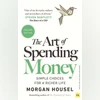
The Art of Spending Money: Simple choices for a richer life
by Morgan Housel
Published by Harriman House
254 pages ₹318
Personal finance literature typically focuses on topics like saving, debt reduction, investing, and wealth accumulation. Morgan Housel, whose first two books collectively sold more than 11 million copies, has chosen a topic for his third that is highly relevant amid growing prosperity: How to spend money wisely.
People, says Mr Housel, rarely make grave spending mistakes when trying to meet basic needs. Misjudgments arise once they graduate to the realm of discretionary spending.
Even after leaving deprivation far behind, many engage in a mindless, unending scramble to accumulate and consume more, assuming this will translate into greater happiness. The author warns that such an approach risks leaving people in their later years with regret at having neglected the pursuits that might have nourished their souls and brought lasting fulfilment. The panacea, he suggests, is to make well-thought-out choices that minimise regret at the end.
A central theme of the book is that most people do not use money as a tool to acquire a happy, contented, and comfortable life. Instead, some turn it into a yardstick to measure how successful they are vis-à-vis others.
Many spend in a manner they believe is in keeping with society’s expectations. As a young valet at a luxury hotel in Los Angeles, Mr Housel watched someone pay $21,000 in an auction for a chair. Seeing the disbelief on the faces of the valets, the man responded, “That’s what you are supposed to do when you are rich.” Mr Housel warns against falling into such conformity traps.
Using money to elicit admiration is another futile pursuit. A newly purchased luxury car may attract attention — more likely envy — from colleagues on the first day a person drives it to office. But within a month, the vehicle evokes a yawn. Inevitably, after a while, someone else drives in with a swankier model that becomes the cynosure of all eyes. The pursuit of validation through possessions is, thus, a game that can never be won. Moreover, those closest to us — our parents, spouse, children and close friends — are hardly likely to hold us in higher esteem for possessing a more expensive car. The author advocates spending on goods for their utility and the joy they bring us, instead of trying to acquire status through them.
Early-life experiences shape spending behaviour. The author cites the example of a businessman who grew up poor. Once he had made it, he encouraged his daughter to select the most expensive college among the ones to which she had gained admission. To him, the high fee felt like a social trophy that he could display and wash away any shame he felt about his earlier impecunity.
Another case the author cites is of a former teacher turned financial educator who suffered from what she called “post-traumatic broke syndrome”. She had suffered grinding poverty for so long, and that experience had been so painful, that she lived in constant fear of reverting to the same status. This made it difficult for her to spend despite her affluence.
The two stories illustrate how deeply embedded emotional scripts dictate financial decisions long after circumstances have changed. One needs to be conscious of them and try to overcome their subliminal influence with logic and objectivity.
The book discusses the concept of the “hedonic treadmill”. People overestimate how much happiness a new possession will bring. After an initial bump, pleasure wanes and attention shifts to acquiring the next big material prize. Happiness, according to the author, is the gap between current reality and expectations. Instead of relentlessly striving for more, he advocates that people learn to dial down expectations if they are to ever experience contentment. They must train themselves to enjoy their current possessions and stop pegging happiness to the next grand purchase.
Mr Housel reminds readers that beyond a certain threshold, income ceases to be the primary determinant of well-being. Good health, restful sleep, a loving spouse, well-behaved children, meaningful friendships, and a sense of belonging and purpose contribute far more to lasting happiness. But these cannot be bought off the shelf. They must be earned by investing time and effort. Alas, the relentless pursuit of financial success often crowds out these goals.
Another significant insight the author offers is the need to reframe saving and investing. Rather than viewing them as deferral of consumption, he suggests treating them as deposits towards earning financial independence, which he defines as the freedom to spend one’s time on work that is meaningful and in the company of people one cherishes.
As India turns more prosperous, many of the spending pitfalls Mr Housel highlights are becoming increasingly visible. His book, which advocates moderation, balance, and the need to focus on internal benchmarks rather than external comparisons, comes as a timely reminder that money must work for us instead of dictating our life choices.