India, targeting for its major role in its imports and exports and focus on the internal logistics policy to optimise ease and speed, the need is also to look overseas on the major route for cargo being ocean-going ships. Their insurance on date is 90 per cent by the London-based International Group of Protection and Indemnity (P&I) clubs. A P&I Club is a mutual insurance association that protects shipowners and operators from third-party liabilities — covering risks such as oil spills, cargo damage, pollution, collisions, and crew injury. These liabilities can amount to billions of dollars, making P&I insurance indispensable for any ship to dock, load, or discharge cargo internationally. For uniform assessment and grievance redressal in getting the claims, a common system may on face value look the best solution but then dependence on just the foreign marine insurers does expose India to the geopolitical shocks, regulatory risks and therefore economic vulnerabilities. The issue now to be on discussion table is to whether India to plan for a sovereign insurance entity to safeguard national trade logistics overseas strengthening the Indian shipping industry.
Understanding why urgency to take baby steps to form P&I for India
There are 13 all-foreign-based IG Clubs that are giving these insurance coverages to the entire vessels operating worldwide. Many a times the treatment is little unfair to the new developing maritime nations. If India works in establishing its system for P&I insurance abilities, it can handhold other emerging nations and join the big club to strengthen the resilience.
The global geopolitical scenarios adversely affect the Indian entities, the recent case being EU sanctions against Russia prompted IG-P&I to avoid servicing certain Indian entities. The dominance of foreign P&I led to influence the operational freedom of developing maritime nations.
The impact of dependence on foreign P&I arrangements
Many a times it has been experienced these arrangements leading to cartelisation with decisions made overseas disrupting cargo flow to the Indian business especially flow to refineries, crude shipments, metals and other goods in Indian waters. This leaves Indian shipment left with literally no choice situations even for those operating only on domestic trade. The Sagarmala dream will be facing the barriers if forced to abide by insurance standards and geopolitical decisions when there is decline of coverage impacted by sanctions thus resulting in vessels losing operational legitimacy and hitting adversely the commercial continuity.
To illustrate how the absence of a local P&I framework is already hurting Indian refiners, take Nayara Energy, for instance — its crude shipments from Europe have been stranded as global P&I insurers, bound by EU and UK sanctions frameworks, withhold coverage. This has not only disrupted supply chains but also exposed the vulnerability of India’s energy logistics to decisions made in foreign capitals. For a company that plays a crucial role in India’s refining ecosystem, the inability to secure insurance — simply because most ships carrying crude are European — highlights how foreign-dominated marine insurance directly undermines India’s energy security. It’s an unsustainable situation that underscores why the creation of an Indian P&I Club is no longer optional but a strategic necessity.
Time to now establish the India Club
With strong history of insurance experience in public sector and now entering of private sector in both life and general sectors, for India to have a sovereign Indian P&I Club is not a difficult option. The need to ringfence the vulnerability of Indian ship operators. The Ministry of Ports, Shipping and Waterways is taking the initiative designed around a mutual insurance model that will enable Indian shipowners to pool their premiums and thus share claim risks for both the domestic and overseas operation within this framework.
Strategic and economic advantages
The advantages of establishing India Club extend well beyond insurance. It would fortify India’s maritime self-reliance in an era when energy flows and trade corridors are weaponised. By localising marine insurance, India secures a sovereign layer of protection for its refineries, ports, and cargo chains — ensuring continuity even amid global volatility.
A successful India Club could eventually evolve into a South-South insurance framework, collaborating with non-Western partners to challenge the western-centric monopoly of the IG system. China and Russia have both developed their own P&I clubs to insulate maritime trade from sanctions pressures — a precedent India can build upon.
For India Club to thrive, policymaking must be anchored in three interconnected pillars that build a robust and self-reliant marine insurance ecosystem. The priority is regulatory reform, where the Insurance Regulatory and Development Authority of India (IRDAI) should streamline licensing procedures for marine insurers and create enabling conditions that attract domestic participants into underwriting and reinsurance. The second imperative is public-private synergy. Strong partnerships between government-backed reinsurers such as GIC Re and private maritime operators will help diversify risk pools, enhance operational credibility, and reduce exposure to foreign-dominated frameworks. The third pillar is international cooperation. India must actively pursue reciprocal insurance recognition agreements with partner nations, particularly in Asia, Africa, and Latin America, to reduce dependence on Western-dominated marine insurance networks.
Indian P&I a leap towards Atmanirbharta
With growing economy in India, the need is to ringfence Indian maritime from international geopolitical developments. Reclaiming the control on the marine insurance will protect from commercial vulnerabilities and expedite emerging ambition as a global maritime power. As India advances toward its Viksit Bharat 2047 vision, maritime sovereignty must stand alongside energy independence and digital autonomy as non-negotiable pillars of national strength. India Club is not just an insurance reform — it is a strategic commitment to ensuring that India’s ships, trade, and economy remain beyond the reach of external control.
The author is Practitioner Development Economist and Retd Secretary GoI
Disclaimer: These are personal views of the writer. They do not necessarily reflect the opinion of www.business-standard.com or the Business Standard newspaper

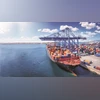 "Maritime call for Atmanirbharta: Why India needs a local P&I Club")

