Associate Sponsors

GIC wants to divert terror insurance money for oil and nuclear risks

India has Rs 15,000 cr in terror risk insurance: Money could be better used
power
Subhomoy Bhattacharjee New Delhi
4 min read Last Updated : Nov 14 2023 | 12:58 PM IST
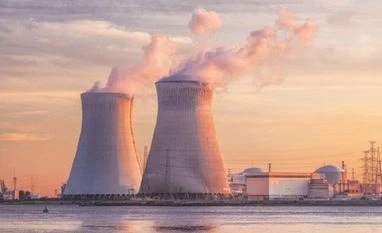
More than Rs 15,000 crore (about $2 billion) is sitting unused in India’s insurance pool against terrorism and could be used to cover nuclear accidents or for imports of Russian oil. Such insurance will encourage foreign nuclear power companies to invest in small modular reactors in India.

A proposal to divert the pool’s money was discussed at a recent meeting of nonlife insurance companies and state-owned General Insurance Corporation of India, or GIC Re. GIC Re created the terrorism insurance pool in 2002 after Indian markets lost global cover in the wake of the 9/11 attacks in the US. Diverting money from the pool “will have a significant commercial impact as the premium rates for industry will dip,” said a senior official aware of the discussions at the meeting.

While the Finance Ministry and sector regulator Insurance Regulatory Development Authority of India are in favour of the diversion, they have not issued any direction that would be a commercial decision.

GIC Re, described as India’s national reinsurer, wants some money to be diverted to the other pools that have limited capacity or are new. For instance, the nuclear accident pool has been around for some time but it has a risk capacity of Rs 1,500 crore. In case of an accident, it would likely be drained soon. An extra-risk cover will allow insurance companies to offer cheaper premiums to clients. A marine cargo risk pool, mostly used to import fertilisers from Ukraine and Russia, has an even smaller risk taking capacity of Rs 400 crore. GIC Re runs these pools, but nonlife insurance companies have to give their assent for diversion of money as they are members. There are 25 members in the Indian Market Terrorism Risk Insurance Pool and 12 in the India Nuclear Insurance Pool.

India’s oil imports from countries under international sanctions have increased, requiring additional insurance cover from the domestic market.

Separately, the risk capacity of the domestic nuclear pool needs to rise as India builds more capacity. Installed nuclear power capacity is set to increase from 7,480 MW to 22,480 MW by 2031, said Jitendra Singh, minister of state (independent charge) for science and technology, recently.

International companies like General Dynamics are keen to explore small modular reactors technology for India but will need strong insurance cover. They cannot buy from insurance in the Indian market in the absence of risk capacity. Some of the surplus from the terrorism pool could therefore be diverted to the new pools. To do this, GIC Re will have to change the statutes for the finances to flow across the pools.

The terrorism risk pool has grown as it has been in existence for two decades, allowing nonlife insurance companies time to build up their contribution. All fire, marine and property insurance policies have included such a cover run by the Indian Market Terrorism Risk Insurance Pool. As India has had no major terrorism cases except for the 2008 attacks in Mumbai, payouts from the pool are minimal.

The premium income of the Indian Market Terrorism Risk Insurance Pool has risen steadily as there has been no claim. Each year more than Rs 500 crore is added to the pool. As much as Rs 516.6 crore was added to the pool in FY2021 while claims paid was a meagre Rs 4.5 crore. The maximum loss any company will be asked to bear is Rs 2000 crore per incident. Insurance companies, despite the positive outcome, have not lowered the rates for their clients. It is 0.23 per cent for industrial risks and 0.15 per cent for non-industrial risks. It is now well understood that terrorism cover does not need a larger insurance arrangement than this.

One subscription. Two world-class reads.

Already subscribed? Log in

Subscribe to read the full story →
*Subscribe to Business Standard digital and get complimentary access to The New York Times

Smart Quarterly

₹900

3 Months

₹300/Month

SAVE 25%

Smart Essential

₹2,700

1 Year

₹225/Month

SAVE 46%
*Complimentary New York Times access for the 2nd year will be given after 12 months

Super Saver

₹3,900

2 Years

₹162/Month

Subscribe

Renews automatically, cancel anytime

Here’s what’s included in our digital subscription plans

Exclusive premium stories online

  • Over 30 premium stories daily, handpicked by our editors

Complimentary Access to The New York Times

  • News, Games, Cooking, Audio, Wirecutter & The Athletic

Business Standard Epaper

  • Digital replica of our daily newspaper — with options to read, save, and share

Curated Newsletters

  • Insights on markets, finance, politics, tech, and more delivered to your inbox

Market Analysis & Investment Insights

  • In-depth market analysis & insights with access to The Smart Investor

Archives

  • Repository of articles and publications dating back to 1997

Ad-free Reading

  • Uninterrupted reading experience with no advertisements

Seamless Access Across All Devices

  • Access Business Standard across devices — mobile, tablet, or PC, via web or app

Topics :IRDAIGICInsuranceoilInsurance industryOil imports

Next Story



