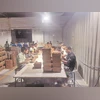
In a dimly-lit room on a Moradabad brass lane, Pirzada Zafar Khan, 62, has spent long years making diyas that have brightened many Diwalis. Seven other workers jostle for space in that 10X13 sq ft room, their tools scattered on the floor. The orders are getting cancelled and the raw material is just lying around, says a worried Khan. ‘’This was supposed to be our earning season, but the exporters aren’t lifting the goods,” he points out in his local dialect.
Indeed, it was supposed to be their busiest time of the year, ahead of festivals. But Md. Noman Mansuri, president of the Handicraft Development Society, explains that the US tariff has impacted the business badly. “With export orders being cancelled, the crisis is hitting the artisans directly,” he says.
After the 50 per cent tariff on Indian goods going into the US came into effect last month, the anxiety over future business and livelihood cannot be missed in the brass city. Many craftsmen have already abandoned the work, according to Khan. “They’ve started pulling rickshaws or taken up daily wage labour. What else can they do?”
Parvez Khan, 50, who has been in the metal business for decades, agrees. “Things are getting worse at a time when we should be earning the most. Indian markets don’t have the capacity to absorb these products. Chinese goods have already captured space, and raw metals are becoming expensive day by day.”
For Moradabad — often called Peetal Nagri (the brass city) — the crisis is palpable. The city accounts for more than 40 per cent of India’s handicraft exports.
On another street, 32-year-old Afzal is on a cycle, with a load of raw brass. His work is to supply material to artisans’ homes. “Here, most households are linked to this industry. Women do the primary shaping of brass, which then moves to smaller units for finishing,” he says. According to Afzal, last year, the demand was very high. This time, small vendors are winding up their work early because of fewer orders. ‘’Women are the worst hit, since their home-based jobs vanish first,” he explains.
Mansuri, who has helped this reporter navigate the crowded lanes with a ride on his modest blue scooter, makes an observation. “If the government doesn’t step in urgently, many of these smaller units will simply shut down. And with them, generations of artistry will vanish.”
Among others, businesses from Britain, the US, West Asian countries, Germany and Canada source brassware from Moradabad, which houses about 600 export units. The city exports goods worth Rs 4,500 crore every year. Many other products including iron sheet, metal wares, aluminum, artworks and glassware are also exported as per the need of foreign buyers, according to the district administration portal.
Eighty-year-old Subhash Chandra Bhatia, whose family settled in Moradabad after Partition, is also staring at uncertainty. “Our workers are sitting idle with no work,” he says. “We have over 50 artisans, but our main market was the US — showcase pieces, candle stands, lamps that fit into their homes and culture. All of it is on hold.”
“The European market has been cold for over a decade. The US accounted for nearly 80 per cent of our exports. From a turnover of Rs 5 crore to 6 crore, we might collapse to barely Rs 1 crore to 2 crore this year,” Bhatia says.
As the likelihood of job losses and layoffs gets real, this craftsman is trying to reconnect with his old clients from Europe. The smile on his face is only momentary. “The tragedy is, many of those clients aren’t even alive anymore.”
For Bhatia and others like him, West Asian markets are not much of a solution. “The UAE and other Arab countries cannot absorb such demand,” he says. “They already have multiple suppliers.” With his son and son-in-law by his side, Bhatia is fighting to keep the business afloat.
“We need immediate cushioning from the government — financial support, tax relief, anything that can save these units,” says Suresh Kumar Gupta, chairman of the Handicrafts Development Committee. “Otherwise, not just Moradabad, but the entire belt of villages and towns connected to this craft will sink into unemployment.”
It’s not just Moradabad. Nearby districts such as Sambhal, with its horn and bone work, Amroha with its woodcraft, Rampur’s polishing units, and even clusters in Bijnor and Meerut are all heavily dependent on the entire chain. And the slowdown has hit them hard, points out Mahesh Chandra Agarwal, managing director of Omex Trading and Om Sons Overseas.
Moradabad Special Economic Zone (SEZ) was set up in 2003 with much hope. More than 20 years later, there’s an overwhelming wish in this Uttar Pradesh town along the banks of Ramganga. The craftsmen want the government to help them tide over the tough times.