
India, EU negotiators start talks to resolve outstanding FTA issues
Issues which needs resolutions include steel, auto and EU's carbon tax
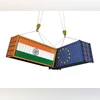 "India, EU negotiators start talks to resolve outstanding FTA issues")
WebinarsNew
Deep DiveNew
Explore Business Standard
Issues which needs resolutions include steel, auto and EU's carbon tax
Negotiators of India and the EU on Monday commenced talks to resolve outstanding issues in the proposed free trade agreement, as the deadline to conclude the talks nears, the commerce ministry said.
A team of negotiators from the European Union (EU) is here from November 3-7 for negotiations with Indian counterparts on the proposed Free Trade Agreement (FTA).
Deliberations during the week will focus on core areas, including trade in goods, trade in services, rules of origin amongst others, along with technical and institutional matters.
"The engagements aim to resolve key outstanding issues and advance the agreement toward a balanced and equitable framework that benefits both sides," the ministry said in a statement.
This visit follows Union Minister of Commerce and Industry Piyush Goyal's official visit to Brussels (27-28 October, 2025), where he held forward-looking discussions with Maros Sefcovic, European Commissioner for Trade and Economic Security.
"These consultations reaffirm the commitment of both sides to intensify engagement and facilitate a comprehensive trade agreement," it said.
As part of the visit, Sabine Weyand, Director-General for Trade at the European Commission (EU DG Trade), will be in New Delhi on 5-6 November for high-level talks with India's Commerce Secretary Rajesh Aggarwal on key technical and policy issues.
Issues which needs resolutions include steel, auto and EU's carbon tax.
India has also pitched for ensuring redressal of both tariff and non-tariff barriers in the pact, besides creating transparent and predictable regulatory frameworks to boost bilateral trade.
The EU has announced regulations such as CBAM and EUDR (Deforestation Regulation) which have been strongly objected to by India.
Under CBAM, Indian exports of steel, aluminium, and cement to the EU could face tariffs of 20-35 per cent.
India has emphasised on the need for preferential treatment for India's key asks, particularly those with respect to labour-intensive sectors.
Engagements between the two sides have increased as they have decided to conclude negotiations by December.
In June 2022, India and the EU bloc resumed negotiations for a comprehensive FTA, an investment protection agreement and a pact on geographical indications after a gap of over eight years. It was stalled in 2013 due to differences on the level of opening up markets.
India's bilateral trade in goods with the EU was USD 136.53 billion in 2024-25 (exports worth USD 75.85 billion and imports worth USD 60.68 billion), making it the largest trading partner for goods.
The EU market accounts for about 17 per cent of India's total exports, and the bloc's exports to India constitute 9 per cent of its total overseas shipments.
Besides significant duty cuts in automobiles and medical devices, the EU wants tax reduction in other products like wine, spirits, meat, poultry, and a strong intellectual property regime.
Indian goods' exports to the EU, such as readymade garments, pharmaceuticals, steel, petroleum products, and electrical machinery, can become more competitive if the pact sails through.
(Only the headline and picture of this report may have been reworked by the Business Standard staff; the rest of the content is auto-generated from a syndicated feed.)
First Published: Nov 03 2025 | 10:03 PM IST


 Connect with us on WhatsApp