India-US BTA: Sangh affiliates draw red line over GM crops, dairy products

The Sangh Parivar has also pointed to the efforts by US Senator Lindsey Graham to move a Bill that proposes steep economic penalties on India
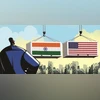
India US Trade
The Bharatiya Kisan Sangh (BKS) and Swadeshi Jagran Manch (SJM) have flagged the issue that concessions to the United States (US) in the agriculture sector
Archis MohanSanjeeb Mukherjee New Delhi
4 min read Last Updated : Jun 30 2025 | 11:14 PM IST
Affiliates of the Sangh Parivar have said the India-United States bilateral trade agreement (BTA) is unlikely to happen if America continues to be “stubborn” about securing market access for genetically modified (GM) crops, dairy products, relaxed regulations on medical devices, and data localisation.
 
The Bharatiya Kisan Sangh (BKS) and Swadeshi Jagran Manch (SJM) have flagged the issue that concessions to the United States (US) in the agriculture sector, including dairy products, will have ramifications for the country’s food security.
 
The parivar has pointed to the efforts by US Senator Lindsey Graham to move a Bill that envisages steep economic penalties for India, and also China, for importing Russian oil. The Bill could propose a 500 per cent tariff on imports from countries not supporting Ukraine.
 
On Monday, SJM National Co-Convenor Ashwani Mahajan posted on X: “No matter what US President Donald Trump says, there cannot be a trade deal with the US because India cannot give what America is asking for.” Mahajan said India could not possibly give ground on market access to America’s genetically modified crops and other agricultural products. 
 
“How can the country’s agriculture and small industries be sacrificed in front of America’s stubbornness,” Mahajan said.
 
India cannot allow “non-vegetarian milk and dairy”, he said, adding that there could not be any agreement that compromised the interests of India’s farmers and dairy.
 
Talking to Business Standard, Mahajan said the SJM had opposed the Regional Comprehensive Economic Partnership (RCEP) because it would have compromised the interests of India’s farmers.
 
“India’s farmers will be unable to compete with the US, given the subsidies that the latter provides its farmers. What if India’s farmers stop producing?” Mahajan asked.
 
Earlier this month, the BKS had slammed the NITI Aayog for its working paper that recommended increasing agricultural trade between India and the US. The BKS accused the Aayog of “kneeling in the tariff war with the US”.
 
In a post on X on Sunday, Jairam Ramesh, Congress general secretary in charge communications, wondered why the NITI Aayog working paper, titled “Promoting India-US Agricultural Trade Under the New US Trade Regime”, and issued on May 30, was withdrawn.
 
“It got reported and also invited some critical comments. Now the Working Paper has gone missing from the Aayog’s website. It has reportedly been withdrawn. Wonder why?” he asked. 
 
The paper has been taken off the Aayog’s website since June 23. Some farmer groups such the Bharatiya Kisan Union (Apolitical) said it was because of them and other peasant organisations.
 
In a statement, BKS All India General Secretary Mohini Mohan Mishra said the working paper had recommended that India, under the proposed BTA, open up its market for rice, pepper, soybean oil, shrimp, tea, coffee, dairy products, poultry, apples, almonds, pistachios, corn, and GM soy products.
 
Mishra said that doing so could risk the livelihoods of 700 million Indians dependent on agriculture.
 
“When the government is preparing to make the country self-reliant in oilseeds, then reducing the import duty on edible oil is a contradictory decision in itself,” Mishra said.
 
Mishra said the advisors to the NITI Aayog should reconsider their recommendations.
 
“It is well known that in the US, GM soya and maize are used as animal feed and some amount of ethanol is produced from them. In such a situation, why is it suggested that the crop be imported?” he asked.
 
The BKS leader said the government had formulated a policy to add 20 per cent ethanol to petrol and had already added 18.5 per cent ethanol.
 
“In such a situation, the suggestion to import American GM corn shows a conflict with the interests of farmers. Such unethical suggestions of the Ayog should be corrected immediately,” Mishra said, adding that the think tank bowing under pressure was not good for India.
 
If the Aayog does not have faith in the country’s capabilities, the government needs to review its working system, he said.

One subscription. Two world-class reads.

Already subscribed? Log in

Subscribe to read the full story →
*Subscribe to Business Standard digital and get complimentary access to The New York Times

Smart Quarterly

₹900

3 Months

₹300/Month

SAVE 25%

Smart Essential

₹2,700

1 Year

₹225/Month

SAVE 46%
*Complimentary New York Times access for the 2nd year will be given after 12 months

Super Saver

₹3,900

2 Years

₹162/Month

Subscribe

Renews automatically, cancel anytime

Here’s what’s included in our digital subscription plans

Exclusive premium stories online

  • Over 30 premium stories daily, handpicked by our editors

Complimentary Access to The New York Times

  • News, Games, Cooking, Audio, Wirecutter & The Athletic

Business Standard Epaper

  • Digital replica of our daily newspaper — with options to read, save, and share

Curated Newsletters

  • Insights on markets, finance, politics, tech, and more delivered to your inbox

Market Analysis & Investment Insights

  • In-depth market analysis & insights with access to The Smart Investor

Archives

  • Repository of articles and publications dating back to 1997

Ad-free Reading

  • Uninterrupted reading experience with no advertisements

Seamless Access Across All Devices

  • Access Business Standard across devices — mobile, tablet, or PC, via web or app

Topics :Sangh ParivarUS India relations Trade talksTrade tariffs

Next Story



