Govt must step in for AMCA to yield pvt fighter jet maker: Sources

Apprehensions persist that a HAL-led joint venture or consortium could ultimately secure the bid to build the prototype of India's first stealth combat aircraft
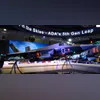
Full-scale model of the Advanced Medium Combat Aircraft, which was showcased at the 15th edition of Aero India in Bengaluru, Karnataka, from February 10 to 14, 2025. Photo Credit: PIB
A model of the Advanced Medium Combat Aircraft (Amca) showcased at the 15th edition of Aero India in Bengaluru | File: PIB
Bhaswar Kumar New Delhi
6 min read Last Updated : Jul 13 2025 | 10:52 PM IST

Don't want to miss the best from Business Standard?

Government intervention is likely to be required to guide the selection of the development-cum-production partner for the prototype of India’s first radar-evading fighter jet, or else the current process is unlikely to yield a second combat aircraft manufacturing line in the country—let alone one led by the private sector, industry insiders with first-hand knowledge of the exercise told Business Standard. The sources — who did not wish to be named — added that even if the prototype were successfully built under the current scheme of things, the programme’s intended execution through industry partnership was likely to be derailed.
   
This follows a key meeting of the Aeronautical Development Agency (ADA) — the design agency of the stealthy Advanced Medium Combat Aircraft (AMCA) — held in Bengaluru on July 4, which was attended by over two dozen interested companies but left many of the largest private players uncertain about the way forward. Private defence majors such as the Kalyani Group, Larsen & Toubro, the Tata group, and the Adani Group are keen to participate in the programme.
   
One of the issues that emerged from the meeting — as outlined by the sources — was this: “Some of the companies that participated in the meeting simply do not have either the experience or the scale to significantly contribute to the AMCA prototype design, development, and production project.” The sources added that the qualification criteria appear not to be appropriately stringent for a project of this scale and significance. “For instance, the low minimum annual turnover threshold has allowed even unqualified companies to throw their hats into the ring. Some of them have never built any defence equipment of significance.”
   
To qualify for the programme, a company bidding independently or as the lead partner in a joint venture (JV) or consortium must have had a minimum annual turnover of Rs 2,000 crore over the past three financial years. The total number of partners permitted under a JV or consortium is capped at three. In such arrangements, non-lead partners are required to have recorded a minimum annual turnover of Rs 200 crore during the same period. 
   
The sources remarked: “Companies — regardless of their actual capabilities — chasing such opportunities merely because of the potential contract value is a concern.”
   
In June, the ADA invited expressions of interest (EoIs) for the prototype development of the AMCA. This followed the late-May approval of an execution model that gives both private and public Indian defence companies equal opportunity to compete for the stealth programme — either independently, as JVs, or as consortia. Bidders must be Indian firms compliant with national laws and regulations. The move marks a departure from longstanding convention, under which Hindustan Aeronautics Limited (HAL) has served as the default domestic production agency for combat aircraft and remains the only Indian entity to have manufactured such platforms so far. It is being viewed as the first concrete opportunity to break HAL’s monopoly in the field and pave the way for a private-sector fighter jet manufacturer.
   
The sources said that if the government’s goal is to establish a private-sector fighter jet manufacturer, the involvement of a large number of smaller private players is unlikely to be the best way forward. “Those private firms that feel they will not make the final cut are certain to tie up with HAL to secure at least some share of the business, rather than walk away with nothing. In such cases, these private-sector partners will carry some liability through equity, but little ability to assert themselves in operations or board matters, which will remain controlled by HAL. This will not advance private-sector capabilities in the field beyond the current level, where they build structures and components for HAL-led programmes.” The sources added that, under the current circumstances, there was a good chance an HAL–private sector tie-up could end up securing the bid.
   
They called for government intervention to bring the execution model back on track. Hinting that the cap of three partners in a JV or consortium could be a constraint, the sources said: “If the government wants a private-sector fighter jet maker, it may have to step in and bring some of the larger private players onto the same page. We are not suggesting that it should direct the formation of a specific consortium or JV. However, a technically competent pool of participants is required, and the government can facilitate an understanding between, say, five or so willing firms to come together and tie up.” 
   
There is also an indication that not all major private firms are fully aligned at this stage, with the sources noting that during the July 4 meeting, at least one leading player with a significant presence in the aerospace sector raised concerns over a condition requiring that, in a JV or consortium, the lead company’s stake must not exceed 50 per cent. “There is concern that the liability would outweigh the level of control the lead firm would have,” the sources said.
   
In response to a query by Business Standard, a source at the Ministry of Defence familiar with the developments said the AMCA execution model followed a balanced approach, as neither HAL nor the private players had been given an advantage over the other.
   
Ahead of the meeting, at least some interested private firms reportedly expressed concerns that the evaluation criteria appeared to favour HAL. However, in an interview with Business Standard following the meeting, HAL Chairman and Managing Director D K Sunil said certain aspects of the evaluation framework were, in fact, weighted against the defence public-sector undertaking.
   
For its part, the government has already signalled its willingness to support the industry, with Defence Secretary Rajesh Kumar Singh telling Business Standard that, challenges for new entrants notwithstanding, it is prepared to ease entry barriers for private firms keen to build the AMCA prototype by extending targeted assistance.
   
The first flight of the stealth jet prototype is expected by end-2028, a defence source earlier told Business Standard. The Indian Air Force, for its part, plans to induct seven squadrons — 126 jets — of the AMCA.
 

One subscription. Two world-class reads.

Already subscribed? Log in

Subscribe to read the full story →
*Subscribe to Business Standard digital and get complimentary access to The New York Times

Smart Quarterly

₹900

3 Months

₹300/Month

SAVE 25%

Smart Essential

₹2,700

1 Year

₹225/Month

SAVE 46%
*Complimentary New York Times access for the 2nd year will be given after 12 months

Super Saver

₹3,900

2 Years

₹162/Month

Subscribe

Renews automatically, cancel anytime

Here’s what’s included in our digital subscription plans

Exclusive premium stories online

  • Over 30 premium stories daily, handpicked by our editors

Complimentary Access to The New York Times

  • News, Games, Cooking, Audio, Wirecutter & The Athletic

Business Standard Epaper

  • Digital replica of our daily newspaper — with options to read, save, and share

Curated Newsletters

  • Insights on markets, finance, politics, tech, and more delivered to your inbox

Market Analysis & Investment Insights

  • In-depth market analysis & insights with access to The Smart Investor

Archives

  • Repository of articles and publications dating back to 1997

Ad-free Reading

  • Uninterrupted reading experience with no advertisements

Seamless Access Across All Devices

  • Access Business Standard across devices — mobile, tablet, or PC, via web or app

Topics :Fighter planeFighter jetIndian Air ForceArmy

Next Story



