The Lok Sabha on Thursday passed the Immigration and Foreigners Bill, 2025, which sets up a legal framework for real-time tracking of foreigners entering and exiting India. The Bill introduces several clauses that make it mandatory for carriers, institutions, and service providers to share detailed information with immigration authorities:
Checks at entry, transit and stay: The new Bill expands the role of immigration officers, allowing them to inspect travel documents at various points during a foreigner’s presence in India.
Clause 3(3) gives immigration officers the authority to examine passports, visas, and other travel documents not only at the point of entry but also during transit, stay, and movement within the country. Officers can also demand additional information from the foreigner if required.
Clause 3(5) puts all visa-related matters under the direct control of the central government.
Reporting requirements for carriers: Transport providers are required to report passenger details in real time. These obligations cover air, sea and land-based modes of travel.
Clause 17(1) mandates that every carrier landing in or departing from an Indian port must submit a passenger and crew manifest, advance passenger information, and passenger name record data.
Clause 17(7) empowers district magistrates and police commissioners to ask carriers for further information on passengers or crew members.
Clause 17(12) prevents any carrier from departing without immigration clearance.
Accommodation, universities and hospitals must report
The Bill also places reporting duties on those who provide housing, education, or healthcare to foreigners in India.
Clause 8(1) requires accommodation providers to report the presence of foreign guests to the local registration officer.
Clause 9 mandates that universities and educational institutions share information on foreign students.
Clause 10 extends this obligation to hospitals and medical facilities, which must inform authorities when a foreign national is admitted for treatment.
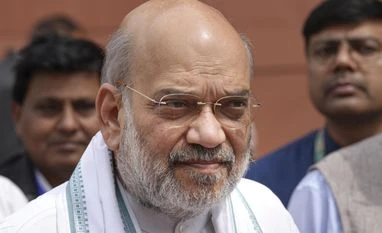
Union Home Minister Amit Shah described it as a step towards securing the country and curbing illegal migration.
Shah, introducing the Bill, said the government wanted to end the patchwork of outdated colonial-era laws governing immigration and replace it with a single, modern system. “Now, there will be a complete, systematic, integrated, and up-to-date record of every foreign national coming to India. The new immigration law will be Transparent, Tech-driven, Time-bound, and Trustworthy,” Shah said.
Speaking after a three-hour debate, Shah said, “The Bill will ensure a close monitoring of everyone who visits India, why do they visit India and how long they want to stay in India. It is absolutely necessary to know the details of every foreigner visiting India.”
He added, “Everyone who wants to visit India as a tourist, for education, for healthcare, for R&D, or business is welcome. But those who come as a threat to the country, we will keep a close look at them and take strong action.”
“India is not a Dharamshala where anyone can come and settle for any reason, the Parliament has the authority to stop those who pose a threat to national security,” he added.
Key provisions in the Bill
< Mandatory reporting by hotels, hospitals, universities, and nursing homes on foreign nationals
Up-to-date records on foreigners’ arrival, purpose, and duration of stay
Stronger penalties for forged documents and overstaying visas
Stricter penalties for violations
Anyone found using a forged passport or visa to enter, remain in, or exit India could face up to seven years in jail and a fine of up to Rs 10 lakh. The minimum punishment would be two years in jail and a Rs 1 lakh fine.
The Bill also introduces penalties for entering restricted areas without valid documents. Foreigners caught violating these provisions could be jailed for up to five years or fined up to Rs 5 lakh.
Government powers over foreigner-frequented places
The legislation gives the central government powers to control access to locations frequently visited by foreigners. These powers include shutting down premises, imposing conditions for use, or restricting access to certain categories of foreigners.
Existing laws to be scrapped
The Bill proposes repealing four laws:
Passport (Entry into India) Act, 1920
Registration of Foreigners Act, 1939
Foreigners Act, 1946
Immigration (Carriers’ Liability) Act, 2000
These would be replaced with a single piece of legislation aimed at simplifying rules and tracking foreign nationals more effectively.
The proposed law does not deal with citizenship matters. It focuses solely on immigration, foreigner registration, and security controls.
Ketan Mukhija, senior partner at Burgeon Law, said the Bill marks “a crucial step in modernising India’s immigration laws by replacing outdated regulations and strengthening national security.”
However, he pointed out potential concerns. “The Bill could be improved by introducing stronger appeal mechanisms against immigration officers’ decisions and ensuring security measures do not create undue hurdles for legitimate travellers. Balancing enforcement with fairness will be key to making the system both effective and just.”
Several countries already operate under laws that allow them to deny visas, monitor foreigner movement, and deport individuals for security reasons.
United States: In March 2025, the US State Department announced it would use AI tools to identify and revoke visas of individuals in the country who show sympathy towards terrorist groups like Hamas. The system, known as “Catch and Revoke,” relies on social media monitoring and online content review.
Australia: The country permits detention of non-citizens considered security risks. However, a 2023 High Court ruling barred indefinite detention of stateless people unless deportation was viable.
Gulf countries: Nations like Saudi Arabia, Bahrain and Kuwait have used national security grounds to deport large numbers of migrant workers, often with limited legal avenues for appeal.

 "Every foreigner visiting India to be tracked under Immigration Bill 2025")

