Mammography is a specialised breast imaging technique used to detect early signs of breast cancer, often before you can feel a lump or notice anything unusual. However, many women delay or avoid this screening due to a lack of awareness or misconceptions. Health experts stress the importance of understanding when and why mammograms should be done, particularly for women in their 40s and beyond, and for those at higher risk.
“Changes in breast could be subtle like microcalcifications or architectural distortions that would be impossible to catch on your own. Even if you’re asymptomatic, a mammogram can be the difference between early detection and late-stage diagnosis,” said Dr Namrata Singal Sawant, Director and Senior Breast & Women’s Imaging Consultant Radiologist at VCare Imaging, Mumbai.
What is a mammogram and when should you start getting them?
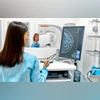
A mammogram is a specialised low-dose X-ray that captures detailed images of your breast tissue.
According to guidelines by the Breast Imaging Society of India (BISI),
routine screening mammograms should start at age 40 and continue annually until at least 70.
If you are younger than 40 but have a family history of breast cancer, a known BReast CAncer genes BRCA1/BRCA2 mutation, or underwent chest radiation between ages 10–30, you’re considered
high-risk. In such cases, screening may begin as early as 30, and it involves both a mammogram and a breast MRI once a year.
“Even without a family history, women are advised to get annual mammograms starting at 40,” said Dr Sawant. “Breast cancer doesn’t always run in families, and many early-stage cases have no symptoms at all.”
What’s the actual process like? Is it painful?
The idea of breast compression under a paddle might feel intimidating. But technology has come a long way.
According to Dr Sawant, modern machines use “Fit Sweep Paddles” that are gentler, applying pressure more near the nipples and less near the chest wall, making the experience nearly painless for most women.
“It’s more like pressure than pain,” reassured Dr Sawant. And if your breasts are already tender, ultrasound may be used first.
What about radiation exposure during a mammogram?
“The dose is very low, about 0.4 millisievert (mSv), and the benefits of early detection far outweigh the risks,” Dr Sawant affirmed.
Is mammography always accurate?
While mammography is 85–90 per cent accurate, there are limitations, especially in dense breasts. “That’s why we often recommend a supplementary ultrasound in such cases,” said Dr Sawant.
Trained breast radiologists and the latest tech (like 3D mammograms and AI-assisted reads) can significantly reduce the margin of error, she explained.
Some of the newer technologies for mammography include:
- AI-assisted readings for faster, more accurate diagnosis
- Contrast-enhanced digital mammograms (CEDM) that help with tricky cases
- Better compression paddles for minimal discomfort
Dr Sawant strongly recommended getting it done at a centre equipped with Full Field Digital Mammography (FFDM) and trained breast radiologists to ensure accuracy.
What happens if my mammogram shows something abnormal?
An abnormal result doesn’t automatically mean cancer. It just means something unusual was seen that needs more investigation. The next step is usually to consult a breast oncosurgeon, who will guide you through further tests like biopsy, MRI, or ultrasound.
While India lacks a universal
breast cancer screening programme, mammography is available at many government hospitals at subsidised rates and is also included in corporate or insurance-linked annual health check-ups.
Dr Sawant emphasised the importance of choosing imaging centres with updated digital technology and experienced breast radiologists to ensure diagnostic accuracy.
“As professionals, we plan careers, finances, and families, but often neglect preventive health. Prioritising annual breast screenings is a vital step toward long-term wellbeing,” said Dr Sawant.
Since you're already here
…and clearly interested in your health, take a moment to explore our varied range of stories on wellness, medical research, and public health insights.
For more health updates, follow #HealthWithBS This content is for informational purposes only and is not a substitute for professional medical advice.

 "Breast cancer screening: When you need a mammogram and what to expect")

