Home / Health / ICMR deploys drones for cornea transport in breakthrough eye-care move
ICMR deploys drones for cornea transport in breakthrough eye-care move
ICMR, in collaboration with Aiims Delhi and Ministry of Civil Aviation, has conducted drone-based transport of a human cornea followed by successful transplantation surgery
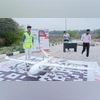
Drones are emerging as game changers in healthcare logistics, offering rapid delivery of life-saving medical supplies to remote and hard-to-reach areas, said MoHFW. (Photo: PIB release)
The Indian Council of Medical Research (ICMR) on Tuesday conducted a transportation of human cornea using a drone, which was followed by a successful transplantation surgery at All India Institute of Medical Sciences (Aiims), New Delhi, informed the Ministry of Health and Family Welfare (MoHFW) in a statement.
The ICMR achieved this feat under the i-DRONE initiative in collaboration with Aiims Delhi and Dr Shroff’s Charity Eye Hospital, New Delhi, with support from the Ministry of Civil Aviation, National Organ and Tissue Transplant Organisation (NOTTO) and Noida-based startup TSAW drones.
The mission
According to MoHFW, the initiative aims to revolutionise ophthalmic healthcare by leveraging drone technology to expedite the delivery of sensitive biomaterials, ensuring timely and successful transplants.
Under the i-DRONE initiative, the inaugural drone flight carried a preserved donor cornea from the Sonipat center of Dr Shroff’s Charity Eye Hospital to Aiims Jhajjar (NCI campus) followed by successful transplantation surgery at Aiims Delhi. The distance between the two cities was covered in almost 40 minutes via drones which, by road, usually takes around 2-2.5 hours. During the flight, it was ensured the donor tissue remained intact, sterile, and viable for clinical use.
"Drones are emerging as game changers in healthcare logistics, offering rapid delivery of life-saving medical supplies to remote and hard-to-reach areas. The timely transportation of corneal tissues is critical, as the viability of donated corneas is time-sensitive," MohFW said.
"Delays in transportation can compromise tissue quality and reduce the chances of successful transplantation. Drone-based transport offers a swift, temperature-stable, and efficient alternative to traditional road networks, which are often slow or unpredictable—especially in semi-urban or rural areas. This can help bridge the gap between donor sites and recipients, ensuring that no viable tissue goes unused and that more patients regain sight in time," MohFW said in a statement," the ministry added.
What is ICMR’s i-DRONE Initiative?
Launched in 2021 by ICMR, i-DRONE initiative initially focussed on the use of drones to deliver vaccines and medical supplies in hard-to-reach areas of North East India (Manipur and Nagaland). Over the years, the initiative has demonstrated the successful use of drones in delivering essential medical supplies across various states, including delivery of Covid-19 and Universal Immunisation Program (UIP) vaccines, medications, blood bags, and surgical supplies.
"We have expanded our efforts to include the low-temperature delivery of blood products and essential medicines to high-altitude and sub-zero locations. This cornea transport study is another major step forward—enhancing patient access, ensuring timely transplants, and reducing pressure on overburdened tertiary hospitals. This initiative aligns perfectly with the Honourable Prime Minister’s vision of a self-reliant India powered by innovation. Drone-based healthcare logistics are the future, and India is leading the way," said Dr Rajiv Bahl, Secretary, Department of Health Research (DHR) and Director General, ICMR in a statement.
Dr M Srinivas, Director, Aiims Delhi, highlighted that corneal blindness affects millions of people in India. He said the timely availability of donor tissue is often a limiting factor and a drone-based transport model could be a transformative step toward ensuring equitable access to vision-restoring surgeries, particularly in underserved areas.
"The success of this pilot project paves the way for deploying precision drone logistics in a wide range of critical medical applications," he said.

 "ICMR deploys drones for cornea transport in breakthrough eye-care move")



