Home / Health / Israel's RedC wants to turn donor cells into $50 shelf-ready blood
Israel's RedC wants to turn donor cells into $50 shelf-ready blood
Although RedC has already produced small quantities of blood using this process, the real test will be whether it can scale up production, bring down costs, and secure regulatory clearances
3 min read Last Updated : Jun 05 2025 | 11:01 PM IST
In the next five to six years, you might be able to buy laboratory (lab)-grown blood off the shelf for just $50 a unit, compatible with all blood types.
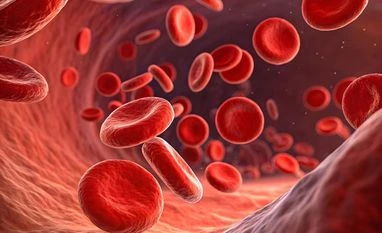
An Israel-based company, RedC Biotech, is working towards that goal. It is developing a process that reprogrammes blood from universal donors (O-negative) by deactivating genes in the white blood cells, converting them into stem cells. These are then harvested and multiplied in large bioreactors capable of producing 2,000 litres of red blood cells, using technology developed by the Technion — Israel Institute of Technology.
Although RedC has already produced small quantities of blood using this process, the real test will be whether it can scale up production, bring down costs, and secure regulatory clearances.
“We expect to conduct testing for two years, followed by three years of trials in Israel. We should be ready for large-scale commercial production after that,” says Ari Gargir, chief executive officer and founder of the company, who holds a doctorate in the subject.
Gargir, who was recently in India for talks with the central government, said he is close to finalising a partnership with a leading government-owned research lab. The initial focus will be on mapping the country’s blood types and locating suitable voluntary O-negative donors.
His India strategy is focused and clear. “India already has the infrastructure — companies with bioreactors and major stem cell players like HiMedia Labs, whom we’ve already engaged with. Our model is to license our technology and have them handle the production,” says Gargir.
Efforts to create artificial blood have been underway in countries such as the UK, the US, and Japan, where synthetic blood has been explored. But Gargir argues that these approaches are costly and limited in scale. RedC’s goal is to industrialise blood production and close the gap between supply and demand.
“The method we’ve chosen to harness blood is more complex and takes longer, but it opens the door to scalable production,” he says. He adds that only 6 per cent of the global population are universal donors.
Globally, about 120 million blood units are donated each year, while demand stands at 220 million. In India, based on data up to 2022, the shortfall was around 1.5 million units a year. “This is the gap we’re trying to bridge — to help save more lives,” he says.
He points out that, like any pharmaceutical product, their blood will require regulatory approvals in both Israel and India, unlike donated blood, which faces fewer checks due to the lack of alternatives. At a price of $50 per unit, RedC’s product would be cost-competitive with donated blood, which must undergo pathogen testing — a step their in-lab process eliminates by design.
Regulatory veins run deep
· Israel-based RedC aims to mass-produce blood at $50 a unit
· Plans to begin commercial production within 5 years
· Nearing a deal with an Indian government research institute to map blood types and identify O-negative donors
· Will partner Indian stem cell and biotech firms for manufacturing
· Subject to full regulatory scrutiny in both Israel and India, similar to pharmaceuticals