Closely monitoring: Army Chief Gen Pande on Bhutan-China boundary talks
"This relationship also transcends into the military domain as we have IMTRAT (Indian Military Training Team) right from the early 1960s. They are at the centre of our relationship," he said
Press Trust of India New Delhi As Bhutan and China looked at an expeditious resolution of their festering boundary row, Army Chief Gen Manoj Pandey on Thursday said the development is being closely monitored.
At a media briefing ahead of the Army Day, he said India has a unique bilateral relationship with Bhutan based on "utmost trust, goodwill and mutual understanding".
"This relationship also transcends into the military domain as we have IMTRAT (Indian Military Training Team) right from the early 1960s. They are at the centre of our relationship," he said.
Gen Pande was responding to a question on China and Bhutan making progress in their boundary talks and whether any possible resolution would have security implications for India.
"Bhutan and we share mutual security concerns which both of us are aware of. The ongoing talks on the boundary which you alluded to, we are closely monitoring," he said.
"We are interacting with our friends in Bhutan on a transparent and regular basis," the Army Chief said.
He said India's military relationship with Bhutan including training programmes is proceeding well.
Over two months ago, Bhutan's Foreign Minister Tandi Dorji held talks with his Chinese counterpart Wang Yi in Beijing.
A Chinese readout on the talks said Bhutan firmly abides by the one-China principle and stands ready to work with China for an early settlement of the boundary issue and advance the political process of establishing diplomatic relations.
New Delhi has been keeping a close eye on the negotiations between Bhutan and China on their boundary row as it could have implications for New Delhi's security interests, especially in the Doklam tri-junction.
In August last year, China and Bhutan agreed to expedite and take simultaneous steps to implement a "three-step roadmap to resolve their festering boundary dispute.
In October 2021, Bhutan and China signed an agreement on the "three-step roadmap" to expedite negotiations to resolve their boundary dispute.
The signing of the pact came four years after the Indian and Chinese armies were locked in a 73-day stand-off at the Doklam tri-junction after China tried to extend a road in the area that Bhutan claimed belonged to it.
The India-China standoff in the Doklam plateau in 2017 even triggered fears of larger conflict between the two neighbours. Bhutan had said the area belonged to it and India supported the Bhutanese claim.
(Only the headline and picture of this report may have been reworked by the Business Standard staff; the rest of the content is auto-generated from a syndicated feed.)

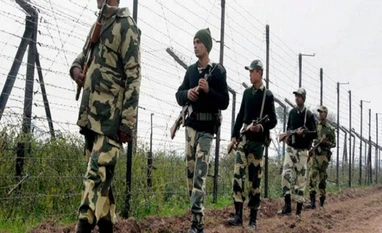 "Closely monitoring: Army Chief Gen Pande on Bhutan-China boundary talks")

