Home / India News / 'Air too toxic to breathe': Parent's post questions Delhi's school calendar
'Air too toxic to breathe': Parent's post questions Delhi's school calendar
With Delhi's AQI in the 'severe' range, a parent's LinkedIn post highlights how frequent pollution-related shutdowns are affecting children and suggests reworking school breaks
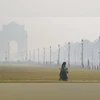
Delhi’s air quality continued to be in the ‘severe’ range on Thursday. (Photo/PTI)
3 min read Last Updated : Nov 20 2025 | 2:18 PM IST
Delhi’s air quality continued to be in the ‘severe’ range on Thursday. The Anand Vihar monitoring station recorded an Air Quality Index (AQI) of 416 at 8 am, according to data from the Central Pollution Control Board (CPCB).
This was only a slight improvement from Wednesday’s AQI of 419, and pollution levels remained a serious health risk across the city.
According to CPCB standards, AQI levels between 0-50 are ‘good’, 51-100 ‘satisfactory’, 101-200 ‘moderate’, 201–300 ‘poor’, 301-400 ‘very poor’, and 401-500 fall under the ‘severe’ category.
Amid the persistent smog, a LinkedIn post by Delhi resident Akshay Verma, co-founder of FITPASS, has resonated with many parents. Verma shared how even his three-year-old son now needs to understand a new and unexpected term: AQI.
“One week he’s learning how to hold a pencil... next week he’s learning why he can’t go to school because the air is ‘too poisonous’,” he writes, describing the strange challenges of raising a child in the capital.
According to him, school closures have become as uncertain as the pollution itself. “Summer break, Diwali break — and now an annual ‘pollution break’ nobody wants to call by its real name,” he says. For a child who still believes “clouds live inside cartoons”, he adds, explaining toxic air feels “heartbreaking and absurd".
Why is the school calendar being questioned?
Verma suggests that Delhi may need to reverse its academic calendar. Instead of the traditional long summer break, he proposes a long winter break from Diwali to January, when the city’s air quality routinely drops to its worst levels.
Since heat can be managed but polluted air cannot, he argues that schools could function normally in the summer and pause during the months when pollution repeatedly forces shutdowns.
How are families coping with Delhi’s pollution?
Doctors, Verma notes, are already advising those who can afford it to move temporarily to cleaner cities for six to eight weeks during peak pollution. But for most families in Delhi, especially working-class households, such relocation is impossible. “They are forced to breathe whatever the city decides,” he writes.
What larger point does the post make?
Drawing a comparison with hill schools, which follow academic calendars based on weather, Verma says Delhi now has enough data to adopt a similar model. “A city’s future sits inside its classrooms,” he says. “Right now, those classrooms are empty."


 "'Air too toxic to breathe': Parent's post questions Delhi's school calendar")

