


Delhi pollution: SC seeks response on efficiency of AQI monitoring stations
SC asked the Delhi government to explain the efficiency of its AQI monitoring equipment after concerns that water spraying near stations could distort pollution readings amid rising health worries
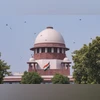 "Supreme Court, SC")
A Bench headed by Chief Justice of India Justice B R Gavai, and Justices Vinod Chandran and N V Anjaria, asked the administration to clarify the type of monitoring equipment in use and its accuracy, directing that the response be filed within two day
Listen to This Article
The Supreme Court on Monday sought a detailed response from the Delhi government on the nature and efficiency of the equipment used to measure the air quality index (AQI) in the national capital, amid allegations of water spraying near air-quality monitoring stations to distort pollution readings.
A Bench headed by Chief Justice of India Justice BR Gavai, and Justices Vinod Chandran and NV Anjaria, asked the administration to clarify the type of monitoring equipment in use and its accuracy, directing that the response be filed within two days.
“Let GNCTD (Government of National Capital Territory of Delhi) file an affidavit explaining the nature of equipment being used and their efficiency to gauge AQI monitors. Please bring it the day after tomorrow,” the Bench said.
The issue came to light after Amicus Curiae (friend of the court) Aparajita Singh drew the court’s attention to media reports suggesting that water sprinkling was taking place around several monitoring points in the capital.
The central government, represented by Additional Solicitor General Aishwarya Bhati contested the allegation, saying such videos were being circulated for political reasons and that water spraying was occurring across the city as part of regular dust-control measures. At this point, CJI Gavai remarked, “I saw the sprinkling around the Supreme Court too.”
Also Read

 "Sahara India Pariwar")
 "Supreme Court, SC")
 "Smog, Delhi Pollution, Delhi Air Quality, Pollution")
 "Supreme Court, SC")
Singh also told the court that incidents of stubble burning were not being accurately reflected in official records. Although the Bench noted that the latest status report indicated a drop in cases, from around 28,000 to roughly 4,000, Singh said experts believed the figures did not present a true picture.
She also pointed out that both the Commission for Air Quality Management and independent specialists had flagged concerns about undercounting.
The amicus curiae said that farmers often resort to burning crop residue due to narrow harvesting windows, and that Punjab had indicated that a compensation of ~100 per quintal from the Centre could help discourage the practice.
Singh also said that the machinery for stubble disposal was being distributed since 2018, but the scale of support has remained insufficient.
Senior Advocate Gopal Sankaranarayanan, appearing for a group of advocates who have intervened in the MC Mehta case, submitted that despite periodic interventions, pollution levels in Delhi had worsened this year. He referred to rising cases of lung cancer and argued that the health emergency warranted stronger measures. The existing regulatory bodies, he said, lacked the capacity to address the crisis and needed firmer oversight.
The Bench then asked if a year-long suspension of stone crushers and certain construction machinery was feasible. On this, the government counsel argued that sweeping bans would impair economic activity and that all developing nations face similar tensions between growth and environmental constraints.
Pollution cannot be addressed through abrupt prohibitions, ASG Bhati said, adding that the regulators must balance environmental concerns with the needs of those dependent on these sectors.
Responding to the discussion, the Bench observed that if stubble burning had indeed declined but pollution levels remained severe, other contributing factors would need to be examined.
Singh agreed that a combination of seasonal conditions and multiple sources of emissions typically pushes air quality into hazardous ranges during this period.
The apex court declined to entertain a plea for a blanket halt on all polluting activities in the capital, noting that the graded restrictions under the Graded Response Action Plan (GRAP) were devised by domain experts on the basis of scientific assessment.
“The restriction to be imposed on activities in Delhi in a graded manner taking into consideration AQI standards has been finalised by experts in the field based on scientific data. We do not possess expertise to deal with the same. We are, therefore, not inclined to act on submission of Sankaranarayanan that all activities be stopped in Delhi. Large chunk of the population depends on the various activities for their livelihood in the capital,” the bench noted.
The court called for coordinated efforts from the Union environment ministry and the governments of Punjab, Haryana, Uttar Pradesh and Rajasthan to address the situation effectively. The matter will be taken up again on November 19.
More From This Section

 "blast, Delhi Blast, Bomb Blast")
 "India tourism trends, off-season travel India, all-season destinations India, Goa monsoon travel, year-round travel destinations, Gen Z travel India, hybrid work tourism, experiential travel India, domestic tourism growth, weekend getaways India, tra")
 "NIT Rourkela")
 "unemployment, jobs")
Topics : Supreme Court Delhi Delhi air quality air pollution
Don't miss the most important news and views of the day. Get them on our Telegram channel
First Published: Nov 17 2025 | 7:22 PM IST