Home / India News / How EC was formed after Ambedkar's amendment in Constituent Assembly
How EC was formed after Ambedkar's amendment in Constituent Assembly
Before Ambedkar brought the amendment, draft Article 289 proposed separate election commissions for the Centre and the states, scholarly articles and Constituent Assembly debates suggest
EC came into being on January 25, 1950, a day before India became a Republic
Bhimrao Ramji Ambedkar, considered the key architect of the Indian Constitution, is also credited with the creation of the Election Commission.
An amendment brought by him in the Constituent Assembly led to the establishment of the Election Commission, an independent body mandated to hold elections to the office of President and Vice President, and Lok Sabha, state assembly, Rajya Sabha and state legislative council polls.
Certain provisions of the Constitution, including the one related to the EC, came into force immediately after it was adopted by the Constituent Assembly on November 26, 1949. The rest of the provisions came into force on January 26, 1950.
The EC came into being on January 25, 1950, a day before India became a Republic.
Before Ambedkar brought the amendment, draft Article 289 proposed separate election commissions for the Centre and the states, scholarly articles and Constituent Assembly debates suggest.
But Ambedkar proposed a more centralised body to be headed by a chief election commissioner to be appointed by the President.
Draft Article 289 proposed one commission to hold elections to the central legislature, both the Upper and Lower Houses (which later came to be known as Lok Sabha and Rajya Sabha).
It also proposed separate commissions for each state or province. These commissions were to be appointed by respective state governors.
The new Article 324 proposed by Ambedkar before the Constituent Assembly made the poll machinery centralised by having a singular poll authority for holding state and national elections.
Regional commissioners were proposed to help the EC function across India.
During the first Lok Sabha elections in 1951, regional commissioners were appointed for six months in Bombay and Patna. After that, there was no such deployment.
State chief electoral officers now work as the EC's limbs in respective states and union territories.
Article 324 gives the EC "plenary powers" to conduct elections and prepare electoral rolls.
The EC has exercised its constitutional powers to deal with issues where election laws and rules are silent.
The Supreme Court has on various occasions upheld these powers saying Article 324 is a vast reservoir of powers for the poll panel.
(Only the headline and picture of this report may have been reworked by the Business Standard staff; the rest of the content is auto-generated from a syndicated feed.)

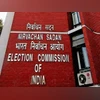 "How EC was formed after Ambedkar's amendment in Constituent Assembly")


 Connect with us on WhatsApp