
Waqf Bill takes centrestage during Eid prayers in parts of Karnataka
On March 28 Union Home Minister Amit Shah made it clear that the Waqf (Amendment) Bill, will be reintroduced in the current session of Parliament
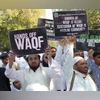 "Waqf Bill takes centrestage during Eid prayers in parts of Karnataka")
Explore Business Standard
On March 28 Union Home Minister Amit Shah made it clear that the Waqf (Amendment) Bill, will be reintroduced in the current session of Parliament
The issue of the Waqf Amendment Bill took center stage during Eid-ul-Fitr celebrations in some parts of Karnataka on Monday, with people, including Minister Rahim Khan, offering special prayers sporting black armbands to express their protest against the Centre's move.
According to the information available, believers sported symbols of protest during the prayers held in Bidar, Mandya and Belagavi. ALSO READ: Govt creating obstacles in people celebrating Eid freely: Akhilesh Yadav
In Bidar, Minister Khan, who holds sports and youth empowerment portfolio, reached mosque with his followers wearing black armband and offered prayers at the Eidgah Maidan.
His supporters performed prayers and lodged their protest peacefully against Waqf law amendment. ALSO READ: Waqf Bill a 'direct assault on Muslims', part of Hindutva agenda: Owaisi
The Mandya Urban Development Authority president Naheem performed prayers in Mandya wearing the black armband. All his supporters too followed him.
Speaking to reporters, he said he did it as a silent protest against the Waqf Amendment Bill.
In Belagavi, Social Democratic Party of India cadres participated in the prayers wearing black armband to show protest against the bill.
Apart from demanding to withdraw the amendment bill, the protesting Muslims in Kittur appealed for the early release of their national president M K Faizy, who was arrested earlier this month by the Enforcement Directorate in a money laundering case linked to the banned terrorist organisation PFI.
The ED claimed that there existed an 'organic' relation between the two outfits and that PFI was carrying out its criminal activities through the political party.
The Social Democratic Party of India (SDPI), founded in 2009 and headquartered in Delhi, is alleged to be the political front of the Popular Front of India (PFI), which was banned by the Union government in September 2022.
The Union Cabinet recently approved the Waqf (Amendment) Bill, incorporating the changes recommended by the Joint Parliamentary Committee (JPC), paving the way for it to be tabled in Parliament for a discussion and passage.
The Bill was referred to the JPC in August 2024, after it was introduced in the Lok Sabha by Minority Affairs Minister Kiren Rijiju.
The parliamentary panel adopted the report with a majority vote, while all 11 MPs from opposition parties in the panel had objected to it.
They had also moved dissent notes. The 655-page report was submitted to both Houses of Parliament earlier this month.
On March 28 Union Home Minister Amit Shah made it clear that the Waqf (Amendment) Bill, which was referred to a joint parliamentary committee (JPC) in August 2024, will be reintroduced in the current session of Parliament.
(Only the headline and picture of this report may have been reworked by the Business Standard staff; the rest of the content is auto-generated from a syndicated feed.)
First Published: Mar 31 2025 | 3:33 PM IST


