
With AQI below 50, Shimla attracts tourists from Haryana, Punjab, Delhi
While the AQI stood above 300 in at least 13 pollution hotspots in Delhi on Tuesday, Manali recorded the lowest AQI (6), followed by Kullu (7) and Dharamshala (15) on Wednesday
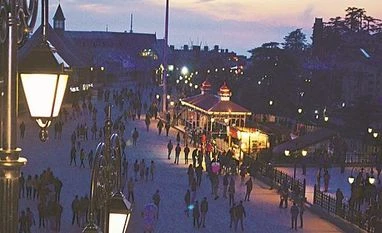 "With AQI below 50, Shimla attracts tourists from Haryana, Punjab, Delhi")
Explore Business Standard
While the AQI stood above 300 in at least 13 pollution hotspots in Delhi on Tuesday, Manali recorded the lowest AQI (6), followed by Kullu (7) and Dharamshala (15) on Wednesday
With the quality of air in the plains of North India now reaching the 'poor' category, tourists from Delhi, Punjab, Haryana and other neighbouring areas are heading towards the hill state of Himachal Pradesh where even the highest AQI comes under 'moderate' category.
Except for Solan, where the AQI is under the 'moderate' category, the Air Quality Index in tourist destinations of Himachal Pradesh is under the 'good' category including Shimla, which recorded an AQI of 34 on Wednesday.
While the AQI stood above 300 in at least 13 pollution hotspots in Delhi on Tuesday, Manali recorded the lowest AQI (6), followed by Kullu (7) and Dharamshala (15) on Wednesday.
Air Quality Index (AQI) is a tool for effective communication of air quality status to people in terms, which are easy to understand. It transforms complex air quality data of various pollutants into a single number (index value), nomenclature and colour.
The AQI from 0 to 100 is considered good, while from 100 to 200 it is moderate, from 200 to 300 it is poor, and from 300 to 400 it is said to be very poor and from 400 to 500 or above it is considered as severe.
The environmental scientist and Principal Scientific officer of the Environment Science and Technology Department of Himachal, Dr Suresh Attri said that the data released on October 25 shows that the good air quality and pleasant weather conditions are attracting tourists from neighbouring states.
"As you know other parts of India are reeling under the worst Air Quality Index. Himachal Pradesh is recording a commendable AQI, (with) Manali having the cleanest air in the state, followed by Kullu, Dharamshala and Shimla," he said.
"Shimla recorded AQI at 34, Manali recorded lowest at 6 and Kullu 7, followed by Dharamshala which recorded AQI value at 15," he added.
Atri said that, however, the AQI in Solan is over 160 but still it comes under the 'moderate' category. "Kala Amb also recorded a poor quality of air at 149 as both are industrial areas," he said.
The environmental scientist said that the AQI has increased in Shimla a bit and the temporary reason behind the change is the pollen from the seeds of the Cedar trees. "It is good as it will not be permanent," the Principal Scientific officer said with a sigh of relief.
The foreign tourists coming to Himachal also said that it is good to be amidst snow-capped mountains as compared to the national capital.
"We arrived today here in Shimla, it is beautiful weather, in this region of the city there are no vehicles, and the fresh air and pleasant weather are soothing here. In Delhi it was very bad, even though it is tough to cross the roads there are a large number of vehicles. I would recommend everyone to come here to this beautiful part of the Himalayas. We can see the clear sky and the snow-clad mountains here, it's wonderful," said Karen, a tourist from the UK.
Amarpreet Singh, a tourist from Ambala said that the higher AQI and rise in the level of pollution in the wake of Diwali and other festivals has brought him Shimla.
"I would recommend everyone to come here and would advise you to stop using firecrackers. If you don't burn firecrackers you would find air quality like Shimla in Delhi and other parts of north India," Amarpreet said.
Leena, a tourist from the National Capital Region (NCR) said that the Himachal government should regulate the number of tourists arriving here.
"It is good to be here, the good air quality and beautiful weather is wonderful. We are taking pictures and recording the blue sky which we will not be able to see for the next month. The government here should regulate the number of tourist arrivals in a certain period so that the beauty of the hills can be preserved," she added.
(Only the headline and picture of this report may have been reworked by the Business Standard staff; the rest of the content is auto-generated from a syndicated feed.)
First Published: Oct 26 2023 | 12:11 PM IST

