CBRE South Asia Pvt Limited, India’s leading real estate consulting firm, announced on Wednesday that real estate requirements for manufacturing electric vehicles (EV) batteries are estimated to reach 2,400 acres by 2030 as a result of the government's EV adoption targets.
The report titled ‘Electric Vehicles in India – New Wheels on the Roads’, points out that Uttar Pradesh and Maharashtra are the leading states in charging infrastructure manufacturing. Maharashtra has the highest count of sanctioned EV chargers with 317 chargers, followed by Gujarat with 278 EV chargers.
Currently, India manufactures lithium-ion cells by importing raw materials, which account for 77 per cent of the total manufacturing cost. However, this is set to change with the discovery of a 5.9-million-tonne lithium reserve in Reasi district in Jammu and Kashmir in February this year. This will reduce India's reliance on imported lithium significantly. The current primary clusters for lithium-ion battery (LiB) manufacturing exist in Chennai, Hyderabad, Pune, Prantij, Surat, Mandal, Delhi-NCR, Gurugram, and Mohali.
The real estate requirements of manufacturing facilities of four-wheeler and two-wheeler (4W and 2W) electric vehicles are estimated to be around 13 million sq ft by 2030. The report states that by 2030, the real estate requirement will allow a production capacity of approximately four million units of 4Ws and 23 million units of 2Ws.
Investments in EV sector
Several policy enablers by state and union governments have enabled the creation of an indigenous EV manufacturing ecosystem by incentivising investments from global or domestic players. During the 2020-2023 period (YTD), Maharashtra and Tamil Nadu led EV investments with a 15 per cent share each of the cumulative $28.8 billion investment. Meanwhile, Karnataka accounted for 11 per cent share, Gujarat 8 per cent, and Uttar Pradesh and Telangana recorded a 7 per cent share each.
For the current year, the EV sector has recorded investment announcements of $6.2 billion to date. The year 2022 witnessed global and domestic players announcing investments of over $17.1 billion in the EV industry, a y-o-y increase of about 287 per cent compared to $4.4 billion in 2021. In the same period, more than half of the investments were driven by EV component manufacturers.
EV sales
EV manufacturers and e-mobility start-ups are focusing on creating their space in the primary automotive clusters in India. Uttar Pradesh took the lead in registered EV annual sales in 2022 with a 16 per cent share, followed by Maharashtra with a 13 per cent share and Karnataka with a 9 per cent share.
The Indian EV market is expected to grow at a compounded annual growth rate (CAGR) of about 49 per cent between 2021 and 2030, and cross the annual sales of 17 million units by 2030.
In India, Tamil Nadu, Maharashtra, and Haryana are the leading states in EV manufacturing; Karnataka, Telangana, and Tamil Nadu are the leading states in battery manufacturing; and Karnataka and Tamil Nadu lead in research and development (R&D).
Anshuman Magazine, chairman and CEO, India, South-East Asia, Middle East and Africa, CBRE, said that the intersection of real estate and the EV sector presents exciting opportunities and challenges and the rapid growth in EV manufacturing is set to revolutionise the automotive industry.
Investors and manufacturers of EVs are focusing on real estate strategies to strengthen the EV market. The strategies include focusing on speed-to-market to meet the rising demand, setting up facilities near consumption hubs, installing new-age technologies to improve operational efficiencies, and upgrading modern warehouses to enhance storage efficiencies.
Rami Kaushal, managing director, Consulting and Valuation Services, India, Middle East and Africa, CBRE, said that the future of the EV industry is bright, and real estate will play a pivotal role in shaping its trajectory.
"As demand for EV manufacturing facilities, charging infrastructure, and associated services expands, the real estate sector will need to adapt and provide the necessary infrastructure and spaces to accommodate this growth," Kaushal said.

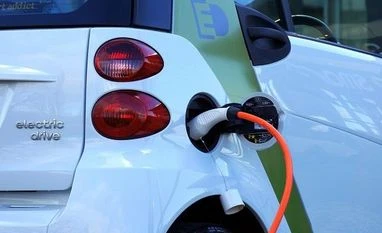 "EV battery manufacturing will require 2,400 acres of land by 2030: CBRE")


 Connect with us on WhatsApp