
Toyota, Daimler, Hino, Mitsubishi joining forces in ecological technology
The companies plan to cooperate in reducing carbon emissions and developing other technologies such as autonomous driving, net-connected services and electric vehicles
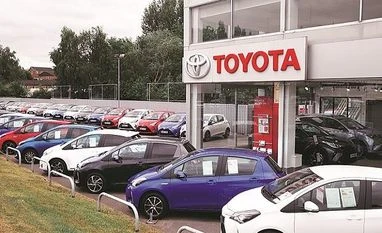 "Toyota, Daimler, Hino, Mitsubishi joining forces in ecological technology")
WebinarsNew
Deep DiveNew
Explore Business Standard
The companies plan to cooperate in reducing carbon emissions and developing other technologies such as autonomous driving, net-connected services and electric vehicles
German truck maker Daimler, Japan's top automaker Toyota and two other automakers said Tuesday they will work together on new technologies, including using hydrogen fuel, to help fight climate change.
The companies said Mitsubishi Fuso Truck and Bus Corp., whose top stakeholder is Daimler Truck, and Hino Motors, the truck maker in the Toyota group, will merge.
Daimler Truck and Toyota Motor Corp will equally invest in the holding company of the Mitsubishi-Hino merger, they said without giving a dollar amount for the deal.
The companies plan to cooperate in reducing carbon emissions and developing other technologies such as autonomous driving, net-connected services and electric vehicles.
This collaboration among our four companies is a partnership for creating the future of commercial vehicles in Japan and the future of a mobility society,' said Toyota Motor Corp. Chief Executive Koji Sato.
The two truck companies will work on commercial vehicle development, procurement and production to become globally competitive, the executives said.
We at Daimler Truck are very proud of our products, because trucks and buses keep the world moving. And soon they will even do so with zero emissions, said Daimler Truck Chief Executive Martin Daum.
Today's announcement is a crucial step in making that future work economically and in leading sustainable transportation.
Automakers are rushing to keep up with the global shift toward less polluting vehicles and to help in other ways to combat climate change.
Commercial vehicles like trucks and buses are major contributors to auto emissions. In some cases rivals are joining forces to gain a a competitive edge and cut costs through economies of scale of by sharing knowledge and resources.
It is hard to go at it alone. Working together is crucial, Sato said.
Fuel cells power Toyota's buses in Japan but its strength has been in hybrids, which have both electric motors like EVs and gasoline engines.
Consumer acceptance of battery powered EVs has come faster than expected, Toyota officials say, and the company is hard at work on rolling out EVs in various markets.
Details of the merger, including shareholding ratios, the company name and its structure will be worked out over the next 18 months, the companies said.
They aim to sign a definitive agreement by early next year and close the transaction by the end of 2024.
The deal still needs shareholders' and regulatory approval.
The deal is a chance for a fresh start at Hino, its chief executive, Satoshi Ogiso said, after the company's image was marred by its disclosure last year that it had systematically falsified emissions data beginning as early as 2003.
We will unite our aspirations to support mobility and contribute to society' and hand in hand accelerate advanced technology development to overcome the increasingly fierce global competition, he said.
(Only the headline and picture of this report may have been reworked by the Business Standard staff; the rest of the content is auto-generated from a syndicated feed.)
First Published: May 30 2023 | 5:57 PM IST


 Connect with us on WhatsApp