
No issues found in fuel switches in its Boeing 737 MAX planes: Akasa Air
The airline has a fleet of 30 Boeing 737 MAX aircraft. A total of 196 such aircraft are to be delivered to the carrier in the coming years
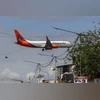 "No issues found in fuel switches in its Boeing 737 MAX planes: Akasa Air")
WebinarsNew
Deep DiveNew
Explore Business Standard
The airline has a fleet of 30 Boeing 737 MAX aircraft. A total of 196 such aircraft are to be delivered to the carrier in the coming years
Akasa Air has completed the checks on the fuel switches of its Boeing 737 MAX planes and there were no adverse findings, a senior airline executive said on Tuesday.
The airline has a fleet of 30 Boeing 737 MAX aircraft. A total of 196 such aircraft are to be delivered to the carrier in the coming years.
Last week, the Directorate General of Civil Aviation (DGCA) directed airlines to inspect the fuel switch locking system in their Boeing 787 and 737 planes by July 21. The direction came after the Aircraft Accident Investigation Bureau (AAIB) said in its preliminary report that fuel switches were cut off before the Air India plane crash last month.
Akasa Air's Chief Financial Officer Ankur Goel said the airline complies with whatever requirements that continue to come either from Boeing as a manufacturer or from the DGCA as a safety regulator.
"The inspection has been done. We have reported our findings to the DGCA. Very happy to say that no adverse findings found on the switches at all," he told PTI.
He was responding to a query about the findings of the inspection of the fuel switches.
Fuel control switches regulate the flow of fuel into the aircraft engines.
Earlier in the day, Air India said it has completed "precautionary" inspection of the locking mechanism of the fuel control switch (FCS) on its Boeing 787 and 737 aircraft fleet and no issues were found.
Air India has a total of 33 wide-body Boeing 787s and Air India Express has around 75 narrow-body 737s.
There are more than 150 Boeing 737s and 787s being operated by Indian airlines.
Akasa Air and SpiceJet operate Boeing 737s. IndiGo also operates Boeing 787 and 737s, but they are leased from foreign airlines, which means they won't be subject to the DGCA directive.
On June 12, Air India's Boeing 787-8 plane operating the flight AI 171 enroute to London Gatwick from Ahmedabad crashed into a building soon after take off, killing 260 people, including 19 on the ground.
(Only the headline and picture of this report may have been reworked by the Business Standard staff; the rest of the content is auto-generated from a syndicated feed.)
First Published: Jul 22 2025 | 11:00 PM IST

