Home / Industry / News / 40% pollution cut under NCAP may extend life expectancy by 2 yrs: Study
40% pollution cut under NCAP may extend life expectancy by 2 yrs: Study
The Energy Policy Institute at the University of Chicago said in its 2025 report that residents in these 130 cities would gain two years in life expectancy as compared to 2017 if the target is met
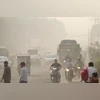
Twenty-two cities met the National Ambient Air Quality Standard (NAAQS) for PM10, defined as annual levels below 60 micrograms per cubic metre. Photo: PTI
Residents of 130 cities covered under the National Clean Air Programme (NCAP) could see their life expectancy increase by two years compared to 2017 if India achieves its revised target of a 40 per cent reduction in particulate pollution by 2026, a new report said on Thursday.
Launched in 2019, NCAP aimed to cut 2017 particulate pollution levels in 130 highly polluted cities by 20-30 per cent by 2024. In 2022, the government revised the target to a 40 per cent reduction by 2026.
In practice, only PM10 concentration is being considered for performance assessment.
The Energy Policy Institute at the University of Chicago (EPIC) said in its 2025 report that residents in these 130 cities would gain two years in life expectancy as compared to 2017 if the target is met.
Government data shows 103 of the 130 cities recorded an improvement in PM10 levels in 2024-25 compared to 2017-18. Sixty-four of them reduced these levels by more than 20 per cent, while 25 achieved cuts of over 40 per cent.
Twenty-two cities met the National Ambient Air Quality Standard (NAAQS) for PM10, defined as annual levels below 60 micrograms per cubic metre.
The EPIC report said all of India's 1.4 billion people live in areas where average particulate pollution exceeds the WHO guideline. Even those in the cleanest regions could live 9.4 months longer if air quality met the global benchmark.
It noted that PM2.5 concentrations in 2023 were higher than in 2022, more than eight times the WHO guideline. Bringing them down to the global standard would add 3.5 years to the average life expectancy of Indians.
The WHO's 2021 guideline sets the annual average limit for PM2.5 at 5 micrograms per cubic metre and for PM10 at 15 micrograms per cubic metre. However, India's standards allow 40 micrograms for PM2.5 and 60 micrograms for PM10.
(Only the headline and picture of this report may have been reworked by the Business Standard staff; the rest of the content is auto-generated from a syndicated feed.)

 "40% pollution cut under NCAP may extend life expectancy by 2 yrs: Study")


 Connect with us on WhatsApp