Gaitonde sells for Rs 67 cr, becomes India's second most expensive artwork

Saffronart's anniversary auction fetches Rs 355.77 crore, highest for South Asian art globally
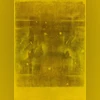
V S Gaitonde, Untitled, 1970, sold for Rs 67.08 crore, achieves 2nd highest price for Indian art (Photos: Courtesy Saffronart)
Veenu Sandhu New Delhi
4 min read Last Updated : Sep 28 2025 | 6:59 PM IST
Calendar 2025 is turning out to be a year of records for Indian art. At Saffronart’s 25th Anniversary Evening Sale, which concluded on Saturday (September 27) in New Delhi, VS Gaitonde’s untitled painting from 1970 went for Rs 67.08 crore ($7.57 million), making it the second most expensive work of Indian art sold worldwide – and setting a world record for the highest price achieved by the artist at auction globally. 
The reclusive Gaitonde surpassed Amrita Sher-Gil’s The Story Teller (1937) and Tyeb Mehta's Trussed Bull (1956), which were until now tied as the second most expensive Indian artworks. Both had gone for Rs 61.8 crore (approximately $7.4 million) at past Saffronart auctions – the Sher-Gil in 2023 and Mehta in April this year. 
“Gaitonde is bound to break records,” Saffronart CEO and Co-Founder Dinesh Vazirani said while speaking to Business Standard. “He wasn’t very prolific, and his paintings are tough to come by.” 
The late art critic Richard Bartholomew had once described Gaitonde as “a quiet man and a painter of the quiet reaches of the imagination”. 
Saffronart’s latest auction, meanwhile, also set a world record for the highest value sale of South Asian art at an auction globally – achieving a cumulative sales value of Rs 355.77 crore ($40.20 million). “The sale surpassed the record we set in April 2025 by over 60 per cent,” said Minal Vazirani, Saffronart president and co-founder. 
Nursery Tales by Nalini Malani, 2008, sold for Rs 3.60 crore (Photos: Courtesy Saffronart)
 
The live sale featured a catalogue of 85 works by pre-modern and modern artists, all of which were sold, marking another “white glove” auction for the house. 
The first sign that this was going to be a good year for Indian art came in March, when MF Husain’s 1950s painting, Untitled (Gram Yatra), sold for over Rs 118 crore ($13.8 million) at a Christie’s auction in New York. Collector Kiran Nadar, chairperson of the Delhi-based Kiran Nadar Museum of Art, is said to have bought that 14-foot-wide mural wherein the artist turned his gaze on snapshots of Indian society.
 
Among the other highlights of Saturday’s sale was F N Souza’s seminal series of six portraits, Six Gentlemen of Our Times (1955), which sold for Rs 20.40 crore ($2.30 million). The series set a world record for the highest value for a work on paper by a South Asian artist at auction. 
F N Souza, Six Gentlemen of Our Times, 1955 (set of six), sold for Rs 20.40 crore - the highest value for a work on paper by a South Asian artist (Photos: Courtesy Saffronart)
 
Artist records were also achieved for Tyeb Mehta, whose Trussed Bull, a sister work of the one auctioned in April and also painted in 1956, sold for Rs 56.40 crore ($6.37 million), eight times its higher estimate. “This work was special since it was displayed at Tyeb Mehta’s first solo exhibition in 1959,” says Vazirani. 
Trussed Bull by Tyeb Mehta, 1956, sold for Rs 56.40 crore (Photos: Courtesy Saffronart)
 
Meanwhile, Jehangir Sabavala’s The Anchorite (1983) fetched Rs 16.80 crore ($1.89 million), the second-highest value for the artist globally; and Nalini Malani’s Nursery Tales (2008) sold for Rs 3.60 crore ($406,780), more than five times its estimate. 
The Anchorite by Jehangir Sabavala, 1983, sold for Rs 16.80 crore (Photos: Courtesy Saffronart)
 
Other strong results included Austrian artist Walter Langhammer’s Barken am Zattere (Rs 38.40 lakh), Jyoti Bhatt’s Self-Portrait (Rs 50.40 lakh), and Sohan Qadri’s 2010 untitled work (Rs 72 lakh), which achieved the second-highest value for the artist at auction.
 
“It is amazing to see the Indian art market’s strength,” Dinesh Vazirani said. “People are educated about art; they want to invest in it. It is a mature market.” He added that reducing the goods and services tax (GST) for artworks, from 12 to 5 per cent, has also had a positive effect. “It psychologically pushes people to buy art.”
 
Beyond that, the sale, he said, is proof that great paintings will achieve any price.

One subscription. Two world-class reads.

Already subscribed? Log in

Subscribe to read the full story →
*Subscribe to Business Standard digital and get complimentary access to The New York Times

Smart Quarterly

₹900

3 Months

₹300/Month

SAVE 25%

Smart Essential

₹2,700

1 Year

₹225/Month

SAVE 46%
*Complimentary New York Times access for the 2nd year will be given after 12 months

Super Saver

₹3,900

2 Years

₹162/Month

Subscribe

Renews automatically, cancel anytime

Here’s what’s included in our digital subscription plans

Exclusive premium stories online

  • Over 30 premium stories daily, handpicked by our editors

Complimentary Access to The New York Times

  • News, Games, Cooking, Audio, Wirecutter & The Athletic

Business Standard Epaper

  • Digital replica of our daily newspaper — with options to read, save, and share

Curated Newsletters

  • Insights on markets, finance, politics, tech, and more delivered to your inbox

Market Analysis & Investment Insights

  • In-depth market analysis & insights with access to The Smart Investor

Archives

  • Repository of articles and publications dating back to 1997

Ad-free Reading

  • Uninterrupted reading experience with no advertisements

Seamless Access Across All Devices

  • Access Business Standard across devices — mobile, tablet, or PC, via web or app

Topics :Indian artV S GaitondeSaffronartPaintings

Next Story



