Budget 2026-27: Miners for removal of export duty on low-grade bauxite

Sector seeks tax concessions and government-backed protection against geopolitical risks abroad
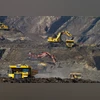
mining, mining industry
A major new demand is a government-backed insurance mechanism for overseas mining investments, particularly in Africa and South America | (Photo/Unsplash)
Saket Kumar New Delhi
3 min read Last Updated : Jan 15 2026 | 10:42 PM IST
India’s mining industry is pressing the government for removing export duties on low-grade bauxite and maintain the current duty regime on iron ore, various tax concessions, and a government-backed insurance mechanism to protect overseas mining investments from geopolitical risks in the upcoming Union Budget.
 
A senior executive at the Federation of Indian Mineral Industries (Fimi) told Business Standard that the industry body has submitted a proposal to remove the 15 per cent export duty on low-grade bauxite.
 
“India is self-sufficient in bauxite, especially in Gujarat and Maharashtra where low-grade deposits dominate. These grades are not consumed domestically. The 15 per cent duty should be withdrawn to support bauxite exports,” the executive said, requesting not to be identified.
 
On iron ore, the industry wants the government to maintain the current zero-duty regime for low-grade ore. At present, exports of iron ore below 58 per cent Fe (iron) attract no duty while higher grades face a 30 per cent duty. “Low-grade iron ore is not consumed by the domestic industry. We want to maintain the status quo. No new duties should be imposed,” the executive added.
 
A major new demand is a government-backed insurance mechanism for overseas mining investments, particularly in Africa and South America, where political instability and geopolitical risks could jeopardise projects, said Rajib Maitra, partner and sector leader, Deloitte South Asia.
 
The proposal mirrors sovereign guarantees extended to exporters by the Export Credit Guarantee Corporation (ECGC). ECGC, a government-owned entity, provides Indian exporters with insurance against commercial or political risks abroad, helping banks offer credit while protecting investments in politically volatile regions.
 
Maitra said mining investors need sovereign guarantees or counter-guarantees to secure financing from banks and financial institutions for overseas projects. Conventional insurance often does not cover political or financial instability, leaving projects exposed. The scheme would particularly support critical mineral projects such as lithium processing, rare earth separation, and magnet manufacturing.
 
Separately, the industry is lobbying for a much larger push on coal gasification, seeking ₹35,000 crore in Budget support, said Maitra. In January 2024, the Cabinet approved an outlay of ₹8,500 crore for promoting coal/lignite gasification in the country.
 
Coal gasification is a process that heats coal under high temperature and pressure with limited oxygen or steam, converting it into a clean gas called syngas. Considered a source of clean energy for the industry, the process is being promoted to reduce reliance on conventional fuels and lower emissions.
 
A Deloitte report on Budget expectations shows that the metal and mining industry has outlined five major tax-related requests for the government.
 
The first is enhanced depreciation in the initial years of a project along with an investment tax credit to ease upfront capital expenditure for mining, mineral processing, and downstream manufacturing. The industry has also sought tax credits specifically for critical mineral projects, including lithium processing, rare earth separation, and magnet manufacturing, where India currently lacks scale and faces high cost disadvantages.
 
A key demand is the reintroduction of the concessional 15 per cent corporate tax rate for new manufacturing units, which was discontinued in 2024 and replaced with the standard 25 per cent rate. Further, the sector wants conditional tax holidays for strategic greenfield projects.
 
Another major expectation is a reduction in basic Customs duties on imported raw materials, such as coking coal, an input material for the steel industry that is not available in sufficient quantities domestically.
 

One subscription. Two world-class reads.

Already subscribed? Log in

Subscribe to read the full story →
*Subscribe to Business Standard digital and get complimentary access to The New York Times

Smart Quarterly

₹900

3 Months

₹300/Month

SAVE 25%

Smart Essential

₹2,700

1 Year

₹225/Month

SAVE 46%
*Complimentary New York Times access for the 2nd year will be given after 12 months

Super Saver

₹3,900

2 Years

₹162/Month

Subscribe

Renews automatically, cancel anytime

Here’s what’s included in our digital subscription plans

Exclusive premium stories online

  • Over 30 premium stories daily, handpicked by our editors

Complimentary Access to The New York Times

  • News, Games, Cooking, Audio, Wirecutter & The Athletic

Business Standard Epaper

  • Digital replica of our daily newspaper — with options to read, save, and share

Curated Newsletters

  • Insights on markets, finance, politics, tech, and more delivered to your inbox

Market Analysis & Investment Insights

  • In-depth market analysis & insights with access to The Smart Investor

Archives

  • Repository of articles and publications dating back to 1997

Ad-free Reading

  • Uninterrupted reading experience with no advertisements

Seamless Access Across All Devices

  • Access Business Standard across devices — mobile, tablet, or PC, via web or app

Topics :Mining industryInsuranceOverseas Investors

Next Story



