The finance ministry announced the extension of safeguard duties (SGD) until April 2028, ending policy uncertainty. SGD will have tapering rates of 12 per cent till April 2026 then 11.5 per cent till April 2027 and then 11 per cent till April 2028.
The SGD raises the price floor but weak export markets and near-term supply pressure put a ceiling on steel prices. The SGD includes hot rolled or HR coils, sheets and plates, HR plate mill plates, cold-rolled coils (CRC) and sheets, metallic and colour-coated steel coils and sheets. It excludes electrical steel, tinplate, stainless steel, and aluminium-coated steel.
Provisional Joint Plant Committee (JPC) data indicates domestic finished steel consumption grew 7.4 per cent year-on-year (Y-o-Y) to 105.2 million tonnes (mt) during April-November of 2025. Finished steel imports declined by 36.3 per cent Y-o-Y during April-November of 2025.
Domestic HRC, CRC, and rebar prices have recovered month-on-month (M-o-M) in anticipation of SGD extension. The third quarter of 2025-26 (Q3FY26) saw softer steel prices and Q4 is seasonally the strongest quarter and it could push domestic prices up. From Q4FY26 onwards, steel producers should enjoy better operating profit per tonne and that could continue till April ’28.
But new capacities of domestic players coming online coupled with weak global prices limit upside potential. Spot domestic Chinese Ebitda (earnings before interest, taxes, depreciation, and amortisation) spreads remain negative and Chinese export prices are running lower quarter-on-quarter (Q-o-Q). Chinese production is cutting back. So this may ease import pressures.
Raw material prices may rise. The Q3FY26 average iron ore prices at $106 per tonne are higher by 2.6 per cent Y-o-Y and 3.8 per cent Q-o-Q. The Q3FY26 average spot coking coal price at $199.9 per tonne is 1.5 per cent lower Y-o-Y but 9.0 per cent higher Q-o-Q. Coking coal costs could escalate by another $3-5 per tonne.
The Q3FY26 average domestic steel HRC prices at ₹47,177 per tonne are lower by 1.2 per cent Y-o-Y and 4.7 per cent Q-o-Q. The Q3FY26 average rebar price at ₹47,254 per tonne is lower by 12.1 per cent Y-o-Y and 1.5 per cent Q-o-Q. Spot domestic HRC prices at ₹48,650 per tonne are at 7.8 per cent discount to Chinese import parity while spot rebar prices, at ₹49,000, are at a small premium.
Domestic producers with raw material integration are better placed to manage rising raw material costs. Tata Steel (20 per cent captive coking coal and 100 per cent iron ore integration) and Jindal Steel (20 per cent coking coal through overseas mines) are partly insulated.
Jindal Steel (49 per cent flat products in its portfolio which benefit from SGD) recently commissioned 4.6 million tonnes per annum (mtpa) blast furnace capacity and basic oxygen 3 mtpa capacity at Angul, Odisha and is targeting exit liquid steel capacity of 15.6 mtpa and finished capacity of 13.8 mtpa by FY27. Tata Steel (75 per cent flat products in its portfolio) is ramping up its 5 mtpa Kalinganagar blast furnace and 2.2 mtpa cold rolling mill complex to aid volume growth.

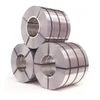 "Domestic steel prices may rise in Q4 as safeguard duty curbs imports")









