Home / Opinion / Columns / Could a Chandra Shekhar acolyte become India's next Vice President?
Could a Chandra Shekhar acolyte become India's next Vice President?
If elevated as Vice-President on September 9, Harivansh's career - shaped by his idol, former Prime Minister Chandra Shekhar - will acquire a new trajectory
premium
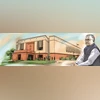
Chandra Shekhar was a socialist. Harivansh was a follower of Rammanohar Lohia | Illustration: Binay Sinha
4 min read Last Updated : Aug 01 2025 | 10:27 PM IST
The lot of a deputy chairman (as deputy presiding officers are known in the Rajya Sabha; in the Lok Sabha, it is deputy speaker, a position that has been vacant since 2019) is not an easy one. The chairman presides over the question hour, rising when it is over. The so-called zero hour (when members are allowed to raise issues at relatively short notice, and do so sometimes with no notice at all) is usually handled by the deputy chairman. This is when the placards come out, papers are torn up, and mayhem sometimes rules. It is the deputy chairman who presides over important and sometimes contentious debates. One needs to have eyes at the back of one’s head.
Harivansh Narayan Singh, or Harivansh as he prefers to be known as, first became Rajya Sabha member in 2014 and was elected deputy chairman in 2018. His name was forwarded by his party, the Janata Dal (United), or the JD(U). In his position, he remained unmoved by the acrobatics by his party in Bihar. His Rajya Sabha term came to an end in 2020 and with it his position as deputy chairman. But his party, which had returned to the National Democratic Alliance, again nominated him for the Rajya Sabha and also for deputy chairmanship. At his re-election, Prime Minister Narendra Modi said: “He is an outstanding umpire and belongs to all aisles of the House.”
JD(U) leader Nitish Kumar had picked him for politics. But Harivansh’s real calling was journalism and his real idol was former Prime Minister Chandra Shekhar. They belonged to the same linguistic region — eastern Uttar Pradesh/Bihar. Chandra Shekhar was from Ballia, which is in Uttar Pradesh. Harivansh’s family lived in Jayaprakash Narayan’s (JP’s) village, Sitab Diara. The two families had many connections.
Chandra Shekhar was a socialist. Harivansh was a follower of Rammanohar Lohia. The two first met at the Jaslok Hospital in the 1970s, where JP was admitted for kidney failure. Harivansh was working for famed Hindi magazine Dharmayug and interviewed Chandra Shekhar — he was to do so many times and was struck by the constancy of views. Later, when Chandra Shekhar became Prime Minister (1990-91), he became additional media advisor in the Prime Minister’s Office.
It is Chandra Shekhar’s influence and his training as a journalist that shaped his core beliefs: That there are two sides to everything; and at the end of the day, it is the last man who must get justice. When he joined the Ranchi-based Prabhat Khabar (1989), its circulation was 500 copies. It would grow to 200,000 over the next eight years especially after the bifurcation of Bihar. Harivansh achieved this by localising the news content. In the process, issues like corruption and land-grabbing became campaign matters and the newspaper’s tagline was: “Not just a newspaper, a movement”. Prabhat Khabar was among the first to report on the fodder scam during Lalu Prasad’s chief ministership and, with the help of leaders like Sushil Modi, followed it doggedly right to the end.
After he segued into politics, Harivansh’s unfailing politeness stood him in good stead. The Opposition moved a motion of no-confidence against him after he allowed a voice vote on two farm Bills (2020) while it had demanded they be referred to a select committee for a second look. Predictably, the motion was rejected by then chairman Venkaiah Naidu. But this was an aberration. His sense of balance and fair play during an era in the history of Indian Parliament when suspension of MPs became commonplace (46 Rajya Sabha MPs were suspended in the winter session in 2024, the highest ever), was evident in the way he handled the issue of breach of privileges. For instance, Aam Aadmi Party (AAP) Member Raghav Chadha was charged with claiming to but not actually obtaining the signatures of colleagues in seeking a motion to refer the Government of National Capital Territory of Delhi (Amendment) Bill, 2023, to a select committee. Union Home Minister Amit Shah demanded stringent action against him, charging falsification of signatures. Mr Chadha was suspended. Harivansh tactfully and deftly navigated the proceedings of the privileges committee and the suspension was ended. An Opposition member said: “When Harivansh sits in the chair, you feel your voice will be heard. The same cannot be said of other presiding officers.”
A new Vice-President will be elected on September 9. Given the composition of the electoral college (the elected members of the Lok Sabha and Rajya Sabha, and the nominated members), the government’s victory is a foregone conclusion. Three names are in circulation: A Union minister, the governor of a southern state, and the deputy chairman. If elevated, Harivansh’s career will acquire a new trajectory.
Disclaimer: These are personal views of the writer. They do not necessarily reflect the opinion of www.business-standard.com or the Business Standard newspaper




