Home / Opinion / Columns / Exim matters: US reform proposals challenge WTO's basic principles
Exim matters: US reform proposals challenge WTO's basic principles
US proposals to reform the WTO question core principles like MFN and special treatment for developing nations, deepening divisions and raising doubts over the future of rules-based trade
premium
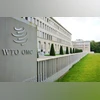
All WTO agreements rest on a small set of foundational principles: MFN obligation, national treatment, binding commitments, transparency, and SDT for developing and least developed countries. (Photo: Shutterstock)
3 min read Last Updated : Dec 22 2025 | 12:31 AM IST
Last week, the United States (US) circulated proposals for reform of the World Trade Organization (WTO) that question several of its core principles, such as the most-favoured nation (MFN) obligation, special and differential treatment (SDT) for developing countries, the consensus-based decision-making process, and the role of the WTO Secretariat. Discussion on these matters in the coming weeks is likely to expose deep divisions among members and add to the organisation’s current fragility.
The WTO was established in 1995 after nearly eight years of negotiations, with the principal objective of making cross-border trade in goods, services and intellectual property more stable, fair and predictable through uniform and binding rules. Today, its 166 members account for around 98 per cent of global trade.
The organisation performs three core functions: Providing a forum for trade negotiations, overseeing the implementation of agreements, and settling disputes among members. Its apex decision-making body is the biennial Ministerial Conference, supported by the General Council and an extensive committee structure.
All WTO agreements rest on a small set of foundational principles: MFN obligation, national treatment, binding commitments, transparency, and SDT for developing and least developed countries. MFN requires each member to extend any trade concession offered to one member to all others. The United States now argues that this principle no longer reflects economic realities and should be replaced with greater flexibility to differentiate among trading partners. For many members, including India, MFN is not an abstract concept but a practical safeguard against power asymmetries.
Diluting non-discrimination would risk shifting the system away from rules towards leverage, particularly disadvantaging smaller and weaker economies. While preferential trade agreements already permit departures from MFN, these are structured exceptions rather than a rejection of the principle itself. The US has already ignored the MFN principle by levying different duties on goods from different countries, under the pretext of national security considerations.
Developing countries, like India, regard SDT as essential for addressing capacity constraints, development gaps and structural disadvantages. The US argues that SDT is appropriate for least developed countries but not for developing countries.
However, while there is merit in the proposal to refine S&DT provisions, a wholesale rollback for developing countries would risk entrenching, rather than narrowing, global inequalities.
The US says that the WTO’s unanimity-based decision-making process inhibits progress. Many frustrated members have pursued plurilateral agreements that bind only consenting participants. Such plurilateralism is the most viable path forward, the US says. Others, including India, caution that unchecked reliance on such approaches could fragment the trading system, marginalise non-participants and weaken multilateral disciplines.
The US reform proposals must be viewed against the backdrop of recent US actions: Unilaterally raising tariffs against various countries, hoping to reshore more job-creating investments in manufacturing in the US, accusations about China subsidising manufacturers to create overcapacity and stealing intellectual property of US firms, blocking appointments to the WTO’s appellate body, and paralysing the dispute settlement mechanism. Many trade analysts, therefore, wonder whether the US proposals are designed to strengthen the multilateral system at all.
Reform is clearly necessary, but changes that weaken the MFN principle, dilute development flexibilities and sideline binding dispute settlement risk reducing the WTO’s relevance. Privately, many trade diplomats wonder whether a rules-based system can function if its most influential member remains unwilling to be bound by the very disciplines it seeks to rewrite.
Disclaimer: These are personal views of the writer. They do not necessarily reflect the opinion of www.business-standard.com or the Business Standard newspaper