From Ghalib to open mics: What is going wrong with Urdu Shayari today?

Once celebrated for its originality and craft, shayari is moving towards populism instead of excellence
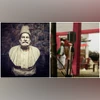
Urdu shayari
As Ghalib’s legacy is celebrated, the tension between poetic craft and viral performance raises a question: are we honouring Urdu or simply applauding the echo of its greatness? (Photo: Wikimedia Commons)
Aman Sahu New Delhi
4 min read Last Updated : Dec 27 2025 | 12:05 AM IST
In 1797, Mirza Asadullah Baig Khan was born in Agra on December 27. But history does not remember him by the name he was given at birth. Instead, he came to be known by the takhallus (pen name) that would define him — Mirza Ghalib, arguably the greatest Urdu shayar ever born. Ghalib, who played perhaps the most significant role in shaping the Urdu language, believed that Meer Taqi Meer was its true master. As he famously wrote: “Rekhta ke tum hi ustad nahin ho ‘Ghalib’/ kehte hain agle zamane mein koi ‘Meer’ bhi tha.” (You are not the sole master of Urdu, Ghalib/ they say that in an earlier era, there was also a Meer.) 
However, more than two centuries later, when the world celebrates Ghalib’s birth anniversary today, his wit and depth are fondly recalled, but the humility that once accompanied them seems to have been lost to time. Nowadays, some shayars take a very basic thought and recite a couplet without any technical characteristics required to be called a sher.  Consider this example from Manhar Seth, who has 3 million followers on Instagram: “Hum bhi mil lenge tere bacchon se, tu bhi unhe kya batayega/ De denge hum bhi apna dil unhe — maa ka khilona bacchon ke kaam toh aayega.”(I may meet your children someday too — what will you tell them then? I’ll give them my heart as well; a mother’s broken toy might at least be of use to her children.) 
The confidence in their eyes cries out that they are superior to Meer. Anyone with a working knowledge of shayari would know that this is nothing more than a performance, with more emphasis on a deep voice and sound variations than on the craft being philosophical or even imaginative enough to be categorised as poetry.  Many Indian standup comedians use abysmal shayari to rescue substandard jokes. Sometimes, even when the jokes are good, the technique is used merely to go viral with the ‘thug life’ meme. Misogynistic two-liners — not worthy of being called a sher — are also used to trend with “The Boys” meme. In Urdu shayari, it is understood that the shayar may reproach the beloved for being unfaithful or distant, but not at the cost of linguistic integrity or technical discipline. Even Pakistani poet Jaun Elia, whose work deals with some of the most intense and existential themes in Urdu poetry, did not abandon the boundaries that form the basis of the craft. And it is not just about rules, the lack of imagination feels even more alarming. 
The originality that defined the genius of Ghalib is reflected in this sher, where he dared to question even God about the very nature of existence: “Jab ki tujh bin nahin koi maujood/ phir yeh hungama ai Khuda kya hai?” (When there is none but You, O God/ then what is all this commotion?) It seems highly unlikely that a modern shayar would be able to create something like this. Perhaps because modern audiences often applaud thoughts that are shallow and unimaginative. 
Open mics and digital platforms may have strengthened free expression by promoting talent that would otherwise have remained unknown, but they have also made people believe that shayari can be anything and everything — sometimes rhyming, sometimes just words uttered in an extremely deep voice. Their couplets may have qafiya (rhyme), but the bahr (metre) is immeasurable, and the thought itself is deprived of imagination. 
There have been efforts that can be termed a renaissance for the Urdu language. Recently, Jashn-e-Rekhta, an Urdu literature festival, celebrated its 10-year anniversary, with reports of nearly 150,000 visitors. It is a necessary and worthy step, but the festival, which should be a promoter of culture, has increasingly become a hub of a commercialised carnival, with celebrity singers and performers as its main draw. There are, of course, sessions during the three-day event that genuinely work towards the preservation and promotion of Urdu, but these remain overshadowed by celebrity culture. 
The blame ultimately lies with the audience and readers. Literature was once criticised for being elitist and exclusionary. Now that it is accessible to all, why is it moving towards populism instead of excellence? This compels us, as participants in the culture, to ask: Do we want to keep Ghalib’s legacy alive, or are we content with joining the ranks of the Pretentious Shayars Society?

One subscription. Two world-class reads.

Already subscribed? Log in

Subscribe to read the full story →
*Subscribe to Business Standard digital and get complimentary access to The New York Times

Smart Quarterly

₹900

3 Months

₹300/Month

SAVE 25%

Smart Essential

₹2,700

1 Year

₹225/Month

SAVE 46%
*Complimentary New York Times access for the 2nd year will be given after 12 months

Super Saver

₹3,900

2 Years

₹162/Month

Subscribe

Renews automatically, cancel anytime

Here’s what’s included in our digital subscription plans

Exclusive premium stories online

  • Over 30 premium stories daily, handpicked by our editors

Complimentary Access to The New York Times

  • News, Games, Cooking, Audio, Wirecutter & The Athletic

Business Standard Epaper

  • Digital replica of our daily newspaper — with options to read, save, and share

Curated Newsletters

  • Insights on markets, finance, politics, tech, and more delivered to your inbox

Market Analysis & Investment Insights

  • In-depth market analysis & insights with access to The Smart Investor

Archives

  • Repository of articles and publications dating back to 1997

Ad-free Reading

  • Uninterrupted reading experience with no advertisements

Seamless Access Across All Devices

  • Access Business Standard across devices — mobile, tablet, or PC, via web or app

Topics :Urdu languagepoetryBS OpinionLiterature

Next Story



