Next game changer: High-speed rail may add ₹60 trn to economy in 15 years

For decades, traditional trains have been India's arteries, moving over 23 million passengers daily along with vital freight
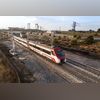
High Speed Rail
Every kilometre of HSR provides five times the capacity of conventional rail and can play a crucial role in developing Tier II and III cities, relieving the pressure on the metros. (Representative image: Freepik)
Vinayak Chatterjee
5 min read Last Updated : Sep 18 2025 | 10:50 PM IST
India is ripe for a massive new infrastructure thrust, one that should be as transformative and rejuvenating for the economy as the National Highways Development Project and the renewables initiative have been. And that, indubitably, is a high-speed rail (HSR) mega-programme. India’s per-capita gross domestic product (on a purchasing power parity basis) is now on a par with that of countries that pioneered HSR several decades ago — pointing to the fact that this is the right time for India to make the leap from conventional rail to HSR.  
The case for prioritising HSR has also gained salience after August 18, when the Prime Minister convened the finance, commerce, and railways ministers, along with leading economists, to craft a fresh agenda for boosting economic growth. India has repeatedly shown that bold infrastructure dreams can become reality when propelled by political will, bolstered by associated policies and anchored by strong institutions. HSR must move beyond a one-off project (bullet train) and become the next national programme.  
For decades, traditional trains have been India’s arteries, moving over 23 million passengers daily along with vital freight. But with ₹60,466 crore in passenger subsidies, HSR can ease this burden by drawing new aspirational travellers willing to pay much more for speed and comfort. The Railways also urgently needs to compete effectively with affordable air travel and inter-city luxury coaches.  
However, for HSR to deliver on its promise, certain priorities are non-negotiable. Dedicated lines are essential; mixing high-speed trains with slower passenger or freight traffic would dilute both speed and reliability. India must look beyond its broad-gauge legacy and embrace standard gauge, the global norm that enables easier technology transfer, stronger vendor partnerships, and seamless international compatibility. This would also allow India to open up avenues for exporting indigenous HSR technology, components, and rolling stock. 
Securing long-term sustainable financing will be a critical challenge. The Mumbai-Ahmedabad Bullet Train corridor costs roughly ₹250 crore per km, whereas metro-rail today costs approximately ₹500 crore per km (average of elevated and underground). Yet metros are able to tie up financing because states co-invest, recognising the gains from rising land values around stations and other associated economic benefits. HSR, thus, should not continue to be funded by the Centre alone, but embrace cities and states as co-developers. 
There is then the uncomfortable point that much of the Railways’ innovative development agenda has been historically stymied by the conservatism of a Railway Board-managed hierarchy. HSR, going forward, should be run by the standalone High Speed Rail Corporation, adopting modern management practices, thereby bypassing the difficulties of trying to reform the existing and entrenched railway administration. This is much like the National Highways Authority superseding the timeless public works departments! 
Further, indigenisation is essential to make HSR a self-reliant and globally competitive venture. Targeting localisation in rolling stock and components would reduce import dependence and nurture a strong supplier base. HSR should thus be positioned as integral to industrial policy, fostering a new manufacturing ecosystem, lowering costs, and deepening technical know-how. The Integral Coach Factory and BEML are already developing indigenous high-speed HSR rolling stock based on Vande Bharat designs. 
Every kilometre of HSR provides five times the capacity of conventional rail and can play a crucial role in developing Tier II and III cities, relieving the pressure on the metros. The transformative power of HSR is not only in the trains themselves, but also in the stations that punctuate their journeys. Around the world, stations have acted as the nuclei of new economic geographies. A study by the London School of Economics and the University of Hamburg found that cities connected to HSR networks recorded GDP gains at least 2.7 per cent higher than neighbouring cities without such connections. 
The potential for HSR to create a new-age skilled workforce is already being seen. The National High Speed Rail Corporation Limited has, at its Surat facility, started training 1,153 personnel in bullet train track construction and operations & maintenance (O&M). This single project is reported to be generating 90,000 jobs during construction, 4,000 direct O&M jobs, and 20,000 indirect jobs. Supporting this effort, the HSR Training Institute in Vadodara can train 3,500 staff across rolling stock, civil works, electrical, signalling, telecom, and train operations. 
Recognising all these, The Infravision Foundation (TIF), in partnership with the Confederation of Indian Industries’ Rail Transportation and Equipment Division (CII-RTED), convened a high-level roundtable in New Delhi on August 18 to deliberate on the future of HSR and also release TIF’s research paper “The Case for Developing HSR Corridors in India”.  
There are numerous studies that document the economic turbocharging provided by the highway development programme and renewable thrust; both in terms of direct and indirect benefits to jobs and multiplier effects. A fifteen-year programme for HSR covering, say, 10 corridors of average 700 km will mean an investment requirement of around ₹20 trillion at today’s prices. Using the well-established multiplier of three for such infra projects, the benefit to the economy will be to the order of ₹60 trillion over the next 15 years. Looking ahead, HSR would represent more than just faster travel, it would reshape India’s economic landscape. If highways stitched India together in the 2000s and renewables powered its leap in the 2010s, HSR could well define the next big chapter in India’s growth story. 
After all, a nation poised to become the third-largest economy must take pride in having a modern railway system. 
 
The author is an infrastructure expert. He is also the founder & managing trustee of The Infravision Foundation. Research Inputs from Vrinda Singh

One subscription. Two world-class reads.

Already subscribed? Log in

Subscribe to read the full story →
*Subscribe to Business Standard digital and get complimentary access to The New York Times

Smart Quarterly

₹900

3 Months

₹300/Month

SAVE 25%

Smart Essential

₹2,700

1 Year

₹225/Month

SAVE 46%
*Complimentary New York Times access for the 2nd year will be given after 12 months

Super Saver

₹3,900

2 Years

₹162/Month

Subscribe

Renews automatically, cancel anytime

Here’s what’s included in our digital subscription plans

Exclusive premium stories online

  • Over 30 premium stories daily, handpicked by our editors

Complimentary Access to The New York Times

  • News, Games, Cooking, Audio, Wirecutter & The Athletic

Business Standard Epaper

  • Digital replica of our daily newspaper — with options to read, save, and share

Curated Newsletters

  • Insights on markets, finance, politics, tech, and more delivered to your inbox

Market Analysis & Investment Insights

  • In-depth market analysis & insights with access to The Smart Investor

Archives

  • Repository of articles and publications dating back to 1997

Ad-free Reading

  • Uninterrupted reading experience with no advertisements

Seamless Access Across All Devices

  • Access Business Standard across devices — mobile, tablet, or PC, via web or app

Topics :BS OpinionHigh Speed RailRail Trains

Next Story


