Preparing for China's landing

India's trade deficit with China could widen further
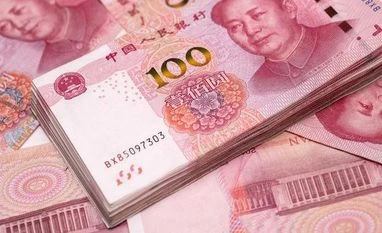
China currency
Photo: Bloomberg
Rajesh Kumar
5 min read Last Updated : Aug 30 2023 | 10:17 PM IST
The People’s Bank of China (PBoC) is an exception among large central banks in cutting interest rates. Contrary to most other central banks that are struggling to tame inflation, the PBoC is responding to weakening growth prospects and declining prices. Although the Chinese government expects the economy to grow by about 5 per cent in 2023, economists believe it will be much lower. Some longer-term projections suggest growth will slow down to 2-3 per cent by the end of the decade. Notably, the Chinese economy expanded at an average annual rate of 9 per cent between 2000 and 2019 and has been the biggest driver of global growth. This sharp slowdown can have a range of implications, both for the global economy and China itself.

The China story, to be sure, has been questioned many times before, but it managed to surprise sceptics. This time, however, may be different. A number of explanations are being put forward for the slowdown. Given the high growth for decades and the size of the economy, a shift to a slower growth trajectory was always on the cards. But the big question is whether this transition will be smooth, or if it will disrupt the world. Analysts, for now, are not anticipating a significant upheaval. A broad consensus, however, often increases risks. Not too many people, for example, had discounted the possibility of stress in the US housing market snowballing into a full-blown financial crisis in 2007-2008. One of the biggest pain points in China today is also real estate.

Years of excessive investment in real estate have resulted in oversupply. According to estimates, real estate accounts for about a quarter of gross domestic product (GDP). With demand and prices falling, developers are unable to meet obligations. But the problem doesn't end here. Banks have lent heavily to both real estate developers and buyers. Property-related debt accounts for about 43 per cent of GDP, according to Oxford Economics, an economic advisory firm. Local governments have also borrowed from banks and their repaying capacity has suffered because of the downturn in the property market. There are layers to the problem, and it is possible that financial markets are not fully appreciating the level of complexity. Chinese households have invested heavily in real estate, partly because of financial repression. Since a lot of wealth is in real estate, falling prices or an unfavourable outlook will affect consumption in general because of the negative wealth effect.

During the previous slowdowns, the government responded with increased investment in infrastructure, which helped maintain activity in businesses such as steel and cement. However, it may not be able to do the same at scale for at least two reasons. First, China already has far too many bridges to nowhere. Second, government finances are not as supportive. The general government debt, according to the International Monetary Fund, is expected to cross 100 per cent of GDP in the coming years. The combined debt of all levels of government and state-owned companies was at about 300 per cent of GDP in 2022, according to the Bank for International Settlements. Repaying debt becomes more difficult with lower growth. The prospect of deflation or very low inflation will only complicate matters.

Besides pure financial issues, the size of the workforce is expected to decline sharply in the coming years. As highlighted by a recent note from London-based Capital Economics, while China’s labour force peaked in 2017, it is projected to shrink by over 0.5 per cent per year by 2030. This would affect output, among other things. China’s geopolitical positioning will not help either. The West is working hard to cut dependence on China and is not willing to share high-end technology, which is critical for growth. The Chinese government’s own suspicion of private capital will affect prospects.

Even if it's assumed that there will be no big financial disruption, a sustained slowdown in China will itself have profound implications for the global economy. According to the IMF, a one percentage point increase in the Chinese growth rate pushes up growth in other economies by about 0.3 basis points. A reversal will likely have the opposite effect. Global growth, in any case, is expected to remain below trend over the next several years. Economies that are deeply connected with China will have a bigger impact. Slower expansion would also mean lower demand for commodities, resulting in lower prices, which will help net importers like India. However, commodity exporters from around the world will feel the pain. With lower domestic demand and excess capacity for almost everything, China would want to push cheap exports, which in the short run could actually help bring down inflation in various parts of the world. However, the outlook for the medium term might not be favourable, given that supply chains are being diversified away from China, not necessarily to more efficient alternatives.

Further, China’s capacity to absorb capital will go down and global savings will have to look for alternatives. Debt investors have already sold Chinese bonds worth over $30 billion so far this year. Large investment banks have also revised their targets lower for Chinese equity. Moreover, Chinese households may save even more as a precautionary measure and end up exporting it. For India, slower global growth will be a big negative. However, if India plays well, it can gain from lower commodity prices and attract more global savings looking for alternatives. It is already encouraging manufacturers moving out of China to set up bases. Finally, given the potential growth differential and other factors, India’s trade deficit with China could widen further.

One subscription. Two world-class reads.

Already subscribed? Log in

Subscribe to read the full story →
*Subscribe to Business Standard digital and get complimentary access to The New York Times

Smart Quarterly

₹900

3 Months

₹300/Month

SAVE 25%

Smart Essential

₹2,700

1 Year

₹225/Month

SAVE 46%
*Complimentary New York Times access for the 2nd year will be given after 12 months

Super Saver

₹3,900

2 Years

₹162/Month

Subscribe

Renews automatically, cancel anytime

Here’s what’s included in our digital subscription plans

Exclusive premium stories online

  • Over 30 premium stories daily, handpicked by our editors

Complimentary Access to The New York Times

  • News, Games, Cooking, Audio, Wirecutter & The Athletic

Business Standard Epaper

  • Digital replica of our daily newspaper — with options to read, save, and share

Curated Newsletters

  • Insights on markets, finance, politics, tech, and more delivered to your inbox

Market Analysis & Investment Insights

  • In-depth market analysis & insights with access to The Smart Investor

Archives

  • Repository of articles and publications dating back to 1997

Ad-free Reading

  • Uninterrupted reading experience with no advertisements

Seamless Access Across All Devices

  • Access Business Standard across devices — mobile, tablet, or PC, via web or app

More From This Section

Disclaimer: These are personal views of the writer. They do not necessarily reflect the opinion of www.business-standard.com or the Business Standard newspaper

Topics :BS OpinionChina

Next Story



