Last week, the government approved a package of ₹69,725 crore to revitalise the shipbuilding industry and granted infrastructure status for building large vessels. It is a significant step forward given the government’s ambitions that India should be among the top five ship building nations in the world by 2047.
The financial package includes ₹24,736 crore under the shipbuilding financial assistance scheme (now extended till March 31, 2036), ₹20,000 crore for maritime development fund, ₹19,989 crore under the ship development scheme and ₹4,100 crore for ship breaking credit notes. It aims to improve long-term financing, promote greenfield and brownfield shipyard development, enhance technical capabilities and skilling, and create a robust maritime infrastructure, says the government.
Almost 90% of global cargo moves through the oceans with China, South Korea and Japan dominating the ship building industry aided by considerable support from their governments. The shipbuilding market is about $160 billion and is projected to grow at 4-5% to about $200 billion by 2030. India has less than 1% of the market share and order book, with most of the ships being relatively small and built for offshore support, navy, coastguard and coastal fishing and transport purposes.
Global shipping faces many challenges such as high costs and investment risks due to fickle demand, regulation uncertainty due to evolving emission norms, technology risks due to fast-changing engine and vessel designs, materials specifications and propulsion systems, supply chain volatility and geopolitical and policy risks such as sanctions and trade barriers. Indian smaller shipyards have relatively low capacity, hardly any global commercial presence, poor indigenous capability for complex ship engine designs to handle alternative fuel and lack enough skilled labour and vibrant eco-systems for ancillaries.
Shipping emits about 3% of global greenhouse gases (GHG) and so the new ships must be designed and built for handling future fuels like ammonia, hydrogen, methanol etc. The transition to low-carbon fleets involves higher costs, greater technological complexity, and capital needs. Indian shipyards are now exploring technology tie-ups with shipbuilders in Japan and South Korea to meet the technological challenges ahead. With government support, they hope to build an eco-system to vastly enhance their capabilities.
The aggregate throughput of all Indian ports at almost 1,600 million tonnes is less than the cargo a single port handles in some countries. Feeder vessels from our ports carry cargo to transhipment ports like Singapore or Colombo. Major shipping lines are owned by entities based in Europe and East Asia. Indian shipyards need to build credibility with these potential ship buyers and offer attractive terms. India’s prospects in labour-intensive ship repairing, maintenance and retrofitting and ship breaking appear better.
The Maritime Amrit Kaal 2047 report envisages investment of ₹80 trillion in the maritime sector with ₹54 trillion for shipbuilding and ship recycling alone. In a sector where we have no comparative advantage or perceivable strengths, an important justification for such investment is supporting naval power and securing vital trade routes while gaining some market share in commercial vessels. However, that sort of investment is unlikely to come from internal accruals or borrowings of the shipyards. So, continuous support from the government will be required to achieve the ambitious targets. Subsidies, however, alone can’t get us far enough. Our shipyards should strive to become globally competitive.

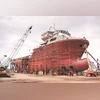 "Shipbuilding dreams: Subsidies to help but shipyards must be competitive")










 Connect with us on WhatsApp