Tariff tantrums and geopolitical turbulence: Shifting India-China ties

The US was already losing its economic heft to China, even with respect to its treaty allies and partners in Asia
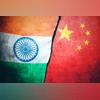
India china, India, China
(Photo: Shutterstock)
Shyam Saran
5 min read Last Updated : Apr 04 2025 | 11:12 PM IST
The US, under President Donald Trump, has declared a new Liberation Day on April 2, when he imposed a slew of “reciprocal” tariffs on all US trade partners. While these tariffs and their economic and commercial impacts on the US and the global economy are being examined threadbare, the geopolitical consequences of the underlying thinking behind this latest US move deserve closer scrutiny.
 
Mr Trump’s “tariff tantrum” risks decoupling the US from the rest of the world, making it a diminished power and creating spaces in the geopolitical landscape for other substantial powers to expand their agency and influence. Make no mistake — the chief beneficiary of the US retreat will be China. If it plays its cards well, which it does not always do, it could be on the brink of hegemony in Asia, if not the world.
 
If the US is celebrating its liberation from a world it believes has taken advantage of it throughout the post-Second World War period, the flip side is that the world may soon liberate itself from the US — by compulsion, if not by choice. The US risks becoming an outlier in whatever global order emerges from the pervasive disruption unleashed by Mr Trump.
 
The sheer instinct for survival may drive countries to forge new arrangements to ensure their security, safeguard their economic interests, and build on affinities that may have remained latent — obscured by the power and influence of the US. This reordering may happen sooner in Asia, as US tariffs and transactional diplomacy accelerate the consolidation of China-led supply chains that now dominate the region’s economy.
 
The US was already losing its economic heft to China, even with respect to its treaty allies and partners in Asia. It continued to exercise influence by remaining the region’s key security provider. If in its new mercenary style, the US seeks recompense from its allies and partners for offering protection, the latter will look for alternatives. And China is waiting in the wings. The Trump administration has resiled from any commitment to defend Taiwan against a Chinese invasion and occupation, saying that it is “too far away” and no vital US interests are involved. This suggests that the US is no longer seeking to maintain its predominance in the Indo-Pacific but emerge instead as an off-shore balancer. This knocks the bottom out of its Indo-Pacific strategy and the “Quadrilateral,” which has become such a key component of India’s strategy of constraining Chinese power. India’s China challenge will impinge even more on its security interests, just as it will for Japan and South Korea, which may pursue nuclear weapons for their defence.
 
The incoming world order will be significantly shaped by how Europe reacts to Mr Trump’s virtual abandonment of the Atlantic alliance. There is no “West” anymore in the sense it was understood since the end of the Second World War. Europe, in particular, has experienced fragmentation in recent years, especially after Brexit in 2020. Will the pressure of current events lead to greater cohesion in Europe? Could recent signs of the UK working together with the European Union (EU) on shared security interests potentially lead to its re-integration into the grouping? Will Europe finally move seriously to organise its own defence independent of the US? From India’s point of view, a more integrated, more independent Europe, exercising greater agency, would be a positive development and there is a good case for India and Europe seeking a closer strategic partnership. India’s traditional preference for a multi-polar world demands an independent and powerful Europe.
 
There is a view that the world may be moving back to an age when great powers had carved the world into competing spheres of influence. Mr Trump seems to be attracted to this idea. There is a hemispheric dimension to his world view, with the US dominating the Americas and adjacent territories such as Greenland, the Russians dominating Europe, and China becoming the pre-eminent power in Asia. One suspects that the seasoned and cynical leaders in Moscow and Beijing will pocket the gains offered by a maverick in the White House and leave the US increasingly isolated from its erstwhile allies and partners.
 
Mr Trump appears to believe that power is its own persuasion. To an extent this is true, but the economical and effective use of power needs a veneer of legitimacy. In the case of the US, legitimacy has been reinforced by its soft power, the attraction of its popular culture, and the innovative spirit and drive of its entrepreneurs. Since American universities are considered the bastions of liberal thinking, they are being systematically decimated. If continued at the current pace, the damage to US’ international profile, built over decades, may be irretrievable even after Mr Trump’s four-year term is over.
 
For India, the shifting geopolitical landscape will offer opportunities even as there will be heightened risks, particularly from a more powerful and assertive China. A review of the current posture towards China may be inevitable. What has not changed is the compelling need for India to secure its own periphery, actualise its declared policy of Neighbourhood First and become the chief engine of growth and a security provider for all its neighbours. The very asymmetry of power it enjoys vis-à-vis its neighbours, makes this eminently possible.
 
The author is a former foreign secretary

One subscription. Two world-class reads.

Already subscribed? Log in

Subscribe to read the full story →
*Subscribe to Business Standard digital and get complimentary access to The New York Times

Smart Quarterly

₹900

3 Months

₹300/Month

SAVE 25%

Smart Essential

₹2,700

1 Year

₹225/Month

SAVE 46%
*Complimentary New York Times access for the 2nd year will be given after 12 months

Super Saver

₹3,900

2 Years

₹162/Month

Subscribe

Renews automatically, cancel anytime

Here’s what’s included in our digital subscription plans

Exclusive premium stories online

  • Over 30 premium stories daily, handpicked by our editors

Complimentary Access to The New York Times

  • News, Games, Cooking, Audio, Wirecutter & The Athletic

Business Standard Epaper

  • Digital replica of our daily newspaper — with options to read, save, and share

Curated Newsletters

  • Insights on markets, finance, politics, tech, and more delivered to your inbox

Market Analysis & Investment Insights

  • In-depth market analysis & insights with access to The Smart Investor

Archives

  • Repository of articles and publications dating back to 1997

Ad-free Reading

  • Uninterrupted reading experience with no advertisements

Seamless Access Across All Devices

  • Access Business Standard across devices — mobile, tablet, or PC, via web or app

Topics :BS OpinionChinaTrump tariffs

Next Story



