The essence of great leadership: Rising above pride and nationalism

By doing this, we sign on to the interests of the regime. There is a small matter of the interests of the people
Iran
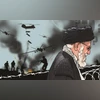
Great leaders are those that rise above narrow considerations of face, of regime stability, of ideology, to do things that are in the interests of the people. There are many such examples in history. Illustration: Ajaya Mohanty
Ajay Shah
6 min read Last Updated : Jun 22 2025 | 11:35 PM IST
Most of us have settled into a warm cynicism about governments. We expect the regime to act through a combination of pride and nationalism. So we think, of course the Iranian government will hit back, of course the Iranian government will try to rival Israel’s military power, of course the regime will continue on the slog of trying to get to nuclear weapons.
 
By doing this, we sign on to the interests of the regime. There is a small matter of the interests of the people. The essential insight of political science and international relations is the distinction between the principal and the agent, the distinction between the interests of the people vs the interests of the regime. 
The pursuit of pride and nationalism by the Khamenei regime has brought disaster for the Iranian people. It does not have to be like this. The right strategy for Iran is to settle into 50 years of becoming a normal country, of getting away from state violence against the people, of building the society and the economy, of becoming a normal country that engages with the world in the normal ways of well behaved countries. That would build a great country, which is in the interests of the people. 
Great leaders are those that rise above narrow considerations of face, of regime stability, of ideology, to do things that are in the interests of the people. There are many such examples in history. 
It would have been easy for the Congress leadership to be hostile towards the British in 1947, as was the case with many post-colonial regimes. Owing to the advanced sensibilities of the Congress leadership, they preserved cordial relationships with the British, and did not inject violence into the end game. This was the lofty spirit of building India as opposed to catering to an angry base. 
Charles de Gaulle came to power in France in 1958 on the promise of keeping Algeria French. But he came to understand that this was harmful for France, and signed up for Algerian independence in 1962, at great personal cost. This was the lofty spirit of building France as opposed to catering to an angry base. 
F W de Klerk inherited the South African apartheid system. He could have continued the politics of anger and rejection of the world. But he understood the harm that the status quo was bringing for the people. He released Nelson Mandela from jail in 1990 and led the transition to democracy in 1994, effectively negotiating himself and his party out of power. This was the lofty spirit of building South Africa as opposed to catering to an angry base. Mikhail Gorbachev is a similar hero, who created the possibility of Russia becoming a normal country, as opposed to staying in the game of trying to be equal to the West, in a miasma of pride, anger, violence, and nationalism. 
Anwar Sadat sacrificed his status as the leader of the pan-Arab cause by making peace with Israel in 1977. Yitzhak Rabin in Israel went against the prideful path by negotiating with Yasser Arafat, culminating in the 1993 Oslo Accords. In return for these great acts of leadership, Sadat was murdered in 1981 and Rabin in 1995, by right-wing nationalists from their homeland.
Deng Xiao Ping succeeded Mao and could have just continued with more Maoism. The prideful path, the continuation of Maoism, would have a combination of strategic autonomy, hatred of the West, and hatred of the domestic elite. Instead, he chose the slogan “hide your strength, bide your time”, engaged with the West, supported the emergence of an elite with the slogans “To get rich is glorious” and “Let some people get rich first”. This was the lofty spirit of building China as opposed to catering to an angry base. 
These examples – Jawaharlal Nehru, Charles de Gaulle, F W de Klerk, Gorbachev, Sadat, Rabin, and Deng Xiao Ping -- all show us great leaders who pursued the interests of the people and not the regime, who dialled down the pride in return for building a normal country, who created conditions of low violence and a chance of sustained economic growth for 50 years.
There are of course numerous failed leaders who emphasised pride and nationalism, who appealed to their base. Leopoldo Galtieri invaded the Falkland Islands in 1982, trying to drum up domestic anti-colonial sentiment, which led to a collapse of the regime in 1983. Nasser was confrontationist on the scale of Khamenei, and lost the six-day war in 1967. Robert Mugabe led a (popular!) violent land reform program in Zimbabwe that gave a collapse of agricultural production and hyperinflation. The gold medal for foolish pride goes to Vladimir Putin, who destroyed the possibility of Russia becoming a normal country, a European quality democracy, and a member of the European Union and North Atlantic Treaty Organization. 
Yes, such leaders exist, but we should not normalise such leadership qualities. 
We should not jump to the assumption that pride is the only force at work. The essence of leadership lies in doing things that are good for the people as opposed to the regime. 
The Khamenei regime may look at the situation in Iran from the viewpoint of pride, it may think the Iranian people must fight back and build a nuclear bomb. That is a terrible strategy for the Iranian people. There is no need for the Iranian state to sacrifice the peace and prosperity of the Iranian people in return for the hope of nuclear bombs that give the regime a bigger swagger in world affairs. Iran faces zero threat from either Israel or the Sunni Arab states; it does not need nuclear weapons. All that is going on is the egotism of a small minority of Iran which happens to control the coercive power of the state. The important thing is not some male notions of pride or honour; the important thing is to create conditions of peace and prosperity, by turning Iran into a normal country.  
 
The author is a researcher at the XKDR Forum

One subscription. Two world-class reads.

Already subscribed? Log in

Subscribe to read the full story →
*Subscribe to Business Standard digital and get complimentary access to The New York Times

Smart Quarterly

₹900

3 Months

₹300/Month

SAVE 25%

Smart Essential

₹2,700

1 Year

₹225/Month

SAVE 46%
*Complimentary New York Times access for the 2nd year will be given after 12 months

Super Saver

₹3,900

2 Years

₹162/Month

Subscribe

Renews automatically, cancel anytime

Here’s what’s included in our digital subscription plans

Exclusive premium stories online

  • Over 30 premium stories daily, handpicked by our editors

Complimentary Access to The New York Times

  • News, Games, Cooking, Audio, Wirecutter & The Athletic

Business Standard Epaper

  • Digital replica of our daily newspaper — with options to read, save, and share

Curated Newsletters

  • Insights on markets, finance, politics, tech, and more delivered to your inbox

Market Analysis & Investment Insights

  • In-depth market analysis & insights with access to The Smart Investor

Archives

  • Repository of articles and publications dating back to 1997

Ad-free Reading

  • Uninterrupted reading experience with no advertisements

Seamless Access Across All Devices

  • Access Business Standard across devices — mobile, tablet, or PC, via web or app

Topics :BS OpinionIsrael Iran ConflictIranAyatollah Ali Khamenei

Next Story


