Home / Opinion / Columns / The US Fed's wrong move: Rate cuts risk fuelling inflation rebound
The US Fed's wrong move: Rate cuts risk fuelling inflation rebound
The Fed's estimate of the neutral rate is wrong. To adequately slow demand, the Fed appears to need the policy rate to be above 4 per cent
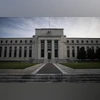
The Fed seems to be looking back two wars, to the weak labour market that followed the 2008 financial crisis and the low neutral rate of interest of those years. (Credit: Bloomberg)
As was widely expected, the United States Federal Reserve has lowered its policy rate by 25 basis points, to 4-4.25 per cent. A slight majority of the rate-setting Federal Open Market Committee (FOMC) expects to cut again at both the October and December meetings, with additional easing expected in 2026. But the Fed is being too dovish, and risks setting itself up to hike interest rates next year.
The case for beginning a monetary-easing cycle this month rests on three judgments. First, the deterioration in headline payroll gains — the economy has added an average of just 29,000 net new jobs per month over the past three months, and employment contracted in June — is a strong indication of a weakening labour market. Second, underlying inflation is on course to return to the Fed’s target, albeit gradually. And third, there is considerable distance between the Fed’s policy rate and the rate at which the Fed would no longer be holding back economic growth. The Fed estimates this so-called neutral rate to be 3 per cent.
On each point, the Fed is off base.
Payroll gains are hard to interpret because of sudden changes in immigration. It is likely that the number of net new payroll jobs needed to keep up with population growth is below 50,000 per month. It is even conceivable that future changes in net immigration flows could imply that the break-even number of monthly net payroll gains may become negative: Net reductions in the level of employment could be required for the labour market to keep up with population changes.
The unemployment rate is typically the best measure of labour-market tightness, and it takes on added importance in light of changes in immigration that make it hard to interpret headline payroll statistics. At 4.3 per cent in August, the unemployment rate is quite low, and has increased by only 10 basis points over the past year. Wage growth tells the same story as the unemployment rate: It is solid, slowly cooling, and indicates that the headline payroll numbers tell us more about the supply side of the labour market than businesses’ demand for workers. The labour market could hardly deteriorate markedly, as the Fed suggests, without an increase in the number of laid-off workers.
As for underlying inflation, I am more concerned than the Fed seems to be. Though the Fed was behind the curve in recognising the threat of inflation in 2021, its aggressive response in 2022 caused underlying inflation to begin falling that autumn. Core inflation, as measured by the deflator on personal consumption expenditure (PCE), fell by around three percentage points from the spring of 2022 to the spring of 2024.
But over the past year, core PCE inflation has not improved, falling only 28 basis points from April 2024 to April 2025. Worryingly, core PCE inflation increased over the summer, and in July was 2.9 per cent — well above the Fed’s target and moving in the wrong direction. It may be that this acceleration of underlying inflation is driven by one-off price increases due to higher tariffs. But consumer spending — the key driver of aggregate demand — is strong. Retail sales data for August surprised forecasters on the upside, increasing by a robust 5 per cent year-on-year.
This strength is reflected in nowcasts. Economists at Goldman Sachs currently expect the economy to grow at a 2.5 per cent annualised growth this year, and the Atlanta Fed tracks 3.3 per cent growth in the current quarter. Both of these estimates are above the economy’s underlying sustainable potential, implying upward pressure on prices. Judging from the labour market, price inflation, consumer spending, and overall economic activity, a 4.4 per cent federal funds rate did not seem to be significantly restraining consumers and businesses.
The Fed’s estimate of the neutral rate is wrong. To adequately slow demand, the Fed appears to need the policy rate to be above 4 per cent. But the Fed intends to push the rate down to 3.6 per cent this year, with an additional cut in 2026. This is likely to tighten an already-strong labour market and could cause inflation to accelerate at a faster rate. In that event, the Fed would have cut rates this year, only to have to reverse course in 2026.
Add to this President Donald Trump’s continued threats to the Fed’s political independence, and the situation becomes even more worrisome. One member of the FOMC expects five additional rate cuts by the end of 2025, which would find the federal funds rate below 3 per cent. If additional Fed appointees hold similar views, inflationary pressure could grow further still, increasing the likelihood that the Fed will need to raise rates next year.
Generals can lose the current war by fighting the last one. The Fed seems to be looking back two wars, to the weak labour market that followed the 2008 financial crisis and the low neutral rate of interest of those years. Today’s economy is quite different — and the Fed has not yet won the more recent war against the return of inflation.
Disclaimer: These are personal views of the writer. They do not necessarily reflect the opinion of www.business-standard.com or the Business Standard newspaper

 "The US Fed's wrong move: Rate cuts risk fuelling inflation rebound")


 Connect with us on WhatsApp