Perhaps the best way to work towards a reasonable answer to the title question is to look at some basic data on population and per capita income of a sizable number of GS nations. The table presents such data for nearly 50 most populous GS countries, each with over 20 million population, arranged according to three commonly used geographic groupings: Asia, Africa and Latin America. A couple of minutes of inspection of the table emphasises some obvious characteristics of GS countries:
- They vary enormously with respect to income and population, both across continents and within them.
- Asia has by far the largest population, compared to both Africa and Latin America; four out of the five most populous nations of the world are in Asia, including the two giants, China and India. With the exception of Pakistan, they all aspire to playing a major role in world affairs, with China already an economic and (increasingly) military superpower. In recent decades, Asian economies (especially in East Asia) have grown the fastest and are expected to do so in the foreseeable future, propelled by their two mega-regional free trade arrangements.
- Leaving aside Venezuela, the other six Latin American countries are either upper-middle-income (as per current World Bank criteria) or, as in the case of Chile, high-income, with Argentina and Mexico bordering on high-income, and Brazil not far behind. Given their relative prosperity and sizable populations, analysts have wondered why Brazil and Mexico do not play larger roles in world affairs.
- The African members of the GS are generally poorer with seven of the 20 listed in the table having per capita income of less than $1,000 and only one, South Africa, enjoying per capita income of more than $5,000. In contrast, seven of the 20 Asian countries have per capita income of greater than $5,000, admittedly including two oil-exporters, Kazakhstan and Saudi Arabia. Three of the large African nations (Ethiopia, the Democratic Republic of the Congo and Sudan) are afflicted by long and bloody civil conflicts, which have seriously constrained their development trajectories. Civil conflicts gravely retard development in four Asian nations too (Syria, Iraq, Yemen, and Myanmar), but they are among the less populous Asian countries; not coincidentally, three of these also belong to the battle-scarred sub-region of West Asia.
How much and how has the GS influenced the course of world affairs and its own advancement? Quite obviously, much less than it would have wished. Perhaps unsurprising, given the preponderance of power, wealth and technology in the North. However, over the last 70 years some significant gains have been made, through at least two different channels. The first is through building coalitions within key North-created international institutions, such as multilateral development banks, the IMF, GATT/WTO and United Nations specialised agencies. Second, through the creation of membership-limited organisations such as Opec, Asean, Organization of American States, and the African Union. The first of these, Opec, has been the most effective in advancing member interests since the 1970s, but at the expense of all oil-importing nations, including the vast majority of GS members. There is no GS-wide organisation with a strong secretariat, comparable to the OECD’s in the North.

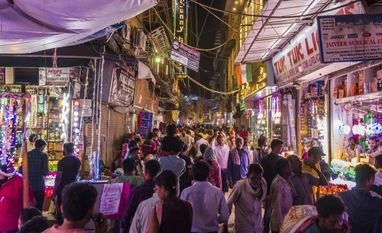 "Who are the Global South?")












 Connect with us on WhatsApp