Associate Sponsors

Co-sponsor

A battle of attrition: Peace remains elusive in Ukraine as war drags on

Ukraine has lost a quarter of its pre-war population of 42 million, with five million living under Russian occupation and another six million having fled to Europe
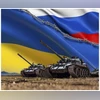
Russia Ukraine conflict, Russia Ukraine
Photo: Shutterstock
Business Standard Editorial Comment
3 min read Last Updated : Feb 23 2026 | 9:54 PM IST
Russia’s full-scale assault on Ukraine, now into its fifth year, has descended into a war of attrition. Even ignoring the exaggerated estimates from both sides, the casualty rates are staggering. According to the independent think-tank Centre for Strategic and International Studies (CSIS), Russia has suffered 1.2 million casualties (killed, wounded, and missing) with some 325,000 killed since February 2022. For Ukraine, the figures are 600,000 casualties and 140,000 deaths (the figures exclude civilian casualties). Despite this, Russia, a country with more than three times Ukraine’s population and access to abundant natural resources, has made scant inroads beyond the territory it controlled in March 2022, the peak of its advance. Then, Russia held about 26 per cent of Ukrainian territory (including Crimea, which it annexed in 2014). Today, advancing at a pace slower than the trench warfare of World War I, Russia holds about 20 per cent of Ukrainian territory. In 2022, Russian President Vladimir Putin presented his Ukrainian invasion as a bulwark against the expansion of the North Atlantic Treaty Organization (Nato) into historical Russian spheres of influence. Since then, Finland and Sweden, two countries that share borders with Russia, have shed their neutrality and signed on to Nato.
 
Yet the tenacity of either side remains unabated — a situation that will test the resolve of their allies, China and Europe. Despite an unprecedented level of economic sanctions, Russia’s earnings from sales of natural resources to a broad swathe of countries (including the United States and some in Europe) have defied Western predictions of economic collapse. In 2025, it became the world’s ninth-largest economy, up from 11th before 2022. But spiralling inflation and shrinking consumer demand could take its toll sooner rather than later. Its staying power appears to be increasingly dependent on China, with which it had declared a “no limits partnership” a few weeks ahead of Russia’s invasion. Since October last year, Western reports suggest that China has extended its support for Russia’s war through expanded supplies of critical drone components, satellite intelligence, and closer military cooperation, even as it has upped oil and natural gas purchases.
 
Ukraine, meanwhile, has lost a quarter of its pre-war population of 42 million, with five million living under Russian occupation and another six million having fled to Europe. With the United States (US) under Donald Trump drastically cutting back on support, Kiev’s war machine today is substantially being underwritten by Europe. The bulk of Ukraine’s vital coal and iron ore resources remains under Russian occupation in the east and critical infrastructure has been destroyed or damaged. Its economic growth is principally the result of a significant expansion of the defence industry. Increasingly, Ukrainian startups are tying up with contractors from the US and European Union (EU). Europe is also inclined to relax the reforms for Ukraine to become a full-fledged EU member. Apart from Mr Putin’s intransigence, the fact that the US under Mr Trump has chosen to eschew international law and principles in favour of its own territorial expansionism and deal-making has considerably diminished the world’s most powerful country’s ability to act as a credible interlocutor in the conflict. As a result, the prospects of peace breaking out in Eastern Europe anytime soon appear dim.

One subscription. Two world-class reads.

Already subscribed? Log in

Subscribe to read the full story →
*Subscribe to Business Standard digital and get complimentary access to The New York Times

Smart Quarterly

₹900

3 Months

₹300/Month

SAVE 25%

Smart Essential

₹2,700

1 Year

₹225/Month

SAVE 46%
*Complimentary New York Times access for the 2nd year will be given after 12 months

Super Saver

₹3,900

2 Years

₹162/Month

Subscribe

Renews automatically, cancel anytime

Here’s what’s included in our digital subscription plans

Exclusive premium stories online

  • Over 30 premium stories daily, handpicked by our editors

Complimentary Access to The New York Times

  • News, Games, Cooking, Audio, Wirecutter & The Athletic

Business Standard Epaper

  • Digital replica of our daily newspaper — with options to read, save, and share

Curated Newsletters

  • Insights on markets, finance, politics, tech, and more delivered to your inbox

Market Analysis & Investment Insights

  • In-depth market analysis & insights with access to The Smart Investor

Archives

  • Repository of articles and publications dating back to 1997

Ad-free Reading

  • Uninterrupted reading experience with no advertisements

Seamless Access Across All Devices

  • Access Business Standard across devices — mobile, tablet, or PC, via web or app

Topics :Editorial CommentBusiness Standard Editorial CommentBS OpinionRussia Ukraine ConflictWar Conflict

Next Story


