Asian climate red alert: Moving to net zero will best serve its poorest

The exceptionally high temperatures on Asia's landmass last year had its knock-on effect on 15 million sq km of ocean area, one-tenth of the earth's ocean surface
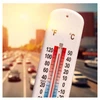
High temperatures
Given that Asia accounts for more than half the world’s population, the obvious takeaway from the WMO’s temperature alert is the critical need for countries to accelerate mitigation and adaptation strategies by several orders of magnitude. Image: Shutterstock
Business Standard Editorial Comment Mumbai
3 min read Last Updated : Jun 25 2025 | 10:28 PM IST
The World Meteorological Organization (WMO) has sounded a red alert in its latest “State of the Climate in Asia” report, indicating that the continent is warming twice as fast as the global land and ocean average. According to the report, the “mean anomaly” for 2024 in Asia was 1.04 degrees Celsius above the 1991-2000 average. In 2024, average temperatures ranked as the warmest or second-warmest on record, depending on the dataset used (the WMO uses six datasets in its analysis). From east to west, these findings would not come as a surprise to a range of Asians who suffered extreme weather events last year — North Indians weathering a severe heatwave, Keralites who lost their families in the Wayanad landslide induced by excessive rainfall, Indo-Chinese and Filipinos facing extensive damage from cyclones, Chinese farmers who lost crops to severe drought, Kazakhs and Russians forced to evacuate due to record-breaking rainfall and citizens of the United Arab Emirates who faced extreme precipitation. 
 
The report attributes this faster rate of warming to Asia’s massive landmass because, as it explains, temperature increases over land are greater than temperature increases over the ocean. At 44.59 million square kilometres, Asia is the largest of all the continents. But the exceptionally high temperatures on Asia’s landmass last year had its knock-on effect on 15 million sq km of ocean area, one-tenth of the earth’s ocean surface. Average sea temperatures rose at the rate of 0.24 degree Celsius per decade, double the global mean rate of 0.13 degree Celsius per decade, causing marine heatwaves in the northern Indian Ocean and the seas near Japan and the Yellow and East China Seas. The observable impact of such rapidly elevated temperatures can be seen in alarmingly receding glaciers, rising sea levels and prolonged heat waves.
 
Given that Asia accounts for more than half the world’s population, the obvious takeaway from the WMO’s temperature alert is the critical need for countries to accelerate mitigation and adaptation strategies by several orders of magnitude, not least because the actions of some actors can have unpredictable consequences elsewhere. East Asia, especially the area around China, Japan, and South Korea, is the world’s most densely industrialised region. China remains the factory to the world, and Japan, Taiwan, and South Korea are centres of hi-tech industries, notably semiconductors. No less concerning is the fact that Asia — South Asia in particular — is increasingly becoming the alternative location for a range of “dirty” industries that the West is jettisoning. This includes chemicals, metal and plastic manufacture, and oil and mineral refining. Asia, therefore, remains the largest consumer of fossil fuel globally, accounting for a staggering 80 per cent of the world’s coal power consumption. China and India, the world’s two most populous countries, figure among the world’s largest fossil-fuel consumers and emitters of greenhouse gases. Though China has made strides in the transition to renewable energy — accounting for a third of total electricity generation — India remains a laggard. Developing countries in Asia argue that economic growth and concomitant poverty reduction are contingent on continuing fossil-fuel consumption. But the fact is that rising temperatures take a toll on the lives and livelihoods of marginalised and vulnerable communities like small farmers and those in the fishing trade. Hastening the transition to net zero would serve Asia’s poorest most effectively. 
 

One subscription. Two world-class reads.

Already subscribed? Log in

Subscribe to read the full story →
*Subscribe to Business Standard digital and get complimentary access to The New York Times

Smart Quarterly

₹900

3 Months

₹300/Month

SAVE 25%

Smart Essential

₹2,700

1 Year

₹225/Month

SAVE 46%
*Complimentary New York Times access for the 2nd year will be given after 12 months

Super Saver

₹3,900

2 Years

₹162/Month

Subscribe

Renews automatically, cancel anytime

Here’s what’s included in our digital subscription plans

Exclusive premium stories online

  • Over 30 premium stories daily, handpicked by our editors

Complimentary Access to The New York Times

  • News, Games, Cooking, Audio, Wirecutter & The Athletic

Business Standard Epaper

  • Digital replica of our daily newspaper — with options to read, save, and share

Curated Newsletters

  • Insights on markets, finance, politics, tech, and more delivered to your inbox

Market Analysis & Investment Insights

  • In-depth market analysis & insights with access to The Smart Investor

Archives

  • Repository of articles and publications dating back to 1997

Ad-free Reading

  • Uninterrupted reading experience with no advertisements

Seamless Access Across All Devices

  • Access Business Standard across devices — mobile, tablet, or PC, via web or app

Topics :Climate ChangeBusiness Standard Editorial CommentAsia

Next Story



