Associate Sponsors

Co-sponsor

Managing the food economy: Procurement must be aligned with requirements

With rice stocks far above buffer norms, India must shift from open-ended MSP procurement to diversified, sustainable agriculture without hurting farmer incomes
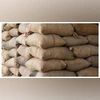
Food storage
India’s ballooning rice stocks expose flaws in open-ended MSP procurement, calling for crop diversification and fiscally sustainable food management reforms. | Image: Shutterstock
Business Standard Editorial Comment Mumbai
3 min read Last Updated : Mar 04 2026 | 10:44 PM IST
Public procurement and distribution are integral to India’s food economy. However, the system is marred by inefficiencies and distortions at various levels. For instance, central stocks of rice and wheat stood at nearly 59.45 million tonnes against a buffer requirement of 21.41 million tonnes as of January 2026, which is 178 per cent above what is needed. While buffer norms are designed to ensure food security under the public distribution system (PDS) and meet emergency needs, persistent accumulation far beyond these levels signals structural policy inadequacies. The strain is visible on the ground. This newspaper recently reported on farmers’ protests in Odisha over delays in paddy procurement despite receiving digital tokens at mandis. Meanwhile, Kerala is defending bonuses above the minimum support price (MSP). However, central stocks of rice held by Food Corporation of India (FCI) remain much above the buffer norms, raising concerns over surplus. Open-ended procurement at MSP, reinforced by state-level bonuses, has encouraged farmers to expand paddy acreage year after year, often at the cost of other important crops that India needs and soil quality. 
In this regard, there are several policy challenges. Excess procurement strains storage capacity and inflates the food subsidy bill. Grain that is procured must be stored, transported, insured, and eventually distributed or exported. When stocks significantly exceed the buffer norms, carrying costs rise and valuable fiscal resources are tied up in maintaining surplus inventories. Food subsidies are one of the largest expenditure heads of the Union government, exceeding ₹2 trillion a year. Further, skewed incentives distort cropping patterns and worsen groundwater depletion in paddy-growing states. Paddy is a water-intensive crop with a water footprint estimated at 3,000-5,000 litres per kg. Its sustained higher production, especially in stressed states such as Punjab and Haryana with declining water tables, deepens ecological stress. 
Assured procurement creates a predictable income stream and encourages farmers to stick with the rice-wheat cycle, even in agro-climatic zones better suited to other crops. Pulses and oilseeds, which enhance soil health, don’t offer this level of price certainty. Agricultural economist Ashok Gulati recently noted that India “is buried under rice”, with buffer stocks nearly four times the required levels even after free grain distribution to 800 million beneficiaries. Global markets are unable to absorb large volumes at favourable prices, making it costly to liquidate surplus stocks of rice. India has become the world’s largest producer of rice, surpassing China. It is often difficult to offload surplus stocks because the cost in India is higher than the prevailing international prices. 
The solution lies in gradually aligning procurement with PDS requirements instead of it remaining open-ended. State-level bonuses beyond MSP should be discouraged to avoid further distortions. At the same time, stronger and more credible incentives must be extended to pulses, oilseeds, and millets through assured procurement where necessary and better market linkages exist. Investment in decentralised storage can reduce wastage and carrying costs. The next phase of India’s food economy management must focus on diversification, self-reliance, and sustainable agriculture with lower fiscal costs. The way forward should be protecting farmers’ incomes without trapping Indian agriculture in a rice-wheat cycle.

One subscription. Two world-class reads.

Already subscribed? Log in

Subscribe to read the full story →
*Subscribe to Business Standard digital and get complimentary access to The New York Times

Smart Quarterly

₹900

3 Months

₹300/Month

SAVE 25%

Smart Essential

₹2,700

1 Year

₹225/Month

SAVE 46%
*Complimentary New York Times access for the 2nd year will be given after 12 months

Super Saver

₹3,900

2 Years

₹162/Month

Subscribe

Renews automatically, cancel anytime

Here’s what’s included in our digital subscription plans

Exclusive premium stories online

  • Over 30 premium stories daily, handpicked by our editors

Complimentary Access to The New York Times

  • News, Games, Cooking, Audio, Wirecutter & The Athletic

Business Standard Epaper

  • Digital replica of our daily newspaper — with options to read, save, and share

Curated Newsletters

  • Insights on markets, finance, politics, tech, and more delivered to your inbox

Market Analysis & Investment Insights

  • In-depth market analysis & insights with access to The Smart Investor

Archives

  • Repository of articles and publications dating back to 1997

Ad-free Reading

  • Uninterrupted reading experience with no advertisements

Seamless Access Across All Devices

  • Access Business Standard across devices — mobile, tablet, or PC, via web or app

Topics :Business Standard Editorial CommentEditorial CommentBS Opinionpublic procurement policyFood Corporation of Indiafarmer incomeagriculture economyMSP rice procurement

Next Story



