Trump's trade order: India has an early opportunity to present its position

Economics and geopolitics are intertwined, at least in the context of China, and it is in the interests of both the US and India to continue cooperating
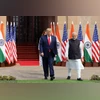
Donald Trump, PM Modi
Photo: Bloomberg
Business Standard Editorial Comment Mumbai
3 min read Last Updated : Feb 11 2025 | 10:32 PM IST
American President Donald Trump’s economic and political ideas are unsettling the world. Given the importance of the United States (US) in the global economy and political order, it is anybody’s guess how the world will look in four years. It is also likely that Mr Trump’s ideas will last longer than his term. Be that as it may, the world will have to deal with disruption in the foreseeable future. Individual countries will need to be prepared to negotiate and adjust to protect their interests. Prime Minister Narendra Modi’s trip to the US this week provides India an early opportunity to present its position to the new Trump administration. The meeting between the two leaders will, among other things, take place against the backdrop of Mr Trump’s imposition of a 25 per cent tariff on US steel and aluminium imports without exception. Before this, he had imposed a 10 per cent tariff on China and threatened to impose tariffs on Mexico and Canada.
 
In the context of trade, to be able to present India’s position, it is important to understand what the new US administration intends to achieve. As has been highlighted by some commentators, there are largely two objectives. First, as Mr Trump himself has often stated, is to have a balanced trade. The US current account deficit (CAD) in the third quarter of 2024 was 4.2 per cent of gross domestic product (GDP), up from 3.8 per cent in the previous quarter. The second objective is to raise revenue to finance the extension of tax cuts. The objectives and means are, of course, at odds with the broader economic consensus. The tariff burden will eventually fall on American households and there are macroeconomic reasons why the US runs a CAD. However, such reasons are unlikely to persuade Mr Trump.
 
The broad thinking of the establishment was recently illustrated by Robert E Lighthizer, US trade representative in the first Trump administration and the author of No Trade Is Free: Changing Course, Taking On China, and Helping America’s Workers (2023) — endorsed by Mr Trump — in an essay in The New York Times. The central argument is that the international trading system has failed the US and many other countries. He notes that China, which reported a trade surplus of about $1 trillion in 2024, has demolished the systems. There are various ways that countries can rig the system to their advantage, including currency manipulation. Mr Lighthizer further argues democratic countries should come together to create a new trading system. Given the broad thinking and policy framework, India must forcefully make the following points to the US to avoid country-specific restrictions — Mr Trump has spoken about Indian tariffs several times during the campaign trail.
 
First, unlike many others, India is not manipulating domestic policies and, like the US, runs a CAD — it imports more than it exports. Second, India is reviewing its tariffs and, as a trade expert underscored in these pages, the actual tariff burden on three-fourths of US imports to India is less than 5 per cent. India, if needed, should be willing to review tariffs and sources of import. Third, India is a large market and talent base for top US technology companies, which means interdependence between the two is much deeper than what is perhaps reflected in trade numbers. Finally, economics and geopolitics are intertwined, at least in the context of China, and it is in the interests of both the US and India to continue cooperating.

One subscription. Two world-class reads.

Already subscribed? Log in

Subscribe to read the full story →
*Subscribe to Business Standard digital and get complimentary access to The New York Times

Smart Quarterly

₹900

3 Months

₹300/Month

SAVE 25%

Smart Essential

₹2,700

1 Year

₹225/Month

SAVE 46%
*Complimentary New York Times access for the 2nd year will be given after 12 months

Super Saver

₹3,900

2 Years

₹162/Month

Subscribe

Renews automatically, cancel anytime

Here’s what’s included in our digital subscription plans

Exclusive premium stories online

  • Over 30 premium stories daily, handpicked by our editors

Complimentary Access to The New York Times

  • News, Games, Cooking, Audio, Wirecutter & The Athletic

Business Standard Epaper

  • Digital replica of our daily newspaper — with options to read, save, and share

Curated Newsletters

  • Insights on markets, finance, politics, tech, and more delivered to your inbox

Market Analysis & Investment Insights

  • In-depth market analysis & insights with access to The Smart Investor

Archives

  • Repository of articles and publications dating back to 1997

Ad-free Reading

  • Uninterrupted reading experience with no advertisements

Seamless Access Across All Devices

  • Access Business Standard across devices — mobile, tablet, or PC, via web or app

Topics :Donald TrumpBusiness Standard Editorial CommentBS OpinionIndia trade policy

Next Story



